


What is Fire Sprinkler System Wet Valves
forede Fire Sprinkler System Wet Valves are core components of wet pipe sprinkler systems, with a durable metal body and clapper mechanism. The system's piping is pre-filled with water, enabling instant water discharge when a sprinkler head activates due to fire, while triggering integrated on-site and remote alarms. Key advantages: instant fire suppression, high reliability, low maintenance, integrated alarms, and wide compatibility with sprinkler configurations. Ideal for environments above 4°C, including commercial, institutional, residential, and light industrial buildings. Proper use involves pre-operation commissioning, routine maintenance, and post-fire reset. These valves ensure the wet sprinkler system's reliable performance, delivering rapid, effective fire protection and enhancing safety across diverse scenarios.
General Description
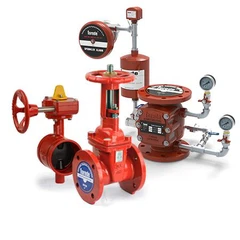
forede Alarm Check Valve Assembly is an integrated functional unit specifically designed for wet pipe fire sprinkler systems, combining core valve components, alarm triggers, and auxiliary control parts into a unified module. Unlike standalone valves, this assembly serves as a "central control hub" that synchronizes three key functions: preventing water backflow, regulating water supply to sprinkler networks, and initiating immediate fire alarms when the system is activated. It is the critical link between the main water source and the sprinkler heads, ensuring the entire wet sprinkler system operates in a coordinated and reliable manner during fire emergencies.
The standard assembly consists of five core components: a corrosion-resistant alarm check valve body (made of ductile iron or 304 stainless steel), a spring-loaded clapper mechanism, a hydraulic alarm interface (compatible with water motor gongs), dual pressure gauges (for inlet and outlet pressure monitoring), and a set of auxiliary valves (isolation valves for maintenance, drain valves for depressurization). Under normal standby conditions, the clapper is tightly sealed by the combined force of system water pressure and the internal spring, keeping the sprinkler network filled with pressurized water while preventing backflow to the main supply. When a fire breaks out, the heat melts the fusible link of the sprinkler head, causing water to discharge and a sudden pressure drop in the downstream pipeline. This pressure change pushes the clapper open, allowing water from the main supply to flow into the sprinkler network continuously.
Simultaneously, the water flow drives the hydraulic alarm through the dedicated interface, producing a loud on-site alert, and the pressure switch (connected to the alarm interface) sends a remote signal to the fire control center. A key feature of this assembly is its integrated design-all components are pre-assembled and calibrated at the factory, reducing on-site installation complexity and ensuring functional synergy. It is engineered to adapt to working pressures up to 1.6 MPa and is suitable for environments where temperatures remain above 4°C (to avoid pipe freezing), as the wet sprinkler system requires permanent water filling in the pipeline. This assembly eliminates the need for separate purchasing and matching of individual components, improving the overall reliability and operability of the fire protection system.
Advantages
forede Alarm Check Valve Assembly offers five distinct advantages rooted in its integrated design and functional optimization, significantly enhancing the performance, reliability, and cost-effectiveness of wet sprinkler systems-key to effective early fire suppression and emergency response.
integrated design simplifies installation and reduces errors. All core components (valve body, alarm device, pressure gauges, auxiliary valves) are pre-assembled and factory-calibrated, eliminating the need for on-site matching of individual parts. This not only shortens the installation cycle but also avoids functional mismatches caused by incorrect component selection or assembly errors. For construction teams, the assembly can be installed as a single unit, reducing labor costs and improving installation efficiency-especially beneficial for large-scale building fire protection projects with tight schedules.
reliable backflow prevention and water supply control. The spring-loaded clapper mechanism in the assembly is designed with a precision-machined seal, ensuring a tight fit under normal pressure to prevent water in the sprinkler network (which may contain pipeline debris or fire-extinguishing additives) from flowing back into the main water supply. This protects the quality of the main water source and complies with water safety standards. When activated, the clapper opens smoothly to ensure stable water flow, maintaining the required pressure for sprinkler heads to deliver optimal spray patterns and suppression efficiency.
synchronized alarm response improves emergency coordination. The assembly's dedicated hydraulic alarm interface ensures that the alarm is triggered simultaneously with water flow-there is no delay between sprinkler activation and alarm notification. The on-site water motor gong produces a high-decibel sound that is clearly audible in large spaces (e.g., warehouses, shopping malls), alerting personnel to evacuate immediately. The remote signal sent by the pressure switch enables the fire control center to quickly locate the fire zone and dispatch emergency resources, shortening the response time between fire detection and professional intervention.
comprehensive monitoring facilitates proactive maintenance. The integrated dual pressure gauges provide real-time visibility of inlet (main supply) and outlet (sprinkler network) pressures, allowing maintenance staff to quickly identify abnormalities such as pipeline leaks, clapper seal wear, or pressure loss. This proactive monitoring capability helps detect potential system faults before they lead to functional failures, reducing the risk of system inoperability during fires. Additionally, the assembly's auxiliary valves (isolation, drain) enable targeted maintenance without shutting down the entire sprinkler system, minimizing downtime.
How to Use Alarm Check Valve Assembly?
Proper use of forede Alarm Check Valve Assembly involves three key phases: pre-installation calibration and commissioning, routine monitoring and maintenance, and post-fire reset and restoration. Adhering to these steps ensures the assembly operates reliably, maintains the integrity of the wet sprinkler system, and delivers effective fire suppression and alarm response when needed.
Pre-Installation Calibration and Commissioning Before integrating the assembly into the sprinkler system: 1) Conduct factory calibration verification-check that the clapper seal, pressure gauges, and alarm interface are pre-calibrated to design specifications. 2) On-site installation and connection: Mount the assembly securely on a stable base, connect the inlet to the main water supply, the outlet to the sprinkler network, and the alarm interface to the water motor gong and pressure switch. Ensure all flange connections are tight and leak-free using gaskets. 3) System pressurization and seal test: Slowly open the main water supply valve to pressurize the system to the design pressure; monitor the dual pressure gauges for 30 minutes to ensure no pressure drop (indicating a tight seal). 4) Alarm and flow test: Open the manual test valve on the assembly to simulate water flow; verify that the water motor gong sounds immediately and the pressure switch sends a valid signal to the fire control center. Check that the clapper opens smoothly and water flows evenly to the sprinkler network.
Routine Monitoring and Maintenance Implement regular checks to maintain assembly performance: 1) Daily pressure monitoring: Record inlet and outlet pressures from the dual gauges; a sudden or gradual pressure drop indicates potential leaks, clapper seal wear, or sprinkler head damage-investigate and resolve immediately. 2) Monthly alarm function test: Open the manual test valve for 15–20 seconds to ensure the water motor gong and pressure switch operate correctly; clean the alarm interface to remove debris that may block water flow. 3) Quarterly visual inspection and maintenance: Examine the assembly's valve body for corrosion, cracks, or leakage; check the clapper seal for wear and replace if necessary; tighten any loose flange bolts; apply anti-rust coating to exposed metal surfaces if needed. 4) Annual comprehensive maintenance: Disassemble the clapper mechanism and auxiliary valves for cleaning and inspection; verify valve seat integrity; re-calibrate pressure gauges to ensure accuracy; perform a full system flow test to confirm the assembly maintains stable water flow and pressure.
Post-Fire Reset and Restoration After a fire incident, follow these steps to reset the assembly and restore the system: 1) Emergency shutdown: Close the main water supply valve and the isolation valve on the assembly to stop water flow to the sprinkler network. 2) System depressurization and drainage: Open the drain valve on the assembly and branch pipe drains to fully empty residual water from the system, preventing corrosion or freezing. 3) Assembly inspection and component replacement: Check the clapper for deformation, the valve seat for damage, and the alarm interface for blockages; replace any worn or damaged components (seals, clapper, pressure gauges). Examine activated sprinkler heads and replace them with matching models. 4) Reassembly and pressurization: Reinstall the clapper and seals, close all drain valves, and slowly open the main water supply valve to repressurize the system-avoid rapid pressure surges that may damage the assembly or piping. 5) Functional verification: Conduct an alarm test and flow test to ensure the assembly operates correctly, pressure is stable, and the alarm system functions as intended before returning the system to standby mode.
Application
Large Commercial Complexes and Retail
Large Commercial Complexes and Retail Spaces are primary application areas. Shopping malls, department stores, hypermarkets, and mixed-use commercial buildings-characterized by large floor areas, dense pedestrian traffic, and diverse flammable goods (textiles, electronics, packaging)-rely on this assembly to ensure coordinated fire suppression and alarm response. The assembly's integrated design simplifies the installation of complex sprinkler networks across multiple floors or zones, while the synchronized alarm ensures timely evacuation of staff and customers. The comprehensive pressure monitoring also helps maintain system integrity in 24/7 operating commercial facilities.
Institutional and Public Service Buildings
Institutional and Public Service Facilities depend on its reliable performance to protect vulnerable populations. Hospitals, nursing homes, and rehabilitation centers use the assembly to safeguard patients, medical equipment, and critical care areas-where rapid fire suppression and minimal system downtime are essential. The assembly's easy maintenance (enabled by auxiliary valves) allows routine checks without disrupting medical services. Schools, universities, and libraries also utilize the assembly to protect students, faculty, and valuable collections; the synchronized alarm ensures quick evacuation, while the durable construction withstands high-traffic public environments.
High-Rise Residential Buildings
High-Rise Residential Buildings benefit from its stable performance and easy installation. In high-rise apartments, condominiums, and luxury residential towers, where fire spread risks are high and evacuation is challenging, the assembly ensures that the wet sprinkler system activates immediately and the alarm is triggered synchronously. The assembly's compact integrated design is suitable for installation in limited mechanical rooms or utility shafts of high-rise buildings. The low maintenance requirements also make it ideal for residential communities, reducing the operational burden on homeowners' associations.
Light Industrial and Warehouse Facilities
Light Industrial and Warehouse Facilities with controlled temperatures also use this assembly. Manufacturing plants producing low-flammability products (e.g., electronic components, precision machinery), indoor warehouses storing consumer goods or non-combustible materials, and logistics distribution centers-where temperatures are maintained above freezing-rely on the assembly's reliable water control and alarm functions. The assembly's durable construction withstands industrial dust and humidity, while the comprehensive pressure monitoring helps detect pipeline leaks in large-scale storage facilities. The integrated design also simplifies the installation of sprinkler systems in large open warehouse spaces.