

What is a Foam Bladder Tank?
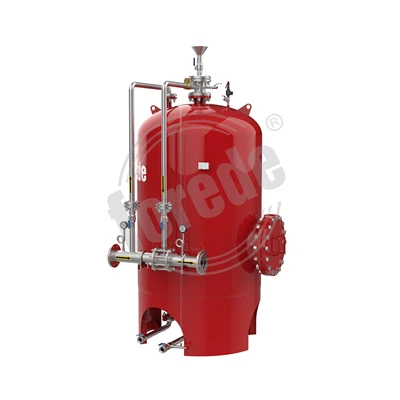
A Foam Bladder Tank is a critical component in fixed foam fire suppression systems. It consists of a steel pressure vessel containing a flexible rubber bladder. The space between the bladder and the tank shell is filled with foam concentrate, while water under pressure enters the bladder, squeezing the concentrate out into a proportioner (such as a Venturi tube or a balanced pressure device). This creates an accurate foam‑to‑water mixture for fighting Class B (flammable liquid) fires and certain Class A hazards.
Foam bladder tanks provide reliable, maintenance‑friendly foam proportioning without requiring any external power supply. They are widely used in oil refineries, chemical plants, aircraft hangars, marine terminals, power generation facilities, and heliports. Sizes range from 200 liters to over 20,000 liters, accommodating various foam types (AFFF, AR‑AFFF, protein, fluoroprotein, etc.). The bladder design ensures that the foam concentrate is always isolated from water until system discharge, preventing hydrolysis, contamination, and premature degradation of the foam.
Accurate proportioning (typically 1%, 3%, or 6%)
No external power required – purely hydraulic operation
Extended concentrate life (bladder isolates foam from water)

Reliable Proportioning
Maintains preset ratio (±10%) over a wide flow range (20‑100% of rated flow). Balanced pressure designs achieve even tighter tolerance.
Low Maintenance
The bladder can be replaced if damaged; external inspection ports and top manways allow easy routine checks without dismantling the system.
Versatile Installation
Available in horizontal or vertical models to fit most pump rooms, skid‑mounted systems, and space‑constrained enclosures.
Global Standards
Designed and certified to GB 20031-2024
Types of FOREDE Foam Bladder Tanks
Different bladder tank configurations suit various fire protection demands, from small skid units handling local hazards to large industrial storage protecting multi‑risk facilities.

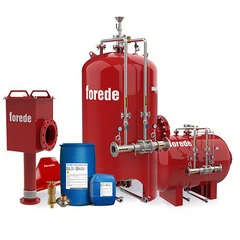
Vertical bladder tanks are the most common configuration for fixed foam systems. They occupy a very small footprint, making them ideal for pump rooms or enclosures where floor space is limited. Capacities typically range from 200 to 10,000 liters, with custom sizes available upon request. The vertical design allows easy bladder inspection via a top manway, and the orientation promotes complete drainage of concentrate. They are typically used with bladder tank proportioners (balanced pressure or Venturi) and can serve multiple foam discharge devices such as monitors, nozzles, foam chambers, and under‑floor systems.
FOREDE vertical tanks feature a nitrile rubber bladder (or NBR for alcohol‑resistant foam), stainless steel water inlet/outlet connections, a reliable pressure gauge, and an epoxy‑coated carbon steel shell for superior corrosion resistance. Optional heating jackets and level monitoring are available for cold climates or remote monitoring needs.
Horizontal bladder tanks are chosen when vertical height is limited, such as in mobile foam units, low‑clearance skids, or offshore platforms with restricted overhead space. They are also common for large capacities (>2,000 liters) where a vertical tank would be too tall for safe installation and maintenance. The bladder and proportioning principle remain identical to vertical designs. Horizontal tanks may require additional supports and special piping arrangements, but they offer the same accurate proportioning and long‑term reliability.
These tanks are often integrated into foam tenders, containerised fire units, or offshore modules where space is extremely constrained. FOREDE provides custom‑designed horizontal tanks with heavy‑duty lifting lugs, low‑point drains, pressure relief valves.

How to Choose a Foam Bladder Tank
Proper selection ensures reliable foam proportioning and full compliance with fire codes, while optimising total cost of ownership.
When selecting a foam bladder tank, consider the following essential parameters:
Required foam concentrate volume – based on hazard area, discharge density, and required duration.
Proportioning ratio – 1%, 3%, or 6% depending on foam type and application. Ensure the proportioner matches the selected ratio.
Operating pressure – must match water supply pressure (typically 6–12 bar / 90–175 psi). Higher pressure ratings (PN16) are available for special systems.
Bladder material – nitrile rubber for standard AFFF and protein foams; NBR for alcohol‑resistant (AR) foams and polar solvents.
Connection size – 2", 3", 4" or larger to match the proportioner and main water line.
Certification – Decide between vertical or horizontal orientation based on available space and access for maintenance.
Foam concentrate volume: 200‑20,000+ litres (custom sizes available)
Proportioning ratio: 1%, 3%, 6% (fixed or field‑adjustable proportioners)
Bladder material compatibility with foam type (Nitrile / NBR)
Maximum working pressure (PN10 to PN16, higher on request)
Orientation: vertical (standard) or horizontal (low clearance)
Certifications: GB 20031-2024
Applications of Foam Bladder Tanks
Bladder tank systems are deployed wherever flammable liquid fires pose a risk, as well as for selected Class A hazards requiring foam suppression.


Oil & gas facilities (refineries, tank farms, loading racks, pump stations) use bladder tanks to protect storage tanks, process areas, and loading arms.
Chemical plants handling polar solvents or aggressive chemicals require AR‑foam compatible bladders (NBR rubber) and corrosion‑resistant tank coatings.
Aircraft hangars are protected by high‑capacity bladder systems feeding foam monitors, under‑floor nozzles, and overhead deluge systems per GB 20031-2024.
Power generation facilities (coal conveyors, turbine enclosures, transformer bunds) use low‑expansion foam for rapid fire knockdown.
Marine applications include LNG carriers, oil tankers, FPSOs, offshore platforms, and ferry Ro-Ro decks.
Heliports and tunnel drainage systems also rely on bladder tank proportioning for foam‑water sprinkler systems.
Compared to pump‑driven systems, bladder tanks offer passive reliability – they require no electricity, only stable water pressure. This makes them ideal for remote sites, high‑reliability installations, and facilities where power supply may be interrupted during a fire event.
Foam Bladder Tank FAQ
Q1: How does a foam bladder tank work?
A: Water under pressure enters the bladder tank, squeezing the flexible bladder that contains the foam concentrate. The concentrate is forced out through a proportioner (Venturi or balanced pressure device) which injects it into the water stream at the correct percentage (1%, 3%, or 6%). No external power is required – the system works entirely on water pressure from the fire pump or municipal supply.
Q2: What is the lifespan of a bladder?
A: With proper maintenance, clean foam concentrate, and protection from extreme temperatures, NBR bladder .The bladder should be inspected annually for cracks, softening, swelling, or any signs of chemical attack. Replacement is straightforward and does not require replacing the entire tank.
Q3: Can the same tank be used for different foam types?
A: Only if the bladder material is compatible with all intended foams (e.g., NBR works with both AFFF and AR‑AFFF). However, cross‑contamination can degrade foam performance significantly. It is best practice to dedicate one tank to a single foam type and flush the entire system thoroughly before switching concentrate.
Q4: What proportioning accuracy can I expect?
A: For a bladder tank combined with a Venturi proportioner: ±10‑15% over 25‑100% flow range. For a bladder tank with a balanced pressure proportioner: ±5‑10% over 20‑100% flow range.
Q5: How do I size a bladder tank?
A: Calculate total foam concentrate needed = (application rate) × (protected area) × (discharge duration). For a tank bund, typical application rate is 6.5 L/min/m² for 30‑60 minutes. FOREDE offers a free sizing service – simply provide hazard type, protected area, foam type, and required discharge duration.
Q6: What maintenance is required?
A: Annual visual inspection of the tank exterior, pressure gauge, isolation valves, and piping. Bladder integrity test every 3‑5 years (or as required by local fire code). Replace concentrate if sample fails viscosity, pH, or expansion ratio tests. FOREDE provides maintenance kits, replacement bladders, and remote technical support.