


Forede Firefighting Equipment Co., Ltd.
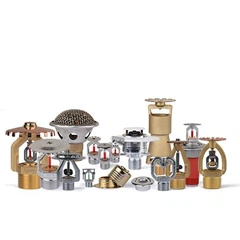
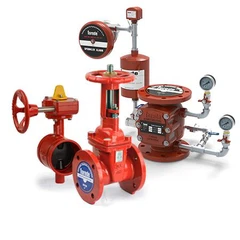
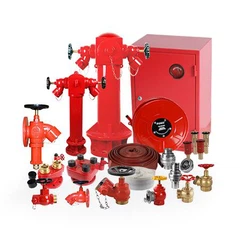
foredeis a leading manufacturer and global supplier of fire-fightingproducts.Our product range is extensive and compromises of waterand foam based fire-fighting products and systems. We have beeninvolved in meeting ever-changing and demanding industrystandards, providing a wide range of products, from simpleindustrial fire protection systems to most complex firefighting skids.
Since company was found in 2003, FOREDEFlRE has evolved andgrown from a small factory in the yard with the limited capacity toonly make sprinklers, to a sophisticated and leading company. in2013, FOREDE developed and improved fire monitors, fire nozzles,foam system devices, fire robots etc. increased production andenhanced quality and cost control to accommodate our continuinggrowth.
We are an lS09001:2015 accredited Company. All products andmanufacturing are tested and inspected to ensure the highestpossible standards,consistent quality and the very bestperformance.
What is Firefighting Fire Monitor?
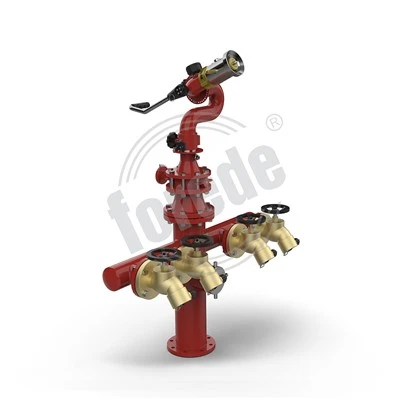
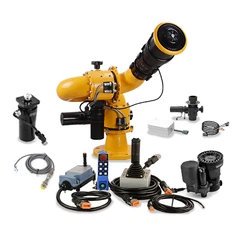
forede provide various Firefighting Fire Monitors to handle large, fast-spreading, or hard-to-reach fires-filling gaps left by handheld nozzles and fixed sprinklers. It delivers high-pressure water or foam-water streams over long distances, with adjustable angles to cover blind spots, making it effective for Class A (solid) and Class B (flammable liquid) fires. Its strength lies in four tailored types, each fitting specific needs:
The manual fire monitor is simple and reliable, using hand cranks for 360° horizontal and ±90° vertical adjustment. No electrical parts mean it works in remote areas (e.g., rural wildland sites) or power-outage-prone construction zones, needing minimal training for temporary teams handling small-to-medium fires.
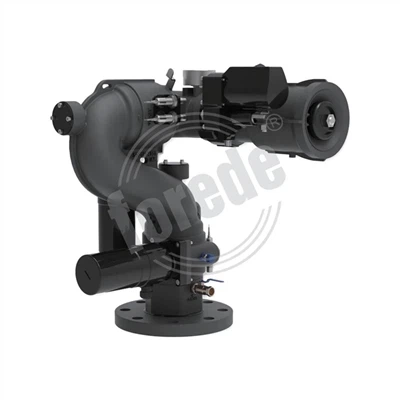
The electric fire monitor prioritizes safety via remote control. Motor-powered, it lets users adjust angles from a panel, avoiding hazardous heat/smoke in high-risk areas (e.g., chemical yards). It offers smooth targeting and preset angles to speed up responses.
The portable fire monitor is mobile, mounted on a wheeled/lightweight frame. It moves through narrow spaces or remote edges, connects to standard hoses, and adapts to small/large fires-solving fixed monitor blind spots.
The automatic fire monitor is hands-free for 24/7 unattended sites (e.g., oil yards, airport cargo bays). Linked to detectors, it activates automatically, tracks fires in real time, and switches between water/foam if needed.
Together, these types work in mobile (water trucks) or fixed setups, ensuring precise, efficient fire control while keeping operators safe and minimizing damage.


Electric Fire Monitor: A remote-controlled option built to keep operators safe. It uses a motor to let users adjust angles via a cab-mounted or handheld panel-critical for high-risk areas (like chemical plant storage zones) where manual operation would expose teams to toxic fumes or heat. It moves smoothly without jolting, ensuring accurate targeting, and can store preset angles (e.g., "tank top" or "floor level") to save response time. It's easy to mount on fixed structures or mobile units, resolving the tradeoff between safety and precision.
Manual Fire Monitor: A simple, reliable choice for scenarios where power is limited or ease of use matters most. It uses hand cranks to adjust horizontal (360°) and vertical (±90°) angles-no electrical parts to fail, making it perfect for remote areas (like rural wildland fire response) or sites prone to power outages (such as construction zones). It's easy to operate with minimal training, suiting temporary teams (like event security) and handling small-to-medium fires (e.g., vehicle fuel spills) consistently.
Portable Fire Monitor: A mobile tool for dynamic, hard-to-reach fires. Mounted on a wheeled or lightweight frame, it can be rolled through narrow industrial aisles, loaded onto small trucks, or carried to remote wildland edges-fixing the problem of blind spots with fixed monitors. It connects to standard fire hoses and adjusts manually or via optional battery power, handling small-to-large fires with matching flow rates. It's designed to withstand rough terrain (like construction gravel or forest trails), solving the balance between portability and durability for emergency teams.
Automatic Fire Monitor: A hands-free system for unattended or high-risk areas. the automatic fire monitor activates on its own when a fire starts-no human help needed, which is vital for 24/7 facilities (like oil storage yards or airport cargo bays) with overnight shutdowns. It uses sensors to track fire movement and adjust angles in real time, and can switch between water and foam if paired with a foam system. It works continuously without manual input, eliminating delayed responses from manual systems and protecting unmanned sites effectively.
How Does a Fire Monitor Work?
Forede's Fire Monitor works in four user-friendly stages, minimizing effort while maximizing suppression:
First, Setup & Connection: The monitor links to a water or foam-water supply-fixed models use a flange connection, while portable ones use quick-connect hoses. Electric or automatic models only need simple power linking (no complex wiring), and manual models skip power setup entirely. Teams can connect hoses and start using manual monitors in minutes, avoiding delays for fast-spreading fires.
Second, Targeting: Manual monitors use hand cranks to aim at the fire's base (not flames) to smother fuel. Electric models let users fine-tune angles from a distance via a panel, with a display showing position to avoid guesswork. Automatic models rely on detectors to lock onto fires and adjust angles if the blaze spreads, ensuring no human error.
Third, Flow & Agent Control: A valve (manual lever or electric switch) adjusts flow rate to match fire size-low flow for small spills, high flow for large tank fires. If paired with a foam system, it switches to foam-water mixture via a linked valve (manually or automatically), no need to swap hoses, which fixes delays from agent changes.
Fourth, Suppression & Shutdown: The water or foam stream forms a barrier to cool fuel and block oxygen. Manual/electric models need operators to keep targeting until the fire is out; automatic models shut off once detectors confirm no heat remains. After use, the monitor is flushed with clean water to prevent clogging, and electric/automatic models run self-tests to ensure reliability next time.
Application
Industrial Plants (Chemical, Petrochemical):
Electric or automatic monitors are used for tank farms and process areas-electric models let teams operate from safe control rooms, while automatic ones protect unattended overnight zones. They handle large Class B fires (like solvent spills) and fit fixed setups.
Marine & Offshore Sites (Oil Rigs, Ports)
Portable or fixed electric monitors work here-portable models handle shipboard spills by rolling across decks, while fixed ones guard fuel storage. They cover large deck areas with long-range streams, suiting marine fire needs.
Municipal & Wildland Fire Response:
Portable or manual monitors suit dynamic scenarios-portable models roll to wildland edges to create firebreaks, while manual ones fit on small trucks for urban vehicle fires. Their easy operation lets teams respond fast to scattered blazes, easing resource strain on busy fire departments.
Aviation & Logistics (Airports, Warehouses):
Automatic or electric monitors protect these 24/7 sites-automatic ones act fast for airport fuel spills, while electric ones cover high warehouse shelves via remote control. They pair with foam systems for Class B fires (like cargo solvent leaks) and fit busy logistics environments.