


What is Handwheel Operate Fire Water Monitor?
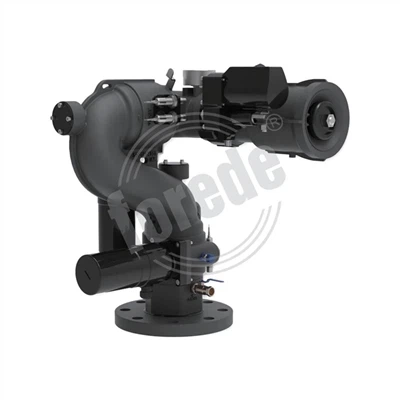
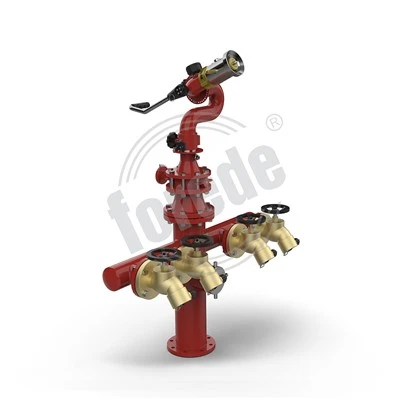
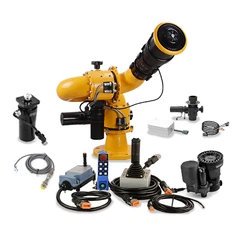
forede Handwheel Control SS304 Fire Monitor is a mechanical fire suppression device with full SS304 stainless steel construction, dual handwheels for precise adjustment, and straight stream/spray dual modes. Operating at 0.8-1.0 MPa, it offers 20-30-40LPS flow rate, 50-meter straight stream distance, and stable positioning via handwheel self-locking, requiring no electricity. Key strengths include SS304 corrosion resistance, handwheel-driven precision, seamless dual-mode switching, low maintenance, and cost-effectiveness. It is widely used in coastal ports, small workshops, gas stations, and outdoor industrial estates for Class A and B fire suppression.
General Description
forede Handwheel Control SS304 Fire Monitor is a professional mechanical fire suppression device engineered with full SS304 stainless steel for both the body and barrel, featuring two dedicated handwheels for manual operation-one governing 360° horizontal rotation and the other controlling -25° to +80° vertical tilting-while supporting seamless switching between straight stream and spray modes. Unlike tiller-operated models that prioritize agility, this monitor's handwheel design emphasizes precise positioning and stable locking, making it ideal for scenarios where fixed-target suppression and consistent jet direction are critical. It adopts an all-mechanical transmission structure, free of any electrical components, ensuring reliable performance in harsh, dusty, humid, or power-outage environments.
Crafted from high-quality SS304 stainless steel, the monitor delivers exceptional corrosion resistance, rust prevention, and structural durability, capable of withstanding salt spray, atmospheric humidity, and mild industrial fumes, with an operating temperature range of -20°C to 85°C. It operates at a working pressure of 0.8-1.0 MPa, with a water flow rate of 20-30-40LPS, a maximum straight stream distance of 50-65 meters, and a spray coverage angle of 100°. The handwheels are equipped with knurled surfaces for non-slip grip, even with wet hands, and the integrated self-locking mechanism secures the nozzle position immediately after adjustment, preventing drift under high water pressure. A dedicated manual knob on the monitor body switches between stream modes, requiring no additional tools or component replacement.
A defining feature of this monitor is its handwheel-driven precision and SS304 structural reliability. The separated handwheel control allows operators to fine-tune the nozzle angle with micro-adjustments, which is particularly useful for targeting small or hidden fire sources. The SS304 material ensures resistance to wear, impact, and environmental erosion, extending the product's service life to over 10 years under normal operation. Compatible with water-based fire suppression systems, it effectively handles Class A (solid combustibles) and Class B (flammable liquids) fires, serving as a low-maintenance, cost-effective solution for small to medium-sized high-risk areas requiring manual control precision.
Advantages
forede Handwheel Control SS304 Fire Monitor boasts five core advantages, centered on its dual handwheel control system, full SS304 stainless steel construction, and dual spray modes. These advantages address the demand for precision, durability, and reliability in manual fire suppression, outperforming tiller models in positioning stability and suitability for fixed-target scenarios.
precision positioning with self-locking stability. The dual handwheel design separates horizontal and vertical adjustment, enabling operators to make micro-scale angle tweaks for accurate fire targeting. The built-in self-locking mechanism engages automatically when handwheels stop rotating, firmly securing the nozzle against high water pressure drift-ideal for long-duration suppression or targeting fixed fire sources like storage tanks or equipment. Compared to tiller models, handwheel operation offers superior control accuracy, avoiding accidental position shifts during operation.
SS304 durability and all-environment adaptability. The full SS304 stainless steel body, barrel, and nozzle resist corrosion from saltwater, humidity, and industrial fumes, eliminating rust, pitting, or material degradation caused by harsh environments. Unlike carbon steel alternatives, it maintains structural integrity after long-term outdoor exposure or contact with water and dust. The SS304 components withstand high-pressure water wear and physical impact, reducing maintenance frequency and extending service life significantly.
seamless dual-mode switching with operational flexibility. A dedicated manual knob on the monitor body enables instant switching between straight stream and spray modes without interrupting suppression work. Straight stream mode delivers a concentrated high-pressure jet for long-distance fire penetration and smoke dispersion, while spray mode creates a wide-area fine mist to smother surface fires and cool combustibles. This versatility adapts to diverse fire scenarios, from small localized blazes to large-scale liquid spills.
mechanical reliability and low maintenance. The all-mechanical structure eliminates electrical components, solenoids, or control modules, avoiding malfunctions caused by power outages, moisture, or dust. Standardized flange connections ensure easy integration with existing fire water systems, while the modular design allows quick disassembly of handwheels and nozzles for maintenance. Routine upkeep only involves cleaning the SS304 nozzle, inspecting seals, and lubricating the transmission mechanism-no specialized tools or technical expertise required.
How Do Tiller Operate Fire Water Foam Monitors Work?
forede Handwheel Control SS304 Fire Monitor operates through a simple, reliable mechanical workflow, leveraging its dual handwheel control, dual-mode nozzle, and SS304 structural stability. The working process involves standby preparation, manual activation, handwheel-based adjustment, fire suppression, and post-operation reset, requiring no external power and ensuring immediate responsiveness in emergencies.
Standby State: Ready for Deployment During normal operation, the monitor is connected to the central fire water supply system via standardized flange connections. The inlet valve remains closed, and the nozzle is locked in a preset default position (aimed at the highest-risk area) via the handwheels' self-locking mechanism. The dual-mode nozzle is set to the preconfigured mode (straight stream or spray) based on the site's primary fire risk. The SS304 components remain corrosion-resistant in standby, even in harsh coastal or industrial environments.
Activation: Manual Valve Opening When a fire is detected, on-site operators initiate activation by unlocking and opening the inlet handwheel valve connected to the monitor's water inlet. High-pressure water immediately flows into the SS304 barrel, with no delay from electrical systems. The operator then releases the handwheels' self-locking mechanism via a small toggle on the monitor body, enabling direction and mode adjustment for rapid transition from standby to operational status.
Handwheel-Based Adjustment The operator uses the dual handwheels to control the nozzle position: rotating the horizontal handwheel for 360° lateral adjustment to align with the fire's location, and turning the vertical handwheel to tilt the nozzle (-25° to +80°) for high or low fire sources. To switch spray modes, the dedicated knob on the monitor body is rotated-no additional tools needed. Once the desired position and mode are set, the handwheels are released, and the self-locking mechanism engages automatically to secure the nozzle against high water pressure drift.
Fire Suppression and Reset High-pressure water flows through the SS304 barrel to the nozzle, forming the selected stream type: straight stream for long-distance penetration and targeted suppression, or spray for wide-area smothering and cooling. The operator can fine-tune the position via the handwheels at any time to adapt to changing fire conditions. After the fire is extinguished, the operator closes the inlet valve to stop water flow, adjusts the nozzle back to the default position via the handwheels, and engages the self-locking mechanism. Routine post-operation checks include cleaning the SS304 nozzle, inspecting seals for leaks, and lubricating the handwheel transmission to ensure subsequent readiness.
Application
Coastal Small Ports and Cargo Yards
Coastal Small Ports and Cargo Yards are primary application areas. These venues face persistent salt spray and seawater corrosion, where the SS304 construction ensures long-term reliability. The handwheel's precision control allows operators to target small fires on docks, cargo stacks, or small vessels with accuracy, while the self-locking mechanism maintains jet direction during suppression. The dual modes adapt to both distant blazes and surface fuel spills, suiting coastal operations with limited staff and budget constraints.
Small Industrial Workshops and Warehouses
Small Industrial Workshops and Warehouses utilize this monitor for targeted protection. Metal processing plants, food factories, and warehouses storing solid combustibles (paper, wood, textiles) or small quantities of chemicals benefit from the handwheel's precise adjustment. Operators can suppress fires near valuable equipment or inventory without causing secondary damage, as the handwheel enables micro-control of jet angle. The spray mode cools machinery and smothers small liquid fires, while the straight stream mode handles distant fires in high-ceiling spaces.
Gas Stations and Small Fuel Depots
Gas Stations and Small Fuel Depots deploy it for fire safety in fuel storage and dispensing zones. The SS304 material resists corrosion from fuel vapors, and the all-mechanical handwheel operation eliminates electrical hazards-critical for explosive environments. The handwheel's stable locking ensures consistent jet direction when cooling storage tanks, while the spray mode forms a protective mist to smother flammable liquid fires. Its low maintenance requirement suits 24/7 unattended or lightly staffed facilities.
Outdoor Industrial Estates and Parks
Outdoor Industrial Estates and Parks are another key application. Large outdoor parks, green spaces, and industrial estates with scattered high-risk points (e.g., waste storage areas, maintenance zones) benefit from the monitor's durability and precision. The SS304 construction withstands outdoor weather (rain, dust, temperature changes), while the handwheel allows operators to adjust to fires in open spaces with accuracy. Its easy installation and operational simplicity make it suitable for emergency fire suppression in semi-public areas.