

Rubber Flexible Joint
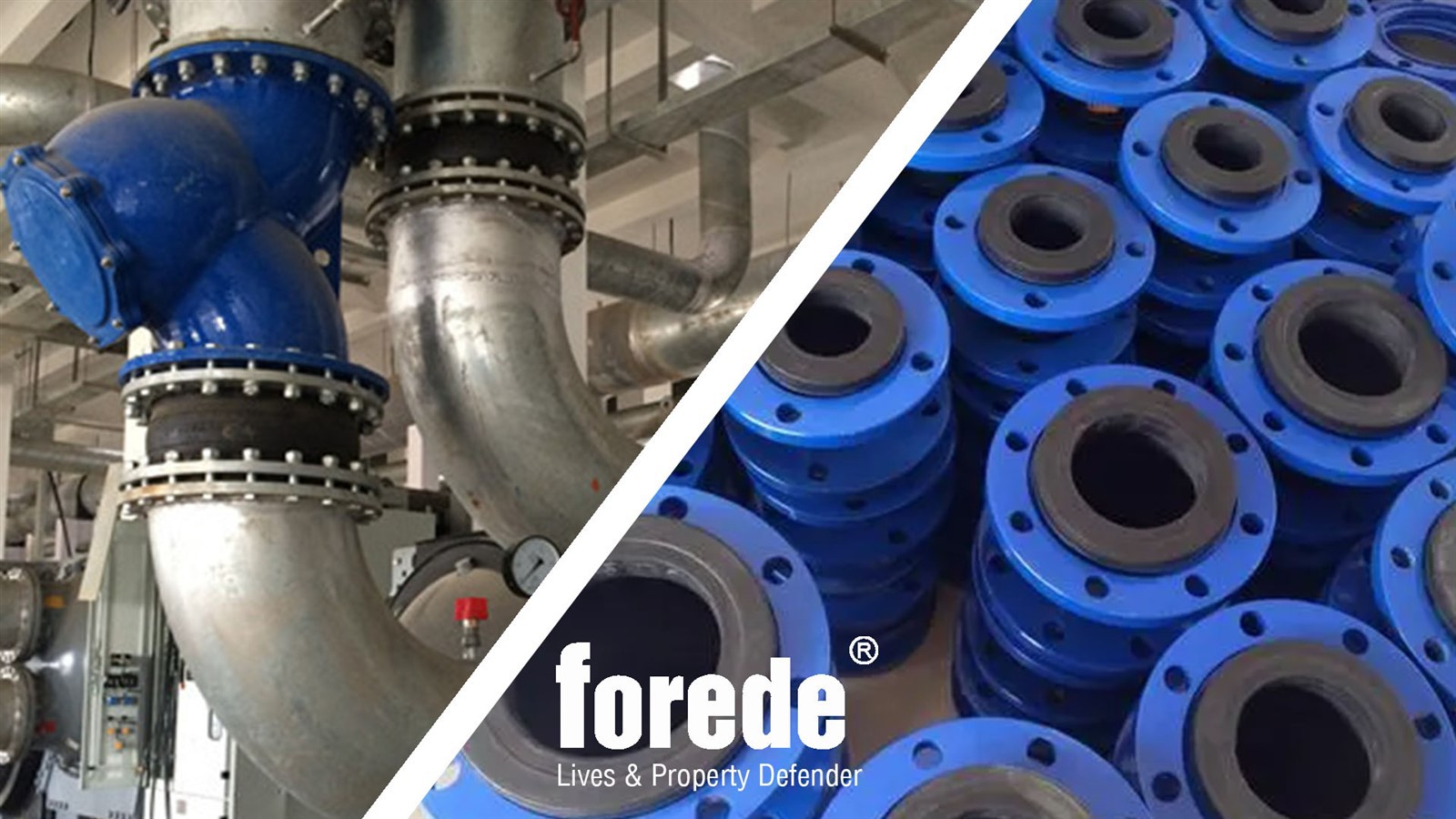
A rubber flexible joint, also known as a rubber expansion joint or rubber bellows, is an essential mechanical device widely used in various industrial applications. It serves as a flexible connector between pipes, valves, pumps, and other equipment, playing a crucial role in compensating for movement, reducing vibration, absorbing noise, and protecting the system from damage caused by thermal expansion, contraction, and mechanical stress.
There are many benefits to using rubber flexible joints in construction and engineering projects. One of the main advantages is that they allow for movement between structures without causing damage or stressing the joints. This is particularly important in structures that are subjected to high levels of vibration or are located in areas with high levels of seismic activity.
Construction and Materials
Rubber flexible joints are typically constructed using high-quality synthetic or natural rubber, reinforced with multiple layers of strong fabrics such as nylon or polyester. The rubber compound is carefully formulated to provide excellent elasticity, resilience, and resistance to a wide range of chemicals, temperatures, and environmental conditions. The reinforcement layers enhance the joint's strength, pressure-bearing capacity, and dimensional stability, ensuring reliable performance under demanding operating conditions.
The design of a rubber flexible joint usually features a bellows-like structure with convolutions or folds. These convolutions allow the joint to flex, bend, and compress in multiple directions, accommodating axial, lateral, and angular movements of the connected pipes or equipment. The ends of the joint are equipped with flanges, threaded connections, or other types of end fittings to facilitate easy installation and secure attachment to the system.
Functions and Benefits
- Movement Compensation: One of the primary functions of a rubber flexible joint is to compensate for thermal expansion and contraction in piping systems. As the temperature of the fluid flowing through the pipes changes, the pipes expand or contract. The flexible joint absorbs these dimensional changes, preventing excessive stress on the pipes, valves, and other components, which could otherwise lead to leaks, cracks, or even system failure.
- Vibration and Noise Reduction: In industrial processes, pumps, compressors, and other rotating equipment generate significant vibrations and noise. Rubber flexible joints act as effective vibration isolators, damping the transmission of mechanical vibrations from the equipment to the connected piping and structure. By reducing vibrations, these joints help minimize noise levels, enhance operator comfort, and protect sensitive equipment from vibration-induced damage.
- Misalignment Correction: During installation or due to settlement of the supporting structure, pipes may become misaligned. A rubber flexible joint can accommodate small amounts of lateral, angular, and axial misalignment between connected pipes, ensuring a proper seal and preventing the development of excessive stress concentrations that could compromise the integrity of the system.
- Shock Absorption: In systems subjected to sudden pressure surges, water hammer, or other transient forces, rubber flexible joints provide shock absorption capabilities. The flexible rubber material can deform temporarily to absorb the energy of the shock, protecting the piping and equipment from damage and reducing the risk of catastrophic failures.
- Sealing and Leakage Prevention: The rubber material of the joint forms a reliable seal against the fluid being transported, preventing leaks and maintaining system efficiency. The flexibility of the joint also allows it to adapt to minor surface irregularities on the connecting flanges, ensuring a tight and leak-free connection.
Applications
Rubber flexible joints find extensive use in a diverse range of industries, including:
- Water and Wastewater Treatment: In water supply and sewage treatment plants, these joints are used to connect pipes, pumps, and valves, accommodating thermal movements and reducing vibration from machinery.
- HVAC Systems: Heating, ventilation, and air conditioning systems rely on rubber flexible joints to connect ductwork and pipes, compensating for thermal expansion and minimizing noise transmission.
- Power Generation: In power plants, they are employed in steam and water piping systems to handle high temperatures, pressures, and vibrations.
- Chemical Processing: The chemical industry uses rubber flexible joints to transport various corrosive and abrasive fluids, as the rubber can be formulated to resist specific chemicals.
- Oil and Gas: In pipelines and refineries, these joints help manage the expansion and contraction of pipes due to temperature changes and pressure fluctuations.