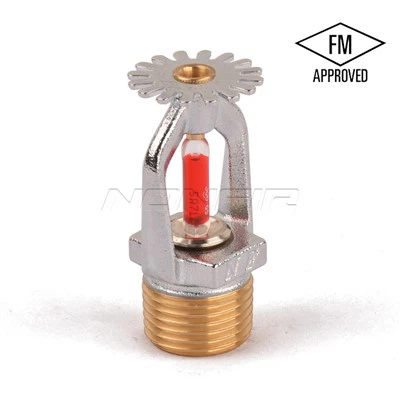

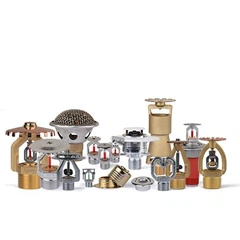

Standard coverage sprinkler:
Flow coefficient K≥80, vertical and pendant sprinklers with a maximum protected area of one sprinkler not exceeding 20m2 and sidewall sprinklers with a maximum protected area of one sprinkler not exceeding 18m.
Extended coverage (EC) sprinkler:
The flow coefficient K≥80, the maximum protection area of a sprinkler head is greater than the protection area of the standard coverage area sprinkler head, and does not exceed 36m2 sprinkler head, including vertical type, pendant type and side wall type extended coverage area sprinkler head.
The sprinkler is mainly used to protect most common materials packaged with or without a film, including non-foamed plastics packed in cartons, and the maximum stacking height of the goods is 10.7m. It can also be used for the protection of cylindrical packaging paper product warehouses and rubber tire warehouses.
Precautions for storage, installation, use and maintenance of sprinkler heads with expanded coverage:
1. Sprinklers should be stored in a dry environment between -15°C and 40°C, and should not be used in an environment below 4°C.
2. It is recommended to use polyester fluoroethylene sealing tape when installing the nozzle and the threaded connection of the pipe fittings, and the pipe fittings should be products that meet the national standards.
3. When installing the nozzle, use the corresponding wrench (30X32) of the wrench, and pay attention to the correct use, as shown in the figure below. The tightening torque of the nozzle is 10-20N.m, and it is strictly forbidden to exceed 30N.m.
4. The nozzle should be kept clean, and it is strictly forbidden to spray paint, paint, etc.
5. The nozzles to be installed should be stored in the protective foam box provided by the manufacturer. The construction personnel are not allowed to use or store other containers such as safety helmets and paint buckets at will.
6. It is not allowed to use throwing, grasping, dumping and other methods to pick and place the nozzle. It must be handled with care, and the glass ball is strictly prohibited from colliding. Damage to the nozzle frame, leakage and explosion caused by the rotation of the glass ball due to irregular operation or installation.