
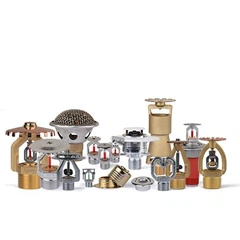
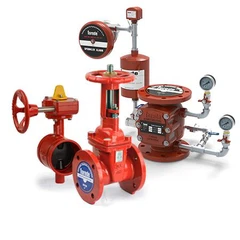
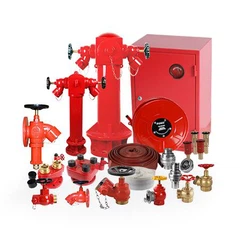

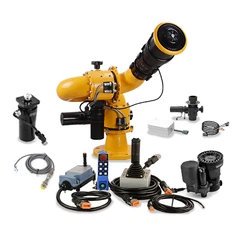
A fire hose is a hose used to transport flame-retardant liquids such as high-pressure water or foam. A traditional fire hose is lined with rubber and wrapped with a linen braid on the outside. Advanced fire hoses are made of polymeric materials such as polyurethane. There are metal joints at both ends of the fire hose, which can be connected to another rubber hose, polyurethane hose, PVC fire hose root hose to extend the distance or connected to a nozzle to increase the liquid injection pressure.
Performance requirements
1 The fabric layer of the hose should be woven evenly and the surface should be clean; no skipped double warp, broken double warp, skipped weft and scratches.
2 The thickness of the hose lining (or covering layer) should be uniform, and the surface should be smooth and flat without wrinkles or other defects.
3 The nominal size and tolerance of the inner diameter of the hose shall meet the requirements.
4 The length and size tolerance of the hose should meet the regulations.
5 The design working pressure and withstand pressure value of the hose shall meet the regulations.
6 Mass per unit length of hose
When the design pressure of the wet hose is 0.8MPA, the minimum burst pressure shall not be lower than 2.4MPA; when the design pressure is 1.0MPA, the minimum burst pressure shall not be lower than 3.0MPA; when the design pressure is 1.3MPA, the minimum burst pressure shall not be lower than 3.9 MPA;
The hose with design working pressure of 0.8MPA, 1.0MPA, 1.3MPA and 1.6MPA has a mass per unit length of 480G/M.
7 For hoses with design working pressures of 0.8MPa, 1.0MPa, 1.3MPa and 1.6MPa, the axial elongation and diameter expansion rate should not be greater than 5% under the design working pressure. For hoses with a design working pressure of 2.0MPa and 2.5MPa, the axial elongation and diameter expansion rate should not be greater than 8% under the design working pressure.
8 Under the action of water pressure, the hose should not twist counterclockwise when viewed along the direction of water flow. Under the design working pressure, the degree of torsion should not be greater than the specifications in Table 6.
9 Under the water pressure of 0.8MPa, bend the hose into a circular arc with the outer radius as specified in Table 7, and there should be no obvious wrinkles on the inner side of the bent part.
10 There should be no adhesion between linings (or covering layers).
11 The hose should be unrolled immediately, without curling, and can be re-tightened, and there should be no leakage under the design working pressure.
12 The lining (or covering layer) should have the following physical and mechanical properties.
Adhesion strength
The adhesion strength between the hose fabric layer and the lining (or covering layer) should not be lower than 20N/25mm. Elongation at break, the elongation at break of the hose lining (or cover layer) should be greater than the elongation at break of the fabric layer. Hot air aging, after the hot air aging test, the burst pressure of the hose and the adhesion strength of the lining (or covering layer) should not be lower than 75% of the measured value before aging.