


What are the materials used to manufacture the Two Way Breeching Inlet Valve?
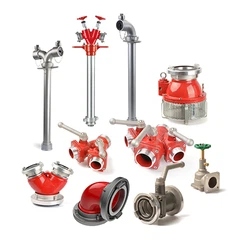
The Two Way Breeching Inlet Valve is an essential component in fire protection systems. It is necessary to ensure that firefighters have access to a reliable water source to extinguish fires quickly and efficiently. Various materials are used to manufacture the Two Way Breeching Inlet Valve, and they must meet strict safety and performance standards.
The body of the Two Way Breeching Inlet Valve is generally made of cast iron or ductile iron. Cast iron has excellent strength and durability properties, and hence it can withstand high-pressure water flow without failing. Ductile iron, on the other hand, has superior corrosion-resistant properties and is resistant to impact damage. Hence, it is preferred in environments where the valve may be exposed to harsh weather conditions.
The valve's internal parts, including the stem, disc, and seat, are usually made of brass or stainless steel. Brass is preferred for its excellent corrosion resistance and high thermal conductivity. While stainless steel is highly resistant to corrosion, making it suitable for use in harsh environments.
Other important components of the Two Way Breeching Inlet Valve, such as the gland and the spindle nut, are made of bronze. This alloy is known for its good wear resistance and resistance to corrosion, making it an ideal material for these components, which are critical to the valve's proper functioning.