

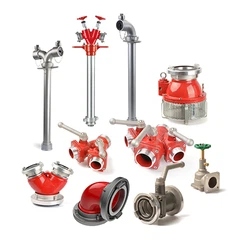
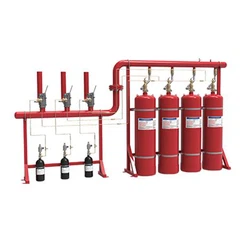

What is Fire Fighting Hose Shut Off Ball Valve
forede Fire Fighting Hose Shut Off Ball Valve is a vital emergency control device, enabling rapid water flow isolation and adjustment in firefighting systems. Its quarter-turn operation shuts off flow in 1–2 seconds, while a full-bore design preserves pressure and flow rate. Constructed with corrosion-resistant materials and fire-rated seals, it withstands extreme temperatures and harsh environments. standards,consistent quality and the very bestperformance.
General Description
forede Fire Fighting Hose Shut Off Ball Valve is a specialized flow control component engineered for emergency firefighting systems, designed to rapidly isolate or regulate water flow in fire hose lines. As a core safety device, it serves as the critical "on-off switch" between water sources (hydrants, fire trucks, or standpipes) and delivery hoses, enabling precise control over suppression operations. Its fundamental structure comprises four key components: a corrosion-resistant valve body, a hollow spherical core (ball), a reinforced valve stem, and a leak-proof sealing assembly . The ball features a full-bore through-hole that aligns with the valve body's inlet/outlet when open, allowing unobstructed water flow, and rotates 90 degrees (a quarter-turn) to block the passage when closed . Unlike traditional gate valves that require multiple rotations for operation, this quarter-turn mechanism ensures instantaneous flow shutdown-critical in emergency scenarios where every second impacts fire containment. Forede's design integrates fire-specific enhancements: the sealing system uses graphite-reinforced PTFE gaskets, maintaining integrity even at 1,093°C (2,000°F) for 30 minutes . The valve also includes a lockable handle to prevent accidental operation and a pressure relief port to avoid overpressurization . Functionally, it balances two core roles: as an isolation valve to disconnect damaged hoses or equipment, and as a flow regulator to adjust water volume for targeted suppression (e.g., switching between spray and jet modes). Compatible with standard fire hose couplings (NH/NST or Storz), it operates across a pressure range of 10–20 bar (145–290 psi), matching the demands of municipal, industrial, and mobile firefighting systems.,it acts as a fail-safe control point, ensuring responders maintain command over water delivery in high-stress emergency environments.
Advantages
forede Fire Fighting Hose Shut Off Ball Valve delivers five mission-critical advantages that outperform conventional flow control valves in firefighting scenarios, prioritizing speed, reliability, and operational safety.
Instantaneous flow control. The quarter-turn operation (90-degree handle rotation) shuts off water in 1–2 seconds, compared to 10–15 seconds for gate valves or globe valves . This rapid response is decisive when isolating leaking hoses, repositioning equipment, or preventing water damage after fire extinguishment. Forede's ergonomic handle-even with gloved hands-ensures one-handed operation, reducing responder fatigue during prolonged operations.
multi-agent compatibility supports versatile distinguishing missions. The valve's corrosion-resistant alloy body and seals work seamlessly with water, AFFF foam, and Class K wet chemicals-adapting to structural, vehicle, and kitchen fire scenarios . This eliminates the need for valve swaps between missions, streamlining fire truck readiness and reducing equipment inventory.
minimal flow restriction. The full-bore design ensures the ball's through-hole matches the hose diameter (1.5–6 inches), resulting in a flow coefficient (Cv) nearly equal to the hose's capacity . For example, a 2.5-inch valve delivers a Cv of 120, compared to 80 for a similarly sized gate valve, preserving water pressure and flow rate for effective suppression . This efficiency is vital for long hose lays or high-pressure applications.
Versatile compatibility and safety. The valve accommodates standard fire hose couplings (Storz, NH/NST, BSP) and integrates with both manual and automatic firefighting systems . A built-in lockout mechanism allows responders to secure the valve in "open" or "closed" positions, preventing accidental operation, while pressure relief vents protect against surge damage . This adaptability makes it suitable for diverse scenarios, from municipal fire trucks to industrial facilities.
How to Use Fire Truck Ball Shut Off Valve?
Using forede Fire Truck Ball Shut Off Valve effectively requires alignment with fire truck operational protocols, prioritizing speed, safety, and equipment protection.
Pre-Deployment Inspection (On-Truck Readiness)
Begin during the fire truck's daily check: Verify the valve's lever moves smoothly (no binding from vibration-induced debris) and the visual position indicator (red/green) aligns with actual status . Inspect the alloy body for dents or corrosion-pay special attention to the swivel inlet seal (replace if cracked). Confirm compatibility with the day's mission: Use 1.5" valves for wildland hoses, 2.5" for structural attack lines. Test the valve by briefly opening the truck's pump (10 bar pressure) to check for leaks-close immediately to avoid water waste.
On-Scene Connection & Activation
Hose Attachment: Align the valve's swivel inlet with the fire truck's discharge coupling-push until it locks (Storz) or hand-tighten (threaded), avoiding wrench-overtightening (damages swivel function). Attach the outlet to the attack hose using the matching coupling.
Pump Coordination: Signal the pump operator to gradually increase pressure to 15–20 bar. The DPE seals will self-tighten as pressure builds, ensuring zero leakage .
Lever Positioning: Place the lever in the "OPEN" position (counterclockwise 90°) and secure it with the optional locking clip to prevent accidental closure during hose drag.
Emergency Operation
Flow Adjustment: For partial flow (e.g., switching from stream to fog nozzle), rotate the lever incrementally-but avoid prolonged partial opening (causes seat erosion).
Rapid Shutdown: Rotate clockwise 90° to "CLOSED" if the hose is damaged or the fire is contained. The full-bore design stops flow instantly, preventing water hammer .
Vehicle Relocation: Keep the valve closed during truck movement to avoid hose kinking; the swivel inlet allows repositioning without disconnection.
Post-Incident Maintenance (Return to Station)
Flush the valve with clean water (via the truck's onboard wash system) to remove foam residue or debris. Inspect the seats-replace if worn (use forede's quick-change kit). Lubricate the swivel inlet with silicone grease (compatible with alloy and seals). Store the valve with protective caps on inlet/outlet, and document the inspection in the truck's maintenance log .
Application
Hose Reel Outlets:
Hose Reel Outlets are primary mounting points. Urban fire trucks equip 2–4 hose reels (1.5"–2" diameter) with the valve, positioned on the vehicle's side or rear for quick access . When deploying attack lines, firefighters use the valve to start/stop flow without returning to the pump panel-critical for interior structural fires where hose maneuverability is limited. The 360° swivel inlet prevents hose twisting as the truck repositions.
Pump Discharge Manifolds
Pump Discharge Manifolds integrate multiple valves (2.5"–3" size) to distribute flow to parallel hose lines. For large-scale fires (e.g., warehouse blazes), this allows simultaneous operation of 3–4 attack hoses at consistent pressure-avoiding the pressure drops common with globe valves . Airport crash tenders use manifold-mounted valves to supply high-volume foam lines for aircraft fire suppression.
Foam Proportioning Systems
Foam Proportioning Systems rely on the valve's precision. Fire trucks equipped with foam tanks install the valve between the water pump and proportioner, regulating flow to ensure accurate foam-to-water ratios (0.3%–6%) . This is vital for Class B liquid fires (gasoline, oil) where incorrect dilution reduces suppression effectiveness.
Wildland Fire Truck Auxiliary Lines
Wildland Fire Truck Auxiliary Lines use ruggedized valve versions. These vehicles equip small-diameter (1.5") hoses with the valve for brush fire suppression, where the alloy body resists damage from debris and the lever operates reliably with gloved hands.