
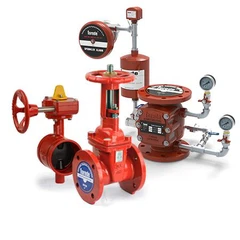

Wet alarm check valves and dry alarm check valves are two types of valves commonly used in fire protection systems. Wet alarm check valves are designed to be used in fire protection systems that are "wet," meaning they are filled with water and are always in operation, while dry alarm check valves are used in fire protection systems that are "dry," meaning they are filled with compressed air or nitrogen and only become active in the presence of a fire.
One of the key differences between the two types of valves is their construction. Wet alarm check valves have a valve body made of cast iron, which provides greater strength and durability in wet environments. The valve is also equipped with a water flow detector and alarm, which is activated when water flows through the valve. This allows the fire department to be immediately alerted to the presence of a fire, facilitating a more rapid response.
Dry alarm check valves, on the other hand, are typically made of lightweight materials such as plastic or aluminum. This makes them more suitable for dry environments, where they are less likely to be affected by moisture. They also do not have a water flow detector or alarm, as they are not continuously filled with water.
Another key difference between the two types of valves is their function. Wet alarm check valves are designed to prevent backflow in fire protection systems, ensuring that water can only flow in one direction. This helps to ensure that the system is always fully charged and ready to react to a fire. Dry alarm check valves, on the other hand, are designed to prevent air from flowing back into the system, which could cause serious damage to the system.
Ultimately, the choice between wet and dry alarm check valves depends on the specific needs of the fire protection system. Wet alarm check valves are typically used in commercial and industrial applications, where fires can occur at any time. Dry alarm check valves are more commonly used in residential sprinkler systems, where the risk of fire is generally lower.
In conclusion, both wet and dry alarm check valves play a critical role in fire protection systems and are essential to ensuring that a building is adequately protected from fire. While wet alarm check valves are designed for wet environments and have a water flow detector and alarm, dry alarm check valves are better suited for dry environments and prevent air from flowing back into the system. Choosing the right valve for a given application is key to ensuring optimal performance and safety in the event of a fire.