


What is Fire Fighter Ground Monitor
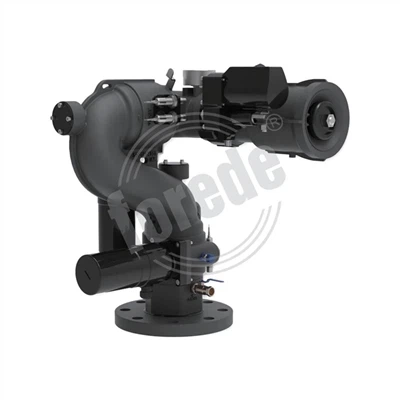
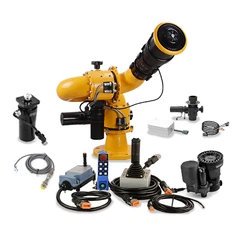
forede Fire Fighter Ground Monitor is a portable fire suppression device crafted from lightweight aluminum alloy (10-15 kg), designed for mobile use in large-scale fire scenarios. Key features include a 360° rotating base, vertically adjustable nozzle (-15° to 85°), interchangeable jet tips (narrow stream/wide spray), and intuitive control levers-delivering stable, long-range (40–60 meters) suppression.
General Description
forede Fire Fighter Ground Monitor is a portable, high-performance fire suppression device engineered for rapid deployment in large-scale fire scenarios, constructed primarily from lightweight aluminum alloy to balance mobility and structural integrity. Unlike fixed fire monitors, it is designed for on-the-go use, serving as a mobile "water cannon" that delivers concentrated, controlled streams of water or fire foam to extinguish large blazes efficiently.
At its core, the device features a compact, corrosion-resistant aluminum alloy body-chosen for its high strength-to-weight ratio, making the monitor significantly lighter than steel alternatives while maintaining durability. Key components include a 360° rotating base (enabling full horizontal coverage) and a vertically adjustable nozzle (ranging from -15° to 85°) that controls the jet's elevation. The nozzle is precision-engineered to produce stable, well-formed jet streams, with interchangeable tips to switch between two primary jet modes: a narrow, long-range stream (for targeting distant fires) and a wide, diffused spray (for covering large surface areas).
Equipped with integrated handles for easy carrying and a stable base with adjustable feet (to anchor on uneven ground), the monitor connects to fire hoses via standard couplings, linking to water sources such as fire trucks, hydrants, or portable pumps. Its lightweight design (typically10-15 kg) allows a single operator to transport and set up the device in minutes, while the intuitive control levers regulate water flow rate and jet direction. It functions as a mobile, high-capacity suppression tool that brings the power of fixed fire monitors to dynamic emergency scenes, ideal for tackling fires too large for handheld hoses.
Advantages
forede Fire Fighter Ground Monitor offers five key advantages centered on its aluminum alloy construction and core performance traits-lightweight, stable jet flow, superior jet shape, and ease of operation-outperforming traditional heavy-duty monitors and handheld hoses.
ultra-lightweight mobility reduces deployment effort. Crafted from high-grade aluminum alloy, the monitor weighs 10-15 kg, 40–50% lighter than steel models of similar capacity. This allows a single operator to carry it across job sites, up stairs, or over rough terrain without fatigue-critical in emergencies where every minute counts. Unlike bulky steel monitors that require two or more people to move, its portability ensures rapid setup in remote or hard-to-reach areas, such as warehouse back corners or construction sites.
stable jet flow ensures consistent suppression effectiveness. The precision-machined nozzle and internal flow channel minimize turbulence, delivering a steady, non-dispersing jet even at high pressures (up to 16 bar). This stability ensures the water or foam reaches the target fire without losing momentum, covering distances of up to 40–60 meters-far beyond the range of handheld hoses (typically 20-35 meters). For large fires, this means suppressing the blaze from a safe distance, reducing operator exposure to heat and smoke.
superior jet shape adapts to diverse fire scenarios. The interchangeable nozzle tips produce two optimized jet modes: a narrow, pencil-thin stream for penetrating deep into large blazes (e.g., stacked pallets or industrial equipment) and a wide, fan-shaped spray for smothering surface fires (e.g., fuel spills or warehouse floors). Unlike generic monitors with irregular jet patterns, forede's design ensures uniform coverage-either focused power for targeted suppression or broad coverage for fast fire containment-enhancing versatility across fire types.
aluminum alloy durability ensures long-term reliability. The corrosion-resistant aluminum alloy body withstands exposure to water, foam, and harsh weather conditions, avoiding rust or degradation common in steel monitors. The material is also impact-resistant, able to withstand accidental bumps or drops during transport-critical for rugged industrial or construction site use. With minimal moving parts and no complex electronics, the monitor requires little maintenance beyond routine cleaning, ensuring it remains operational for years with minimal upkeep.
Can Anyone Use a Fire Fighter Ground Monitor?
While forede Fire Fighter Ground Monitor is designed for ease of operation, not everyone can or should use it-usability depends on physical capability, basic safety knowledge, and emergency context, despite its intuitive design.
First, moderate physical strength is required. Though lightweight (10–15kg), transporting the monitor across uneven terrain or up stairs demands basic strength, and setting it up (attaching hoses, adjusting the base) requires manual dexterity. Connecting the monitor to fire hoses also involves tightening couplings, which may be challenging for individuals with limited hand strength. Additionally, while the monitor's base is stable, operating it under high pressure (up to 16 bar) requires holding the control levers steady to avoid sudden movements-individuals with mobility or balance issues may struggle to maintain control.
Second, basic fire safety knowledge is essential. Users must understand how to identify fire types: the monitor is effective for Class A (solid fuels) and Class B (flammable liquids) fires but should never be used on electrical fires (without first cutting power) or Class D (metal) fires. Improper use-such as aiming the jet at flammable vapor clouds or using the wrong jet mode-can escalate the fire or cause injury. Users also need to know to maintain a safe distance (at least 10 meters for large fires) to avoid heat or smoke exposure, as the monitor's long range is designed for remote operation.
Third, emergency context and training matter. In non-emergencies, no one should use the monitor-tampering can damage components or waste water, leaving it non-functional when needed. In emergencies, trained personnel (e.g., fire safety officers, industrial workers with fire training) are ideal users, as they understand flow rate adjustment, jet mode selection, and hazard assessment. However, if no trained help is available, capable adults with basic safety sense can use the monitor for small to medium-sized fires, provided they follow simple guidelines (e.g., anchor the base, aim at the fire's base, start with low flow).
Fourth, age and maturity are critical considerations. Children and teenagers should never operate the monitor-they lack the physical strength and safety judgment to handle high-pressure water flow or assess fire risks. Even adults with limited experience should only attempt use if the fire is small, controllable, and they feel confident in their ability to stay safe. In professional settings (e.g., industrial plants), employers often require basic training to ensure users understand proper setup, operation, and safety protocols.
In summary, while the monitor's design minimizes skill barriers, "anyone" is not accurate. Appropriate users are physically capable adults with basic fire safety knowledge, acting in genuine emergencies-trained personnel are preferred, but capable untrained individuals can use it effectively for manageable fires when no other help is available.
Application
Industrial Facilities
Industrial Facilities are primary applications. Manufacturing plants, especially those producing or storing flammable materials (e.g., chemicals, plastics, or oil), use the monitor to suppress large equipment fires or warehouse storage blazes. Its lightweight design allows quick deployment between production lines, while the long-range jet (40–60 meters) enables operators to tackle fires in high racks or distant corners from safety. Warehouses with tall storage shelves also benefit from its vertical adjustment range, reaching fires on upper levels without the need for ladders.
Construction Sites
Construction Sites rely on its portability and ruggedness. Construction zones, with their temporary structures, flammable materials (e.g., wood, paint, or fuel), and uneven terrain, require a mobile suppression tool that can be easily transported across the site. The monitor's aluminum alloy body resists dust and debris, while the adjustable feet anchor it on gravel or dirt surfaces. It is used to suppress fires in scaffolding, construction vehicles, or stockpiles of building materials, often connected to portable water pumps for off-grid use.
Oil and Gas Sites
Oil and Gas Sites leverage its stable jet flow for fuel fires. Refineries, oil depots, and gas stations use the monitor to address spills of gasoline, diesel, or crude oil. The narrow jet mode penetrates burning fuel pools, while the wide spray smothers surface fires to prevent re-ignition. Its corrosion-resistant aluminum alloy construction withstands exposure to oil and chemicals, ensuring reliability in harsh industrial environments. The monitor is often positioned near storage tanks or loading docks for rapid response.
Large Public Spaces
Wildland Fire Truck Auxiliary Lines use ruggedized valve versions. These vehicles equip small-diameter (1.5") hoses with the valve for brush fire suppression, where the alloy body resists damage from debris and the lever operates reliably with gloved hands.