

What is an Automatic Fire Monitor?
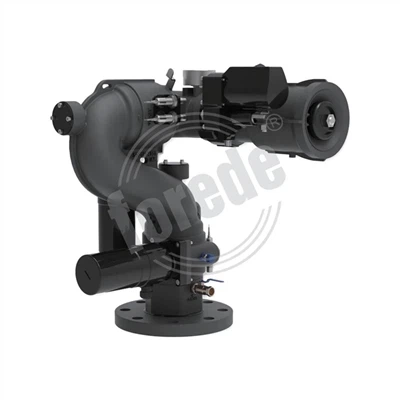
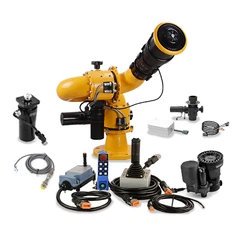
An Automatic Fire Monitor is an intelligent, self-actuating firefighting device designed to detect, track, and suppress fires without the need for direct human intervention. It integrates flame detection sensors, servo-driven positioning systems, and high-capacity water/foam discharge nozzles into a single automated platform. Unlike manual or remote-controlled monitors, automatic fire monitors operate autonomously - upon detecting a fire, they automatically aim at the flame, activate the suppression agent, and continue tracking until the fire is extinguished.
These systems are typically constructed from hard anodized aluminum alloy to withstand harsh industrial environments. They feature dual positioning technologies - infrared and image positioning - to locate fire sources quickly and accurately, and automatically calculate the discharge parabola to correct the muzzle elevation for precise targeting. With flow rates ranging from 300 LPM to 600 LPM, automatic fire monitors provide rapid, reliable fire suppression in high-risk facilities where every second counts.
Modern automatic fire monitors are equipped with electrically operated columnar/mist nozzles that automatically switch the water outlet state based on the distance to the fire source. They also feature 24/7 color image monitoring cameras, limit position stop switches for hardware protection, and brushless DC motors for quiet, reliable operation. The entire system can be integrated with fire alarm panels, smoke exhaust systems, and building automation networks for comprehensive fire protection.
Automatic fire detection & tracking (IR + UV sensors)
flow Rate (300-600 LPM)
Automatic & manual dual-mode operation

Rapid Response
Targets fire source within 30 seconds; extinguishes within 3 minutes(Adjustable).
Precision Targeting
Dual infrared + image positioning for accurate fire source location.
24/7 Autonomous Operation
Monitors continuously; activates automatically upon fire detection.
Standards Compliant
Meets GB 19156-2019
Types of FOREDE Automatic Fire Monitors
Different configurations suit various flow requirements, installation spaces, and hazardous environments.

ZDMS Series Automatic Scanning Positioning Monitor
The ZDMS Series automatic scanning positioning fire monitor is FOREDE's flagship automatic fire monitor system. It is constructed from hard anodized aluminum alloy and features a constant nozzle that can be straight stream. The system employs infrared ray and UV sensor technology to scan and locate the fire point.
Key models include the ZDMS0.6/5S (300 LPM) and ZDMS0.6/10S (600 LPM). Both offer 360° horizontal swing, -90° to +30° vertical elevation, and a targeting time of ≤30 seconds. The system supports RS485 communication and operates on monitoring power of 1W and detecting power of 50W. Suitable for mounting heights of 8-15 meters
How to Choose an Automatic Fire Monitor
Proper selection ensures reliable automatic fire detection and suppression in your facility.
When selecting an automatic fire monitor, consider the following key parameters:
Flow rate and throw distance – Based on the protected area size and hazard level. FOREDE offers models from 300/600 LPM (ZDMS0.6/5S-10S) to . Throw distances range from 30m to 35m.
Detection technology – Infrared + UV combined sensing provides reliable fire detection while avoiding false alarms from sunlight and artificial light. Some models also feature image positioning for enhanced accuracy.
Installation height and coverage – ZDMS series monitors are designed for mounting heights of 8-15 meters, with monitoring radii up to 30-35 meters. Ensure the monitor's coverage matches your facility's layout.
Power supply and communication – Most automatic monitors operate on 100-230VAC, with RS485 communication for integration with fire alarm panels and building automation systems.
Dual-mode operation – Look for systems that offer both automatic and manual control modes, allowing firefighters to take over when needed.
Flow capacity: 300 – 600 LPM (constant)
Throw distance: 30 – 35 meters
Detection: IR + UV sensors
Rotation: 360° horizontal, -90° to +30° vertical
Certification: GB 19156-2019
Control: Automatic + Manual + Remote
Applications of Other Type Fire Monitors
Fire monitors provide critical fire protection in high-risk facilities where rapid, unattended response is essential.


Petrochemical facilities – Refineries, chemical plants, and tank farms where flammable liquids and gases pose constant fire risks. Explosion-proof automatic monitors are essential in Zone 1/2 hazardous areas.
Airports and hangars – Aircraft hangars, fueling areas, and maintenance yards require rapid fire response to protect valuable assets and ensure passenger safety.
Power generation facilities – Power stations, turbine enclosures, and coal conveyors benefit from automatic monitors that provide 24/7 protection.
Tunnels and transportation terminals – Road tunnels, underground passages, and transport hubs where rapid fire suppression is critical for life safety.
Warehouses and storage facilities – Flammable material warehouses, ammunition and explosives storage, paint factories, and pharmaceutical companies.
Maritime and offshore – Ships, offshore platforms, and FPSOs where automatic fire monitors provide essential fire protection in remote environments.
Compared to manual or remote-controlled monitors, automatic fire monitors offer unmatched speed and reliability - detecting and suppressing fires within minutes of ignition, significantly reducing property damage and safeguarding lives.
Automatic Fire Monitor FAQ
Q1: How does an automatic fire monitor work?
A: The monitor continuously monitors the protected area using IR and UV flame sensors. When a fire is detected, the system automatically scans to locate the fire source, locks onto the target, opens the water valve and activates the fire pump, and discharges water or foam precisely at the fire. The entire process from detection to suppression typically takes less than 3 minutes.
Q2: What is the difference between automatic and remote-controlled fire monitors?
A: Remote-controlled monitors require an operator to manually aim and activate the device via a control panel or joystick. Automatic monitors operate autonomously - they detect, track, and suppress fires without any human intervention. Many automatic monitors also offer manual override capability for situations where operator intervention is preferred.
Q3: What detection technologies are used?
A: Most automatic fire monitors use a combination of infrared (IR) and ultraviolet (UV) sensing technology to detect flames. This dual-sensor approach allows the system to identify real fires while avoiding false alarms from sunlight, artificial lighting, or welding. Advanced models also incorporate image positioning for even greater targeting accuracy.
Q4: Can automatic fire monitors be used in explosive environments?
A: Yes. These monitors feature dust-proof, and waterproof construction, making them suitable for petroleum, chemical, and nuclear industries.
Q5: What maintenance does an automatic fire monitor require?
A: Regular maintenance includes: cleaning sensor lenses to ensure accurate detection, inspecting nozzles for debris or wear, testing the automatic activation sequence periodically, lubricating moving parts (gears, actuators), and verifying communication with the fire alarm panel. Most systems include self-diagnostic functions to simplify maintenance.
Q6: What standards apply to automatic fire monitors?
A: Automatic fire monitors are designed to meet GB 19156-2019 (Chinese standard for fire monitors)
Contact now