

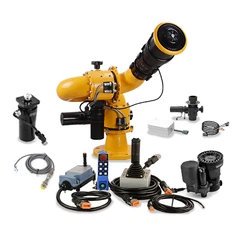
What is Stainless Steel Manual Fire Monitor?
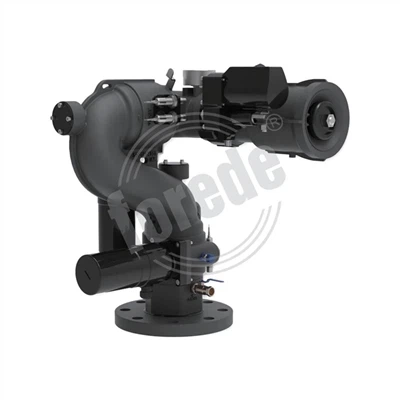
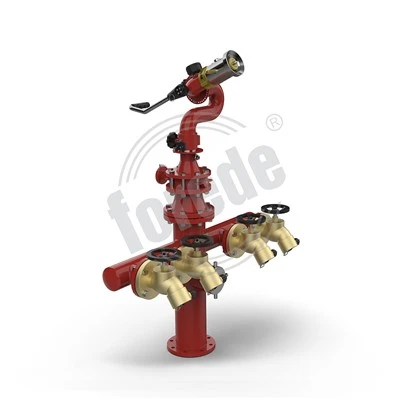
A Stainless Steel Manual Fire Monitor is a durable, high‑flow firefighting device designed for fixed installation in industrial and marine environments. Constructed entirely from corrosion‑resistant stainless steel (SS304 or SS316), it delivers large volumes of water or foam over long distances while being manually operated by a firefighter or trained operator. Unlike remote‑controlled monitors, the manual version offers simplicity, reliability, and cost‑effectiveness without reliance on power or electronics.
These monitors are ideal for oil refineries, chemical plants, offshore platforms, and tank farms where exposure to harsh weather, saltwater, or corrosive chemicals demands superior material longevity. With robust gearing, 360° horizontal rotation, and 0‑90° vertical adjustment, the stainless steel manual fire monitor provides precise aiming and dependable performance even in the most demanding conditions.
Superior corrosion resistance (SS304 / SS316)
High flow capacity (1200-7200 LPM)
Manual operation – tiller control and handwheel control

Heavy‑Duty Construction
Precision‑cast stainless steel body, verified by 30 bar pressure test.
Smooth Operation
Sealed worm gear drive for effortless horizontal and vertical adjustment.
Versatile Nozzle Options
Compatible with straight tip, fog, or foam‑aspirating nozzles.
Standard
Based
Meets EN 15767, GB19156-2019
Types of FOREDE Stainless Steel Manual Fire Monitors
Different configurations suit various flow requirements, installation spaces, and hazard types.

SS304 Fixed Manual Fire Monitor
The standard stainless steel manual monitor is the most common choice for general industrial fire protection. It features a 304 stainless steel body, dual‑handwheel controls (horizontal and vertical), and a brass/SS nozzle tip. Flow rates typically range from 800 LPM to 4000 LPM at 7‑10 bar pressure. The monitor is surface‑mounted on a flange or pipe elbow, providing 360° horizontal rotation and +90° to -30° vertical movement.
This model is widely used in refineries, power plants, and warehouses where cost‑effectiveness and corrosion resistance are key. Optional accessories include a foam tube, adjustable fog nozzle, or shut‑off ball valve.
Heavy‑Duty SS316 Manual Fire Monitor
For offshore platforms, marine vessels, and chemical plants exposed to chlorides or acidic environments, SS316 manual monitors offer maximum pitting resistance. The material upgrade ensures decades of service in saltwater or high‑humidity conditions.
These monitors often include additional features: locked position detents, extended handwheels for thermal protection, and polished internals to reduce friction. Flow rates up to 4800 LPM are available, making them suitable for large tank fire protection.

How to Choose a Stainless Steel Manual Fire Monitor
Proper selection ensures long service life and effective fire control.
When selecting a stainless steel manual fire monitor, consider the following key parameters:
Flow rate – based on design area and hazard.
Operating pressure – 8 Bar, match the available pump pressure (typical range 6‑12 bar).
Material – SS304 for general use, SS316 for coastal or chemical environments.
Rotation coverage – full 360° horizontal and -45° to +75° vertical is standard.
Inlet size – flanged 2″, 3″, 4″, 6″ or custom.
Nozzle type – straight bore, fog, or foam‑aspirating.
Also verify the monitor's maximum working pressure (PN16) and whether it includes a drain valve and pressure gauge.
Flow capacity: 1200 – 7200 LPM (customizable)
Material: SS304, SS316 stainless steel
Rotation: 360° horizontal, -45 to +75° vertical
Inlet flange: ANSI, DIN, JIS or BS standards
Certification: GB 19156-2019, EN 15767, CE,
Optional: Manual
Applications of Stainless Steel Manual Fire Monitors
These monitors are the backbone of fire protection in harsh and high‑risk environments.


Oil & gas facilities (refineries, tank farms, loading racks) use stainless steel manual monitors for fixed roof and floating roof tank protection.
Chemical plants handling aggressive substances rely on SS316 monitors to withstand corrosion from spills and fumes.
Offshore platforms and FPSOs require marine‑grade stainless steel monitors for firewater systems.
Shipbuilding – installed on deck and in engine rooms per SOLAS regulations.
Airports – used in fire stations and fuel depots.
Power plants – protect turbine enclosures and coal conveyors.
Compared to painted carbon steel monitors, stainless steel versions deliver decades of maintenance‑free service in aggressive environments, reducing total cost of ownership and increasing system readiness.
Stainless Steel Manual Fire Monitor FAQ
Q1: Why choose stainless steel over carbon steel for a manual monitor?
A: Stainless steel provides superior corrosion resistance, especially in saltwater, chemical, or high‑humidity environments. It does not require painting or regular anti‑corrosion maintenance. While the initial cost is higher, the lifespan and reliability justify the investment.
Q2: What flow rates are available for manual stainless steel monitors?
A: FOREDE offers models from 1200 LPM up to 7200 LPM, with custom sizes available. Working Pressure is 8 bar or 10 bar. Higher flows require larger pipe sizes.
Q3: Can a manual monitor be upgraded to remote control later?
A: Some models are designed as "manual‑ready", allowing installation of electric or hydraulic actuators without replacing the entire monitor. FOREDE offers conversion kits. However, most fixed manual monitors have a different gearbox design than dedicated remote monitors; it is best to decide the control type at the time of purchase.
Q4: What maintenance does a stainless steel manual monitor require?
A: Very little. Annual checks: lubricate handwheel gears (silicon grease), inspect the nozzle for debris, verify free rotation, and check flange gaskets. No painting or corrosion treatment needed. Rinse with fresh water after foam use.
Q5: Is a shut‑off valve required upstream of the monitor?
A: Yes, a manual or automatic butterfly or gate valve should be installed to allow isolation for maintenance and to control flow. Some monitors include an integrated ball valve; others require a separate valve. The valve should also be stainless steel or suitably coated.
Q6: What international standards apply to stainless steel manual monitors?
A: EN 15767‑1 (European standard for monitors), NFPA 1964 (US standard for water spray nozzles and monitors), and ISO 7076‑5. Marine monitors must also meet IMO MSC/Circ. 582 and classification society rules (ABS, DNV, LR, CCS).