


What is fire monitor
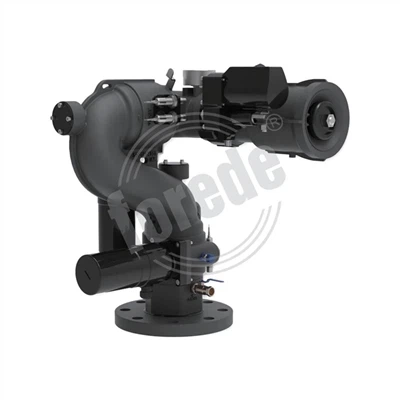
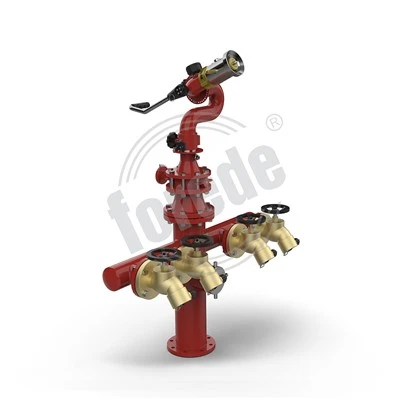
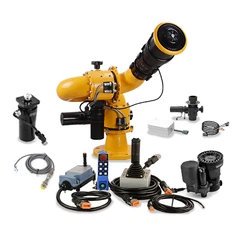
Fire monitor (Also commonly referred to as a water monitor, fire water monitor, or fire cannon) is a high-capacity firefighting device designed to deliver large volumes of water or foam over long distances to control or extinguish fires. this powerful piece of fire-fighting equipment is engineered to deliver high-volume, long-distance streams of extinguishing agents-such as water, foam, or dry powder-to suppress large-scale fires in environments where traditional fire hoses or handheld nozzles are insufficient. From industrial facilities and petrochemical plants to ports, ships, and municipal fire departments, fire monitors play an indispensable role in protecting lives, property, and critical infrastructure from the devastating impact of fires.
Historical Evolution of Fire Monitor
The concept of using directed streams of water to fight fires dates back centuries, but the modern fire monitor as we know it today has evolved significantly over the past 150 years. Early fire-fighting devices were simple, manually operated nozzles attached to hoses, which were limited by their range and flow rate. The first mechanical fire monitors emerged in the late 19th century, driven by the industrial revolution and the need to protect large factories, warehouses, and urban areas from increasingly destructive fires.
01
In the early 1900s, advancements in metalworking and fluid dynamics led to the development of more robust, high-pressure fire monitors. These early models were typically mounted on fire trucks or fixed structures and featured manually operated rotating heads, allowing firefighters to adjust the direction and angle of the water stream. The introduction of motorized fire pumps in the mid-20th century further enhanced the performance of fire monitors, enabling higher flow rates and longer reach.
02
The latter half of the 20th century saw the integration of electronic and automated technologies into fire monitor design. Remote-controlled and automated fire monitors were developed, allowing for operation from a safe distance or even fully autonomous operation in response to fire detection signals. These advancements were particularly critical for high-risk environments such as petrochemical plants, where human exposure to fires could be fatal.
03
In recent decades, the rise of digital technology, artificial intelligence (AI), and the Internet of Things (IoT) has further transformed fire monitor design. Modern fire monitors can now be integrated with fire detection systems, CCTV cameras, and central control panels, enabling real-time monitoring, automatic targeting, and remote operation via smartphones or computers. These technological advancements have significantly improved the efficiency, reliability, and safety of fire monitors, making them an even more critical component of modern fire protection systems.
04

Key Advantages of Fire Monitor

Long Range and High Flow Rate
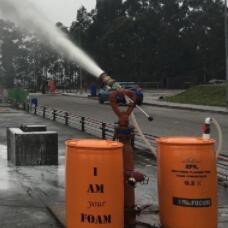
Fire monitors are capable of projecting extinguishing agents over distances of up to 100 meters or more, with flow rates ranging from 500 to 5,000 liters per minute (depending on the model). This allows for effective suppression of fires in large open areas or hard-to-reach locations, such as tall buildings, industrial tanks, or ship decks.

Precision Targeting
Most fire monitors feature 360-degree horizontal rotation and adjustable vertical tilt, allowing for precise targeting of the fire source. Advanced models may also include automated targeting systems, which use sensors to detect the fire and adjust the stream direction automatically.
Versatility
Fire monitors can be designed to use a variety of extinguishing agents, including water, foam, dry powder, and chemical agents. This makes them suitable for suppressing different types of fires, such as Class A (solid materials), Class B (flammable liquids), Class C (electrical fires), and Class D (combustible metals).

Durability and Reliability
Fire monitors are constructed from high-quality materials (such as stainless steel, aluminum, or brass) to withstand harsh environments, high pressures, and extreme temperatures. They are also designed to be low-maintenance, ensuring reliable performance in emergency situations.
Classification by Control Method
Fire monitors can be classified based on their control method, which determines how the monitor is operated. The three main control methods are manual, remote-controlled, and automated.

Manual Fire Monitors
Manual fire monitors are operated directly by a firefighter, who adjusts the rotation, tilt, and flow rate using handwheels or levers. These monitors are simple in design, reliable, and easy to maintain, making them ideal for use in situations where remote control or automation is not necessary. Manual fire monitors are commonly used in small industrial facilities, warehouses, and municipal fire departments.
- Key features of manual fire monitors include:
- Handwheels or levers for adjusting rotation (360 degrees) and tilt (typically -45 to +90 degrees).
- Manual flow control valve for adjusting the flow rate.
- Locking devices to fix the monitor in a specific position.
- Simple, durable construction with minimal moving parts.
Remote Controlled Fire Monitors
Remote-controlled fire monitors are operated from a safe distance using a remote control panel (wired or wireless). This allows firefighters to adjust the monitor's position and flow rate without being exposed to the fire's heat, smoke, or toxic fumes. Remote-controlled monitors are commonly used in high-risk environments, such as petrochemical plants, refineries, and offshore platforms.
Key features of remote-controlled fire monitors include:
- Wired or wireless remote control for adjusting rotation, tilt, and flow rate.
- Electric motors, hydraulic actuators, or pneumatic cylinders for driving the rotation and tilt mechanisms.
- Feedback sensors to provide the operator with real-time information about the monitor's position and flow rate.
- Emergency stop button to shut down the monitor in case of a malfunction.


Automated Fire Monitors
Automated fire monitors are designed to operate without direct human intervention, using sensors and a control system to detect and suppress fires automatically. These monitors are integrated with fire detection systems (such as smoke detectors, heat detectors, or flame detectors) and can be programmed to respond to specific fire conditions.
The automatic tracking and targeting jet fire extinguishing device (spray type) integrates infrared sensing, signal processing, communication control, computer technology, and mechanical transmission to provide 24/7 fire detection within its coverage area.
Key features of automated fire monitors include:
- Fire detection sensors (smoke, heat, flame) to detect the presence of a fire.
- Automated targeting system to locate the fire source and adjust the monitor's position.
- Control system to start the flow of extinguishing agent and adjust the flow rate based on the fire's intensity.
- Integration with other fire protection systems (such as fire alarms, sprinklers, and ventilation systems) to provide a comprehensive fire protection solution.
- Self-diagnostic features to monitor the monitor's performance and detect malfunctions.
Technical Specifications for Fire Monitors
The flow rate is the volume of extinguishing agent that the monitor can deliver per unit time, typically measured in liters per minute (LPM) or gallons per minute (GPM). The flow rate ranges from 500 LPM (132 GPM) for small mobile monitors to 5,000 LPM (1,320 GPM) for large industrial monitors. According to GB 19156-2019, the minimum flow rate for a fire monitor is 16L/s (960 LPM) for continuous water or foam mixture spraying, and 8L per single shot for pulsed spraying. The flow rate is determined by the size of the inlet, the nozzle, and the supply pressure.
The range is the maximum distance that the stream of extinguishing agent can reach, typically measured in meters or feet. The range of a fire monitor depends on the flow rate, pressure, nozzle design, and the type of extinguishing agent. For water fire monitors, the range typically ranges from 30 meters (98 feet) for small mobile monitors to 100 meters (328 feet) or more for large industrial monitors. According to GB 19156-2019, the range of a fire monitor is defined as the distance from the vertical projection of the monitor's outlet center to the farthest point where the medium is continuously scattered for at least 10 seconds.
The pressure is the force per unit area exerted by the extinguishing agent on the monitor's internal components, typically measured in bar (psi). The operating pressure of a fire monitor ranges from 10 to 30 bar (145 to 435 psi), depending on the type and application. The maximum pressure that the monitor can withstand (test pressure) is typically 1.5 times the operating pressure, ensuring that the monitor can handle sudden pressure surges.
The rotation and tilt range of a fire monitor determine its coverage area. Most fire monitors have a horizontal rotation range of 360 degrees, allowing for full coverage of the surrounding area. The vertical tilt range typically ranges from -15 degrees (downward) to +90 degrees (upward), allowing the monitor to target fires at ground level or above.
1. Aluminum Alloy
Lightweight and easy to install
Good corrosion resistance
Common for portable and manual fire monitors
Suitable for municipal fire protection and general industrial use
2. Stainless Steel
Excellent corrosion resistance
High strength and long service life
Ideal for offshore platforms, marine environments, and chemical plants
Common grades: SS304 and SS316
3. Brass / Bronze
Good anti-corrosion performance
Strong resistance to seawater and chemicals
Often used in marine fire monitors and special industrial systems
4. Carbon Steel
High mechanical strength
Lower cost
Usually coated with epoxy or anti-corrosion paint
Suitable for indoor fixed fire systems
5. Ductile Iron
Strong and durable
Common in heavy-duty fixed monitors
Requires surface coating for corrosion protection


forede® specialize in the research and development and production of fire monitors, offering a complete product line covering all specifications including manual fire monitors, electric controlled fire monitors, automatic fire monitors, meeting the needs of various firefighting and rescue scenarios.
We welcome global customers to inquire about pricing. To provide you with a fast and accurate solution, please provide key parameters such as flow rate, working pressure, inlet standard and dimensions when inquiring. We will provide you with a professional quote and technical support as soon as possible.