


What is Fire Fighting Fire Hose Reel Cabinet
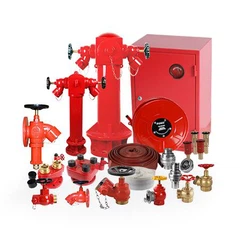
forede Fire Hose Cabinet is a purpose-built storage unit for fire hoses and accessories, crafted from galvanized steel or 304 stainless steel with epoxy coating for durability. It features quick-open doors, integrated alarms, and LED lighting. Available in surface, semi-recessed, and fully recessed models, it accommodates 25–50m hoses and custom accessories.
General Description
forede Fire Hose Cabinet is a specialized fixed storage unit engineered to house, protect, and organize fire hoses, nozzles, and comply firefighting accessories in commercial, industrial, and public buildings, ensuring immediate accessibility during fire emergencies. Unlike generic storage cabinets, it is purpose-built to preserve the integrity of fire suppression equipment while complying with strict fire safety regulations, serving as a critical stationary component of building fire protection systems. At its core, the cabinet features a robust structural frame constructed from either 1.2mm galvanized steel with epoxy powder coating or 304 stainless steel (for corrosive environments), offering resistance to impact, rust, and environmental wear . The cabinet body integrates multiple functional zones: a main compartment with a hose reel mounting bracket (accommodating 25–50m hoses of 1.5"–2.5" diameter), a side shelf for nozzles and couplings, and a dedicated cavity for a manual fire alarm button . A key design element is the quick-access door system-available in breakable tempered glass (with corner safety film) or a push-to-open metal panel, both engineered to open in under 1 second without tools .
Advantages
forede Fire Hose Cabinet delivers four mission-critical advantages that outperform generic storage solutions and traditional unprotected hose storage, directly addressing the challenges of equipment preservation and emergency readiness.
Equipment integrity protection extends service life. The cabinet's sealed design with weatherproof gaskets creates a controlled internal environment, shielding hoses from UV radiation (which degrades rubber), dust accumulation, and moisture-induced mildew . Galvanized steel construction with epoxy coating resists corrosion 3x longer than uncoated alternatives, while stainless steel models withstand saltwater exposure in coastal or marine facilities . This protection reduces hose replacement frequency by 40% compared to unprotected storage, lowering long-term maintenance costs.
Instant emergency access saves critical time. The push-to-open door mechanism and breakable glass panels eliminate delays from locks or complex latches-essential for untrained occupants to retrieve equipment quickly . Unlike loose hoses stored in closets, the integrated reel mount keeps hoses pre-coiled and ready for deployment, cutting unrolling time from 2–3 minutes to 30 seconds.
versatile customization adapts to diverse spaces. With surface, semi-recessed, and fully recessed options, the cabinet fits seamlessly in narrow corridors, elevator lobbies, and exterior walls . Adjustable internal dividers accommodate varying hose lengths and accessory sets (e.g., foam nozzles for industrial kitchens vs. standard spray nozzles for offices), eliminating the need for multiple cabinet types.
regulatory compliance mitigates safety risks. Every model is certified to local building codes, featuring mandatory clear labeling ("FIRE HOSE") and unobstructed installation (minimum 1.2m clearance in front) . The built-in manual alarm button integrates with building fire systems, triggering alerts the moment the cabinet is accessed-addressing code requirements for immediate emergency notification.
How to Use Fire Hose Cabinet?
Using forede Fire Hose Cabinet effectively requires adherence to emergency protocols and regular maintenance, ensuring equipment readiness and safe operation.
Pre-Emergency Inspection & Readiness
Begin with monthly visual checks: Verify the cabinet door closes securely (gaskets intact, no gaps) and the "FIRE HOSE" label is legible . Inspect the hose for cracks, bulges, or dry rot-pay special attention to coupling connections (replace if corroded). Test the manual alarm button by pressing it (coordinate with building management to avoid false alerts). Every six months, fully unroll the hose to check for internal blockages and re-coil it evenly on the reel to prevent kinking.
Emergency Deployment
Access Equipment: Break the glass door (using the provided corner hammer if equipped) or push the metal panel release-door will swing open automatically, activating the alarm.
Retrieve Gear: Grasp the hose nozzle and pull steadily to unroll the hose from the reel. Ensure the hose feeds smoothly without tangling-forede's reel design minimizes friction during deployment.
Connect to Water Source: Locate the nearby fire hydrant or wall-mounted outlet, attach the hose coupling (twist clockwise until tight), and open the water valve fully .
Initiate Suppression: Aim the nozzle at the base of the fire (not the flames), squeeze the trigger, and adjust the spray pattern (stream for small fires, fog for larger areas) as needed.
Application
Commercial Buildings
Commercial Buildings are primary deployment locations. Shopping malls and retail centers install surface-mounted models in corridor intersections, with clear signage visible from both directions . Office towers prefer fully recessed cabinets in elevator lobbies to maintain interior aesthetics, while hotels mount them near guest room exits-equipped with compact 25m hoses suitable for guest or staff use. The quick-access glass doors are critical here, as untrained occupants may need to retrieve equipment before professional firefighters arrive.
Industrial Facilities
Industrial Facilities require specialized configurations. Manufacturing plants use stainless steel cabinets (resistant to chemical splashes) near production lines, with reinforced mounting to withstand vibration . Warehouses install weatherproof outdoor models adjacent to loading docks, housing 50m hoses to cover large open spaces. Chemical processing plants integrate explosion-proof alarm buttons into the cabinets, ensuring compatibility with hazardous area classifications.
Public Infrastructure & Institutions
Public Infrastructure & Institutions demand high-visibility placement. Schools and universities mount cabinets in classroom wings and auditorium corridors, with child-safe (but adult-accessible) door latches . Hospitals use semi-recessed models in patient floors, positioned near nurse stations for rapid access by staff. Transportation hubs-airports, train stations, and subway terminals-install extra-wide cabinets to accommodate dual hose reels, serving both passenger areas and technical rooms.
Specialized Environments
Specialized Environments utilize custom designs. Marine vessels and offshore platforms deploy corrosion-resistant 316 stainless steel cabinets with watertight seals to withstand saltwater exposure . Data centers use low-profile cabinets with perforated doors (for ventilation) near server rows, housing dry chemical-compatible hoses to avoid water damage. Historic buildings opt for custom-colored cabinets that match architectural aesthetics while meeting modern fire codes.