

Foam Nozzle | Comprehensive Industry Knowledge
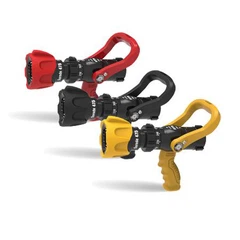
A foam nozzle is a specialized firefighting appliance designed to generate and project air foam onto a fire. Connected to a fire hose and supplied by a foam proportioning system, the nozzle entrains air to produce foam of varying expansion ratios, enabling effective suppression of Class B flammable liquid fires, Class A combustibles, and enclosed-space fires where smoke and heat control are critical. Foam nozzles are essential equipment for fire departments, petrochemical facilities, airports, marine vessels, and industrial fire protection systems worldwide.
According to the Chinese national standard GB 25202-2010 "Foam Nozzle", foam nozzles are classified by expansion ratio into three categories: low-expansion (5 ≤ N < 20), medium-expansion (20 ≤ N ≤ 200), and high-expansion (N > 200). Each type serves distinct firefighting applications: low-expansion foam forms a fluid, floating blanket ideal for liquid pool fires; medium-expansion foam produces a voluminous, adherent foam for enclosed spaces and vertical surfaces; and high-expansion foam is used for volume-filling applications such as mine fire suppression and large-scale warehouse protection.
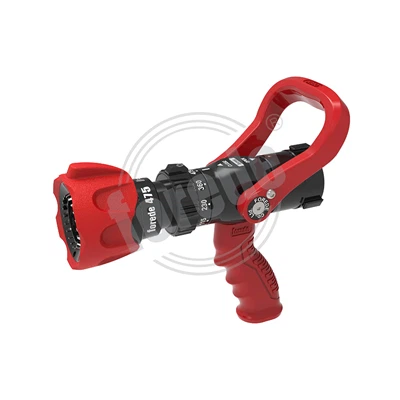
Typical construction of a foam nozzle includes a barrel, handwheel, body, ball valve with operating handle, suction tube (for self-inducting types), coupling, and nozzle tip. Common models are designated PQ4, PQ8, and PQ16, where the number indicates the rated foam solution flow rate in liters per second (L/s) for low-expansion nozzles. Medium-expansion models are similarly rated in L/min, with common capacities of 240, 400, 480, 640, and 960 L/min. All foam nozzles are designed to operate at rated pressures of 0.6–0.8 MPa, with flow tolerance of ±8% as specified by GB 25202-2010.
Low / Medium / High expansion options
Compliant with GB 25202-2010
Corrosion-resistant construction

Effective Fire Suppression
Low-expansion foam blankets liquid surfaces; medium-expansion foam fills enclosed spaces and adheres to vertical surfaces.
Versatile & Portable
Lightweight, ergonomic designs for one or two-person operation; compatible with fire trucks, fixed systems, and marine installations.
Self-Inducting / Non-Inducting
Self-inducting types draw concentrate via negative pressure; non-inducting types require pre-mixed solution from a proportioning system.
National & International Standards
Designed and tested to GB 25202-2010, GB 20031-2024 requirements.
Low-Expansion vs. Medium-Expansion Foam Nozzles
Understanding the key differences between expansion ratios is essential for selecting the right nozzle for your fire protection needs.

Low-Expansion Foam Nozzle
Expansion ratio: 5 ≤ N < 20. Low-expansion foam nozzles produce a heavy, fluid foam that forms a floating blanket on liquid surfaces. They are the primary tool for Class B flammable liquid fires (oils, solvents, chemicals).
Key performance parameters: 25% drainage time ≥ 2.5 minutes (per GB 25202-2010). Common models include PQ4 (4 L/s, throw ≥ 18 m), PQ8 (8 L/s, throw ≥ 28 m), and PQ16 (16 L/s, throw ≥ 32 m). Rated working pressure is 0.7 MPa.
Applications: Oil refineries, chemical storage tanks, tank farms, loading racks, fuel depots, and municipal firefighting. PQ8 is the most common standard configuration for industrial fire protection.
Construction: Aluminum alloy body with copper/stainless steel components in contact with foam solution. Coupling sizes: DN40, DN50, DN65.
Medium-Expansion Foam Nozzle
Expansion ratio: 20 ≤ N ≤ 200. Medium-expansion foam nozzles generate a lighter, more voluminous foam that adheres to vertical surfaces and fills enclosed spaces. They provide superior smoke suppression and rapid volumetric filling.
Key performance parameters: 50% drainage time ≥ 5 minutes (per GB 25202-2010). Common models include 240 L/min (throw ≥ 12 m) and 960 L/min (throw ≥ 14 m). Rated working pressure is 0.6–0.8 MPa.
Applications: Aircraft hangars (NFPA 409), tunnels, cable galleries, shipboard engine rooms, chemical plants, and enclosed industrial spaces.
Construction: Stainless steel body with aluminum alloy components for reduced weight. Coupling: KY65, Storz C-52, BS336, GOST types.

How to Choose a Foam Nozzle
Systematic selection based on protected hazard, fire type, foam concentrate, and operational parameters ensures optimal fire protection performance.
Selecting the right foam nozzle requires a systematic evaluation of the following factors:
Fire type and hazard classification – Class B flammable liquid fires require low-expansion foam (5 ≤ N < 20) for surface blanket application. Enclosed spaces with Class A or mixed hazards benefit from medium-expansion foam (20 ≤ N ≤ 200) for volume filling and smoke suppression. Per GB 25202-2010, the expansion ratio determines the nozzle classification and application method.
Required flow rate – Low-expansion nozzles are rated in L/s (PQ4 = 4 L/s, PQ8 = 8 L/s, PQ16 = 16 L/s). Medium-expansion nozzles are rated in L/min (240, 400, 480, 640, 960 L/min). Flow selection is based on the protected area, discharge density, and available water supply capacity. Per aircraft hangar fire protection codes, when using fluoroprotein foam, the foam solution flow rate shall not be less than 4 L/s.
Throw distance and coverage – At rated pressure of 0.7 MPa, PQ4 achieves ≥18 m, PQ8 achieves ≥28 m, and PQ16 achieves ≥32 m. Medium-expansion nozzles typically achieve 12–14 m throw distance. Larger throw distances are required for tank farm protection; shorter throws are acceptable for enclosed-space applications.
Inducting method – Self-inducting (Venturi-type) nozzles draw foam concentrate directly via negative pressure, suitable for portable operations without external proportioning systems. Non-inducting (direct-discharge) nozzles require pre-mixed foam solution from a fixed proportioning system, suitable for fire trucks and fixed installations.
Foam concentrate compatibility – Confirm the nozzle is compatible with the foam concentrate used: AFFF, AR-AFFF, protein, fluoroprotein, or synthetic foams. Proportioning ratios are typically 1%, 3%, or 6%. Components in contact with foam solution must be corrosion-resistant (copper, stainless steel, or equivalent) per GB 25202-2010 Section 5.3.
Coupling and connectivity – Standard couplings include DN65 for low-expansion PQ nozzles, and KY65, Storz C-52, BS336, or GOST types for medium-expansion nozzles. Verify compatibility with existing fire hoses and hydrant systems.
Expansion ratio: Low (5-20) / Medium (20-200)
Flow: 4–16 L/s (low) / 240–960 L/min (medium)
Pressure: 0.6–0.8 MPa (medium) / 0.7 MPa (low)
Drainage time: 25% ≥2.5 min / 50% ≥5 min
Coupling: DN65 / Storz C-52 / BS336
Standard: GB 25202-2010, GB 20031-2024
Applications of Foam Nozzles
Foam nozzles are deployed across petrochemical, airport, marine, power generation, and municipal firefighting sectors, with specific configurations for each application.


Petrochemical facilities – Class B firefighting in refining units, chemical storage tanks, and loading racks. Low-expansion nozzles (PQ4, PQ8, PQ16) are indispensable end devices in foam fire protection systems, providing rapid knockdown of flammable liquid fires.
Airport firefighting – Crash trucks carry both low- and medium-expansion nozzles for rapid response on aircraft fuselages, runways, and fuel storage areas. Per aircraft hangar codes, any point in parking and maintenance areas shall be protected by two foam nozzles simultaneously.
Marine and shipboard – In accordance with SOLAS Convention and FSS Code, portable foam nozzle assemblies are mandatory firefighting equipment for ship engine rooms, boiler rooms, and other protected spaces. Medium-expansion nozzles are specified for enclosed machinery spaces.
Tunnels and cable galleries – Medium-expansion foam nozzles provide rapid volume filling and smoke suppression. Medium-expansion foam can control fire spread at rates of 15–20 m²/s, extinguishing 1000 m² fires within 1–2 minutes.
Oil terminals and ports – Large storage areas, pipelines, and docking zones use both low- and medium-expansion nozzles to protect bunds, valve pits, and complex geometries.
Power generation – Transformer oil pits, cable tunnels, and fuel generator sets are protected using low-expansion foam nozzles to prevent oil fire spread.
Municipal firefighting – Fire trucks carry both types of nozzles for responses to fuel tanker accidents, gas stations, underground parking garage fires, and enclosed structure fires.
With their lightweight design, ease of operation, and proven effectiveness across multiple hazard types, foam nozzles have become standardized equipment for Class B and enclosed-space fire protection worldwide.
Foam Nozzle – Frequently Asked Questions
Q1: What is the applicable standard for foam nozzles in China?
A: Foam nozzles are designed and tested in accordance with GB 25202-2010 "Foam Nozzle". This standard specifies terminology, classification, performance requirements, test methods, and inspection rules. As a component of foam fire extinguishing systems, foam nozzles shall also comply with GB 20031-2024 "Foam Fire Extinguishing Equipment".
Q2: What are the expansion ratio classifications for foam nozzles?
A: Per GB 25202-2010, foam nozzles are classified into three categories by expansion ratio: low-expansion (5 ≤ N < 20), medium-expansion (20 ≤ N ≤ 200), and high-expansion (N > 200). Low-expansion is used for Class B liquid fires; medium-expansion for enclosed spaces and vertical surface adhesion.
Q3: What do the numbers in PQ4, PQ8, and PQ16 represent?
A: The numbers indicate the rated foam solution flow rate in liters per second (L/s) at the rated working pressure. PQ4 = 4 L/s, PQ8 = 8 L/s, PQ16 = 16 L/s. All have a rated working pressure of 0.7 MPa.
Q4: What is the flow tolerance for foam nozzles under GB 25202-2010?
A: The flow tolerance for foam nozzles is ±8% of the rated flow, ensuring accuracy of foam solution flow under rated operating conditions.
Q5: What factors affect the throw distance of a foam nozzle?
A: Throw distance is influenced by operating pressure, nozzle orifice size, and foam type. At rated pressure 0.7 MPa, PQ4 throws ≥18 m, PQ8 throws ≥28 m, and PQ16 throws ≥32 m. Medium-expansion nozzles typically achieve 12–14 m throw distance. Weather conditions also affect throw distance performance.
Q6: What is the difference between self-inducting and non-inducting foam nozzles?
A: Self-inducting (Venturi-type) foam nozzles draw foam concentrate directly from a container via negative pressure generated by water flow, requiring no external proportioning device. Non-inducting (direct-discharge) nozzles require pre-mixed foam solution from an external proportioning system and are suitable for use with fixed foam systems and fire trucks with integrated proportioning.
Q7: What material requirements apply to foam nozzles under GB 25202-2010?
A: According to GB 25202-2010 Section 5.3, all components in contact with foam solution shall be constructed from corrosion-resistant materials such as copper, stainless steel, or equivalent corrosion-resistant alloys. Non-contacting components such as handles may use aluminum alloy to reduce weight.
Q8: What is the difference between low-expansion and medium-expansion foam nozzles in terms of drainage time?
A: Low-expansion foam nozzles have a 25% drainage time of ≥2.5 minutes. Medium-expansion foam nozzles have a 50% drainage time of ≥5 minutes. The different drainage time requirements reflect the distinct application needs: low-expansion foam must maintain a fluid blanket on liquid surfaces; medium-expansion foam must maintain its volume and adhesion to vertical surfaces.
Q9: Can medium-expansion foam nozzles be used with AFFF foam?
A: Yes, medium-expansion foam nozzles are compatible with AFFF, AR-AFFF, protein, fluoroprotein, and synthetic foams. Always verify the specific compatibility and recommended proportioning ratio (typically 1%, 3%, or 6%) with the foam concentrate supplier before use.
Q10: What marine regulations apply to foam nozzles?
A: In accordance with the International Convention for the Safety of Life at Sea (SOLAS) and the International Code for Fire Safety Systems (FSS Code), portable foam nozzle assemblies are mandatory firefighting equipment for ship engine rooms, boiler rooms, and other protected spaces. Foam nozzles used in marine applications shall comply with these international regulations and applicable classification society rules.
```