

Medium Expansion Foam Nozzle | FOREDE Firefighting
What is a Medium Expansion Foam Nozzle?
A medium expansion foam nozzle is a specialized firefighting appliance designed to generate foam with an expansion ratio between 20 and 200, as defined by GB 25202-2010 "Foam Nozzle". Unlike low-expansion foam nozzles (expansion ratio 5 ≤ N < 20) which produce a heavy, fluid foam ideal for Class B liquid fires, medium expansion foam has a lighter, more voluminous consistency that fills enclosed spaces and adheres to vertical surfaces, making it particularly effective for certain Class A hazards and confined-area firefighting.
Medium expansion foam nozzles typically operate at rated pressures of 0.6–0.8 MPa, with flow rates ranging from 240 to 960 L/min and effective throw distances of 12 meters depending on weather conditions. The foam is generated through a specialized basket-type or Venturi-based mechanism that entrains air at a higher rate than low-expansion designs. The resulting foam has a 50% drainage time of up to 5 minutes, allowing extended protection of both horizontal and vertical surfaces.
These nozzles are typically constructed from corrosion-resistant materials such as stainless steel, with aluminum alloy valve bodies to reduce weight for portable operation. They are designed for use with a variety of foam concentrates including AFFF, AR-AFFF, protein, and synthetic foams, with proportioning ratios typically at 3% or 6% depending on the concentrate specification. The light, airy foam produced by medium expansion nozzles is particularly suited for firefighting in aircraft hangars, tunnels, cable galleries, and other enclosed or semi-enclosed spaces where smoke and heat control are critical.
Expansion ratio: 20–200
50% drainage time: up to 5 min
Compliant with GB 25202-2010

Enclosed Space Protection
Voluminous foam fills confined areas, adheres to vertical surfaces, and suppresses both fire and smoke in tunnels, hangars, and galleries.
High Flow Capacity
Rated flows from 240 to 960 L/min enable rapid fire knockdown over large areas and extended coverage.
Venturi / Basket Design
Available in self-inducting Venturi type for portable use or basket-type for fixed installations, optimized for medium expansion foam generation.
Corrosion-Resistant Construction
Stainless steel and aluminum alloy construction with hardened surfaces ensures durability in harsh firefighting environments.
FOREDE Medium Expansion Foam Nozzle Series
Designed in accordance with GB 25202-2010, covering multiple flow capacities, coupling sizes, and application-specific configurations.

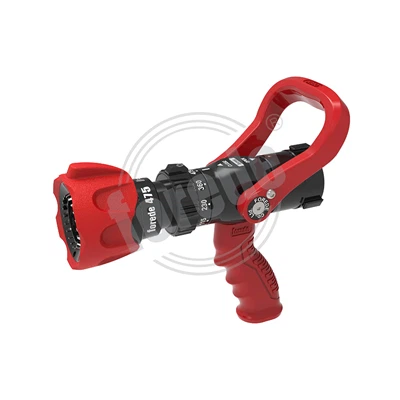
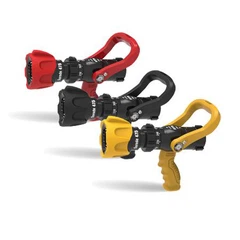
Medium Expansion Foam Nozzle
The medium expansion foam nozzle features a rated flow of ≥240 L/min at 0.7 MPa with a 40 mm (1½") inlet connection. It delivers a throw distance of approximately 12 meters and weighs only 3.2 kg, making it ideal for single-person portable operations.
Constructed from stainless steel with aluminum alloy components, this compact nozzle is suitable for shipboard firefighting, aircraft hangar protection, and tunnel emergency response where lightweight equipment is essential.
Medium Expansion Foam Nozzle
The medium expansion foam nozzle is rated at ≥960 L/min at 0.7 MPa with a 65 mm (2½") coupling. Weighing 4.6 kg and measuring 687 mm in length, it provides high-flow medium expansion foam generation for large-scale incidents.
This model is commonly specified for refineries, chemical storage facilities, and port firefighting operations where higher flow rates are required. The nozzle body is constructed from stainless steel and aluminum alloy, with surfaces hardened for enhanced abrasion and corrosion resistance.

How to Choose a Medium Expansion Foam Nozzle
Systematic selection based on protected hazard, foam concentrate type, water supply capacity, and operational environment.
Selecting the right medium expansion foam nozzle requires a systematic evaluation of the following factors:
Required flow rate – Medium expansion nozzles typically range from 240 to 960 L/min. The required flow depends on the protected area, fire load, and desired discharge density. Larger facilities such as aircraft hangars or chemical storage areas typically require 400–800 L/min models.
Expansion ratio and drainage time – Per GB 25202-2010, medium expansion foam nozzles must achieve an expansion ratio of 20 ≤ N ≤ 200 with a 50% drainage time of ≥5 minutes. Ensure the selected model meets these performance requirements for your specific application.
Foam concentrate compatibility – Confirm that the nozzle is compatible with the foam concentrate used in your system. Most medium expansion nozzles work with AFFF, AR-AFFF, protein, fluoroprotein, and synthetic foams. Verify the required proportioning ratio (typically 1%, 3%, or 6%) and ensure the nozzle supports it.
Coupling and compatibility – Standard couplings include KY65, Storz C-52, BS336, and GOST types. Verify compatibility with existing fire hoses and hydrant systems.
Material and corrosion resistance – Per GB 25202-2010 Section 5.3, all components in contact with foam solution shall be made from corrosion-resistant materials such as copper or stainless steel. Aluminum alloy may be used for non-contacting components to reduce weight.
Self-inducting vs. non-inducting – Self-inducting nozzles draw foam concentrate directly via Venturi effect, suitable for portable firefighting units without external proportioning systems. Non-inducting nozzles require pre-mixed foam solution and are suitable for fixed foam proportioning systems.
Flow range: 240 – 960 L/min
Pressure range: 0.6 – 0.8 MPa
Expansion ratio: 20 – 200
50% drainage time: ≥5 min
Coupling: Storz C-52 / BS336
Standard: GB 25202-2010
Applications of Medium Expansion Foam Nozzles
Medium expansion foam nozzles are deployed across multiple sectors where enclosed-space protection or rapid Class A/B fire suppression is required.


Aircraft hangars – Medium expansion foam provides efficient coverage of large floor areas and adheres to vertical surfaces, protecting aircraft and hangar structures in accordance with NFPA 409 standards.
Tunnels and cable galleries – The voluminous foam fills enclosed spaces, suppressing both fire and smoke simultaneously. Medium expansion foam can control fire spread at rates of 15–20 m²/s, extinguishing 1000 m² fires within 1–2 minutes.
Shipboard engine rooms and pump rooms – As required by SOLAS Convention and FSS Code, medium expansion foam systems are standard protection for machinery spaces where rapid knockdown and volume filling are critical.
Chemical plants and fuel storage – Medium expansion foam prevents vapor dispersion and adheres to vertical tank walls, providing extended cooling and vapor suppression.
Industrial processing areas – In facilities handling flammable liquids and solids, medium expansion nozzles provide rapid coverage of spills and localized fires, reducing downtime and damage.
Municipal and marine firefighting – Medium expansion foam is deployed on fire trucks and marine vessels for response to vehicle fires, fuel spills, and enclosed structure fires.
Compared to low-expansion foam systems, medium expansion foam nozzles offer superior smoke suppression, enhanced vertical surface adhesion, and faster volumetric filling, making them indispensable for enclosed-space fire protection.
Medium Expansion Foam Nozzle – FAQ
Q1: What is the expansion ratio range for medium expansion foam nozzles?
A: Per GB 25202-2010, medium expansion foam nozzles have an expansion ratio of 20 ≤ N ≤ 200. Low-expansion nozzles (5 ≤ N < 20) and medium-expansion nozzles are distinct classifications within the standard.
Q2: How does medium expansion foam differ from low-expansion foam?
A: Medium expansion foam is lighter and more voluminous than low-expansion foam. It adheres to vertical surfaces, fills enclosed spaces rapidly, and provides superior smoke suppression. Low-expansion foam is heavier and more fluid, ideal for Class B liquid fires where it forms a floating blanket.
Q3: What is the typical 50% drainage time for medium expansion foam?
A: The 50% drainage time for medium expansion foam is typically up to 7 minutes, though exact values depend on the foam concentrate type and proportioning ratio. GB 25202-2010 specifies minimum drainage time requirements for each type.
Q4: Can medium expansion foam nozzles be used with AFFF foam?
A: Yes, medium expansion foam nozzles are compatible with AFFF, AR-AFFF, protein, fluoroprotein, and synthetic foams. Always verify the specific compatibility and recommended proportioning ratio with the foam concentrate supplier.
Q5: What is the difference between self-inducting and non-inducting medium expansion nozzles?
A: Self-inducting nozzles use the Venturi principle to draw foam concentrate directly from a container via negative pressure generated by water flow. Non-inducting nozzles require pre-mixed foam solution from an external proportioning system.
Q6: What material requirements apply to medium expansion foam nozzles under GB 25202-2010?
A: According to GB 25202-2010 Section 5.3, all components in contact with foam solution shall be constructed from corrosion-resistant materials such as copper, stainless steel, or equivalent corrosion-resistant alloys. Non-contacting components such as handles may use aluminum alloy to reduce weight.