

Foam Nozzle | Firefighting Equipment | FOREDE
What is a Foam Nozzle?
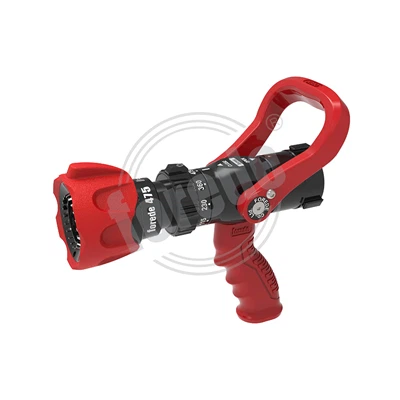
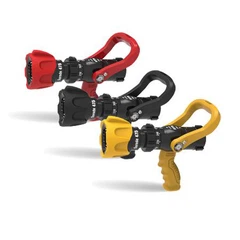
A foam nozzle is a portable firefighting appliance operated by one or two persons, designed to project foam solution onto a fire. Connected to a fire hose and supplied by a foam proportioning system, the nozzle entrains air to generate air foam and discharges it directly onto the seat of the fire. Foam nozzles are essential tools for combating Class B flammable liquid fires (such as oils, solvents, and chemicals) and can also be used to discharge water for extinguishing ordinary combustibles.
The typical construction of a foam nozzle includes a barrel, handwheel, body, ball valve (operating handle), suction tube, coupling, and nozzle tip. According to the Chinese national standard GB 25202-2010 "Foam Nozzle," foam nozzles are classified by expansion ratio and structural type into low-expansion foam nozzles, medium-expansion foam nozzles, and combined low/medium-expansion foam nozzles. Common models include PQ4, PQ8, and PQ16, where the number indicates the rated flow rate of foam solution in liters per second (L/s).
Compared to fixed foam monitors, foam nozzles are lightweight, highly maneuverable, and quickly deployable for emergency response. In accordance with the International Convention for the Safety of Life at Sea (SOLAS) and the International Code for Fire Safety Systems (FSS Code), portable foam nozzle assemblies are mandatory firefighting equipment for ship engine rooms, boiler rooms, and other protected spaces. Foam nozzles are standard equipment on fire trucks and in fixed fire protection systems across petrochemical facilities, airports, marine terminals, power plants, and municipal firefighting services.
Lightweight, one or two-person operation
Low/medium expansion available
Compliant with GB 25202-2010

Effective Class B Fire Suppression
Low-expansion foam rapidly covers liquid surfaces, cuts off oxygen, and prevents re-ignition with expansion ratio ≥ 5.
Lightweight & Maneuverable
Compact design with ergonomic grip, ideal for confined spaces, bund walls, and complex process areas.
Self-Inducting / Non-Inducting
Self-inducting type draws concentrate via negative pressure; non-inducting type requires pre-mixed solution.
National Standard Compliant
Designed and tested to GB 25202-2010 "Foam Nozzle" and GB 20031-2024 "Foam Fire Extinguishing Equipment."
FOREDE Foam Nozzle Series
Designed in accordance with GB 25202-2010, covering different flow rates, expansion ratios, and throw distances for diverse firefighting scenarios.

PQ4 Low-Expansion Foam Nozzle
The PQ4 foam nozzle has a rated foam solution flow rate of 4 L/s at a rated working pressure of 0.7 MPa, with expansion ratio ≥ 5, 25% drainage time ≥ 2.5 min, and throw distance ≥ 18 meters. It features a coupling for connection to DN65 fire hoses. Lightweight and easy to handle, it is suitable for initial fire attack and confined-space operations.
PQ4 is commonly equipped on fire trucks, ship engine rooms, and small oil depots. It is a mandatory basic model for shipboard fire protection. The body is constructed from aluminum alloy or stainless steel, with all components in contact with foam solution made from corrosion-resistant materials.
PQ8 Low-Expansion Foam Nozzle
The PQ8 foam nozzle has a rated foam solution flow rate of 8 L/s at a rated working pressure of 0.7 MPa, with expansion ratio ≥ 5, 25% drainage time ≥ 2.5 min, and throw distance ≥ 28 meters. With higher flow and extended reach, it is suitable for tank farms, loading racks, and large-scale chemical plant firefighting.
According to aircraft hangar fire protection codes, when using fluoroprotein foam, the foam solution flow rate shall not be less than 4 L/s. PQ8 is the most common standard configuration in industrial fire protection, widely used in refineries, airports, and large storage terminals.

How to Choose a Foam Nozzle
Systematic selection based on protected hazard, fire type, foam concentrate type, and water supply system parameters.
Selecting the right foam nozzle requires a systematic evaluation of the following factors:
Fire scenario and hazard type – Per GB 25202-2010, foam nozzles are classified by expansion ratio: low-expansion (5 ≤ N < 20) for Class B liquid fires, and medium-expansion (20 ≤ N ≤ 200) for some Class A fires or volume-filling applications.
Rated flow and throw distance – Determine based on protected area and fire water supply capacity. Common ratings are 4 L/s, 8 L/s, and 16 L/s, with corresponding throw distances of ≥18 m, 24 m, and 28 m. Large tank farms typically require PQ8 or PQ16.
Foam concentrate type and proportioning ratio – Confirm the foam concentrate used (AFFF, AR-AFFF, protein foam) and its mixing ratio (3%~4% or 6%~7%). Different foam types may require matching suction tubes or foam-generating mechanisms.
Inducting method – Self-inducting nozzles draw concentrate directly via negative pressure, suitable for use without a proportioning system. Non-inducting (direct-discharge) nozzles require pre-mixed solution, suitable for fixed proportioning systems.
Material and corrosion resistance – Components in contact with foam concentrate shall be made from corrosion-resistant materials such as copper or stainless steel. Stainless steel is recommended for marine or chemical environments.
Coupling and compatibility – Standard foam nozzles use couplings for connection to DN65 fire hoses. Verify compatibility with on-site fire hydrants or fire truck outlets.
Rated flow: 4 / 8 / 16 L/s
Rated pressure: 0.7 MPa
Expansion ratio: ≥5 (low-expansion)
25% drainage time: ≥2.5 min
Coupling: DN40/50/65
Standard: GB 25202-2010
Applications of Foam Nozzles
Foam nozzles are deployed across petrochemical, airport, marine, power generation, and municipal firefighting sectors.


Petrochemical facilities – Class B firefighting in refining units, chemical storage tanks, and loading racks. Foam nozzles are indispensable end devices in fire protection systems.
Airport firefighting – Standard equipment on airport crash trucks for rapid response on aircraft fuselages, runways, and fuel storage areas. Any point in aircraft parking and maintenance areas shall be protected by two foam nozzles simultaneously.
Marine and shipboard – In accordance with SOLAS Convention and FSS Code, portable foam nozzle assemblies are mandatory firefighting equipment for ship engine rooms, boiler rooms, and other protected spaces.
Oil terminals and ports – Large storage areas, pipelines, and docking zones where foam nozzles provide flexible coverage of bunds, valve pits, and complex geometries.
Power generation – Transformer oil pits, cable tunnels, and fuel generator sets are protected using foam nozzles to prevent oil fire spread.
Municipal firefighting – Fire trucks carry foam nozzles for responses to fuel tanker accidents, gas stations, and underground parking garage fires.
With their lightweight design and ease of operation, foam nozzles have become standardized equipment for Class B fire protection across all types of fire protection systems.
Foam Nozzle – FAQ
Q1: What is the applicable standard for foam nozzles?
A: Foam nozzles are designed and tested in accordance with GB 25202-2010 "Foam Nozzle." This standard specifies terminology, classification, performance requirements, test methods, and inspection rules. As a component of foam fire extinguishing systems, foam nozzles shall also comply with GB 20031-2024 "Foam Fire Extinguishing Equipment."
Q2: What is the difference between low-expansion and medium-expansion foam nozzles?
A: Low-expansion foam nozzles have an expansion ratio of 5 ≤ N < 20, primarily used for Class B liquid fires, with a 25% drainage time ≥ 2 min. Medium-expansion foam nozzles have an expansion ratio of 20 ≤ N ≤ 200, with a 50% drainage time ≥ 5 min, suitable for some Class A fires or volume-filling applications.
Q3: What do the numbers in PQ4, PQ8, and PQ16 represent?
A: The numbers indicate the rated foam solution flow rate in liters per second (L/s). PQ4 = 4 L/s, PQ8 = 8 L/s, PQ16 = 16 L/s. All models have a rated working pressure of 0.7 MPa.
Q4: What is the flow tolerance for foam nozzles?
A: Per GB 25202-2010, the flow tolerance for foam nozzles is ±8%, ensuring accuracy of foam solution flow under rated operating conditions.
Q5: What factors affect the throw distance of a foam nozzle?
A: Throw distance is influenced by operating pressure, nozzle orifice size, and foam type. At rated pressure 0.7 MPa, PQ4 throws ≥18 m, PQ8 throws ≥28 m, and PQ16 throws ≥32 m. Throw distance is defined as 90% of the farthest continuous foam solution drop point projected vertically from the nozzle tip center.
Q6: What is the difference between self-inducting and non-inducting foam nozzles?
A: Self-inducting foam nozzles draw concentrate directly from the foam concentrate container via negative pressure, requiring no external proportioning device. Non-inducting (direct-discharge) nozzles require pre-mixed foam solution from a foam proportioning system and are suitable for use with fixed foam systems.