

What is a Handline Foam Nozzle?
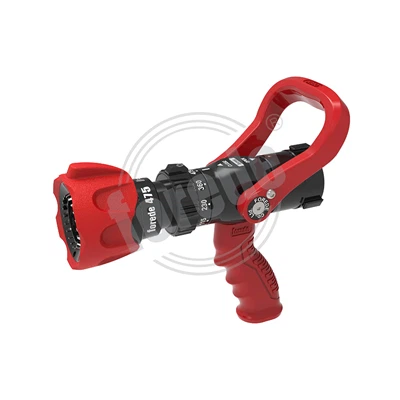
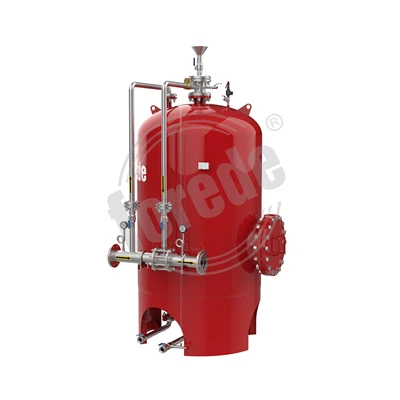
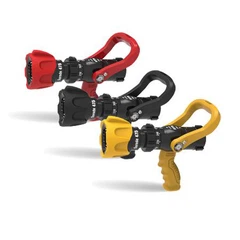
A handline foam nozzle is a critical firefighting tool used by firefighters and industrial emergency responders to combat Class B flammable liquid fires (such as oils, solvents, and chemicals) as well as certain Class A hazards. Connected to a fire hose and supplied by a foam proportioning system (e.g., foam bladder tank or balanced-pressure proportioner), the nozzle mixes foam concentrate with water at a precise ratio and discharges the expanded foam directly onto the fire. Handline foam nozzles offer an optimal balance between flow rate, reach, and foam expansion, making them ideal for both rapid initial attack and supplemental firefighting in fixed foam systems.
Designed for lightweight operation and ease of handling, handline foam nozzles are typically constructed from corrosion-resistant alloys such as aluminum or stainless steel. They incorporate internal Venturi or orifice-type foam-generating mechanisms that produce stable foam quality at inlet pressures of 4–8 bar. Flow rates range from 100 to 800 L/min, with effective throw distances of 15–25 meters. Equipped with adjustable handles and safety triggers, they support three-position switching: foam, water, and shut-off. Whether used with AFFF, AR-AFFF, protein foam, or synthetic foam, handline foam nozzles consistently deliver expansion ratios and drain times that comply with EN 13565 standards.
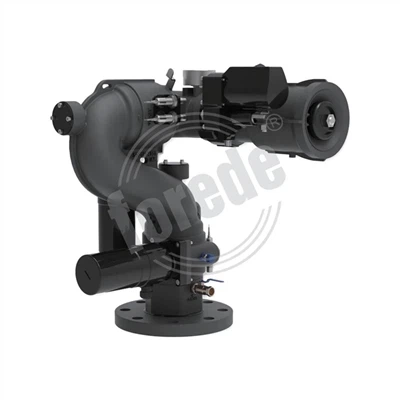
Compared to fixed monitors or vehicle-mounted cannons, handline foam nozzles offer unmatched maneuverability. Firefighters can carry them into confined spaces, bund walls, or complex process areas to precisely target the fire source. Their simple, robust construction makes them easy to maintain and a standard accessory for petrochemical facilities, airports, marine terminals, oil depots, power plants, and fire trucks.
Lightweight, single-operator design
Adjustable expansion ratio 5times /22times)
Compatible with AFFF/AR-AFFF/Protein foams

Effective Fire Suppression
Rapidly blankets Class B liquid surfaces, cuts off oxygen, and prevents re-ignition with expansion ratios meeting standards.
Lightweight & Maneuverable
Ergonomic handle design, single-hand operation, ideal for confined spaces and mobile firefighting.
Multi-Mode Switching
Foam/water/shut-off three-position selector for versatile fireground response.
Certified Compliance
Designed to meet GB 20031-2024 performance requirements.
FOREDE Handline Foam Nozzle Series
Different flow rates, throw distances, and foam-generating mechanisms to match diverse firefighting scenarios.

Standard Handline Foam Nozzle
Standard handline foam nozzles are the most common configuration, with flow rates of 240-960 L/min at operating pressures of 7 bar and throw distances of 12 meters. Constructed from aluminum alloy or stainless steel, they feature a rotating flow-adjustment ring for fine-tuning expansion ratio and jet distance. The internal stainless steel foam screen produces a stable, high-quality foam suitable for tank farms, loading racks, chemical plants, and rapid-response fire trucks.
FOREDE standard handline nozzles come standard with DN40 or DN65 inlet connections, compatible with all common fire hoses. The handle includes a non-slip grip and a safety lock to prevent accidental discharge. Optional detachable foam dispersers are available for low- and medium-expansion switching.
medium Handline Foam Nozzle
High-flow handline foam nozzles are designed for large-scale fires and rapid-spread scenarios, with rated flows of 240–960 L/min, operating pressures of 7 bar, and throw distances of 12 meters. Ideal for refineries, large storage tank farms, aircraft hangars, and port firefighting operations. The nozzle body is constructed from heavy-duty stainless steel or high-strength aluminum alloy, with an optimized foam-generating mechanism that maintains low pressure loss at high flow rates.
This model features a dual-handle design for two-person operation, along with shock-absorbing rubber pads to reduce operator fatigue during prolonged use. It can be connected to DN40/DN50/DN65 hoses and integrates seamlessly with vehicle-mounted monitors or fixed proportioning systems.

How to Choose a Handline Foam Nozzle
Systematic selection based on fire risk, foam type, water system parameters, and operational environment.
Selecting the right handline foam nozzle requires a systematic evaluation of the following factors:
Required flow rate – Calculate the total flow based on the protected area, fire load, and application intensity (NFPA 11 recommends 4.1–6.5 L/min/m² for Class B fires), then divide by the number of nozzles in use. Common flow rates range from 200–400 L/min.
Foam type and proportioning ratio – Confirm the foam concentrate (AFFF, AR-AFFF, protein, or synthetic) and its mixing ratio (1%, 3%, or 6%) used in the system. Some nozzles can be adapted to different foams by changing the foam screen or flow ring.
Operating pressure – Ensure the fire water system can deliver the required inlet pressure (typically 4–8 bar). Insufficient pressure causes poor foam quality, while excessive pressure increases nozzle reaction force and compromises operator safety.
Material and corrosion resistance – Aluminum alloy is lightweight and suitable for general industrial environments; stainless steel offers superior corrosion resistance for marine, chemical, and high-salinity areas.
Operation method – Consider whether adjustable flow, interchangeable foam attachments, or remote control functions are needed. For high-risk areas, models with safety locks and anti-accidental-trigger features are recommended.
Certifications and compliance – Verify that the product meets GB 20031-2024, NFPA 11, or EN 13565-2 standards to ensure system acceptance and maintenance compliance.
Flow range: 240 – 960 L/min
Pressure range: 4 – 10 bar
Expansion ratio: 5 time
Material: Aluminum alloy / Stainless steel (optional)
Inlet: DN40/DN50/DN65
Compliance: GB 20031-2024
Applications of Handline Foam Nozzles
Handline foam nozzles are deployed across petrochemical, airport, marine, power generation, and municipal firefighting sectors.


Petrochemical facilities – Initial attack on Class B fires in refining units, chemical storage tanks, and loading racks; also used as a supplementary tool for fixed foam systems.
Airport firefighting – Standard equipment on airport crash trucks for rapid response on aircraft fuselages, runways, and fuel storage areas.
Oil terminals and marine ports – Large storage areas, pipelines, and docking zones where handline nozzles provide flexible coverage of bunds, valve pits, and complex geometries.
Power generation – Transformer oil pits, cable tunnels, and fuel generator sets are protected using handline nozzles to prevent oil fire spread.
Municipal firefighting – Fire trucks carry handline foam nozzles for responses to fuel tanker accidents, gas stations, and underground parking garage fires.
Marine and shipboard – Engine rooms, fuel tanks, and deck areas where handline foam nozzles are a primary firefighting tool for crew members.
Compared to fixed monitors, handline foam nozzles offer superior mobility, precision targeting, and operational flexibility, making them indispensable end devices in any foam fire protection system.
Handline Foam Nozzle – FAQ
Q1: What is the difference between a handline foam nozzle and a foam monitor?
A: A handline foam nozzle is hand-carried and operated by firefighters for precise targeting and confined-space use; a foam monitor is fixed or vehicle-mounted with higher flow and longer range for broad area coverage. They complement each other in foam fire protection systems.
Q2: Which foam types are compatible with handline foam nozzles?
A: Standard handline nozzles are compatible with AFFF, AR-AFFF, protein foam, fluoroprotein foam, and synthetic foams. Different foam types may require specific foam screens or flow rings; consult the foam supplier for optimal configuration.
Q3: How should a handline foam nozzle be maintained?
A: After each use, flush the nozzle interior with clean water to prevent foam residue from clogging the foam screen. Regularly inspect seals, the safety trigger, and flow adjustment mechanisms. An annual flow and foam performance test is recommended, with replacement of worn parts as needed.
Q4: How is the expansion ratio of a handline foam nozzle adjusted?
A: Most models allow expansion ratio adjustment by changing the internal foam screen or rotating the flow adjustment ring. Low-expansion (4–6x) is used for Class B liquid fires; medium-expansion (8–12x) can be used for some Class A fires or volume filling. Refer to the product manual for specific adjustment procedures.
Q5: What factors affect the throw distance of a handline foam nozzle?
A: Throw distance is influenced by inlet pressure, flow rate, nozzle orifice size, and foam type. At standard pressure (6 bar), a 200 L/min nozzle achieves approximately 18 meters, while a 400 L/min model reaches over 22 meters. Excessive pressure reduces throw distance and increases reaction force-operate within rated conditions.
Q6: How do I select the right handline foam nozzle for my fire protection system?
A: Selection requires consideration of system flow, operating pressure, foam type, and maximum protection distance. FOREDE offers professional sizing assistance-provide your fire pump parameters, proportioning system details, and protected hazard information, and we will recommend the optimal model.
```