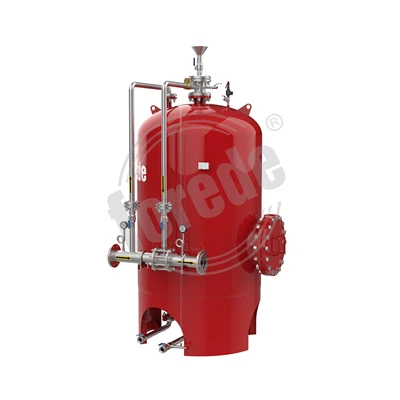

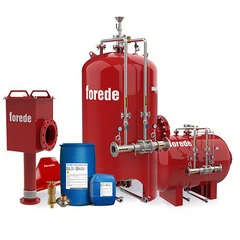

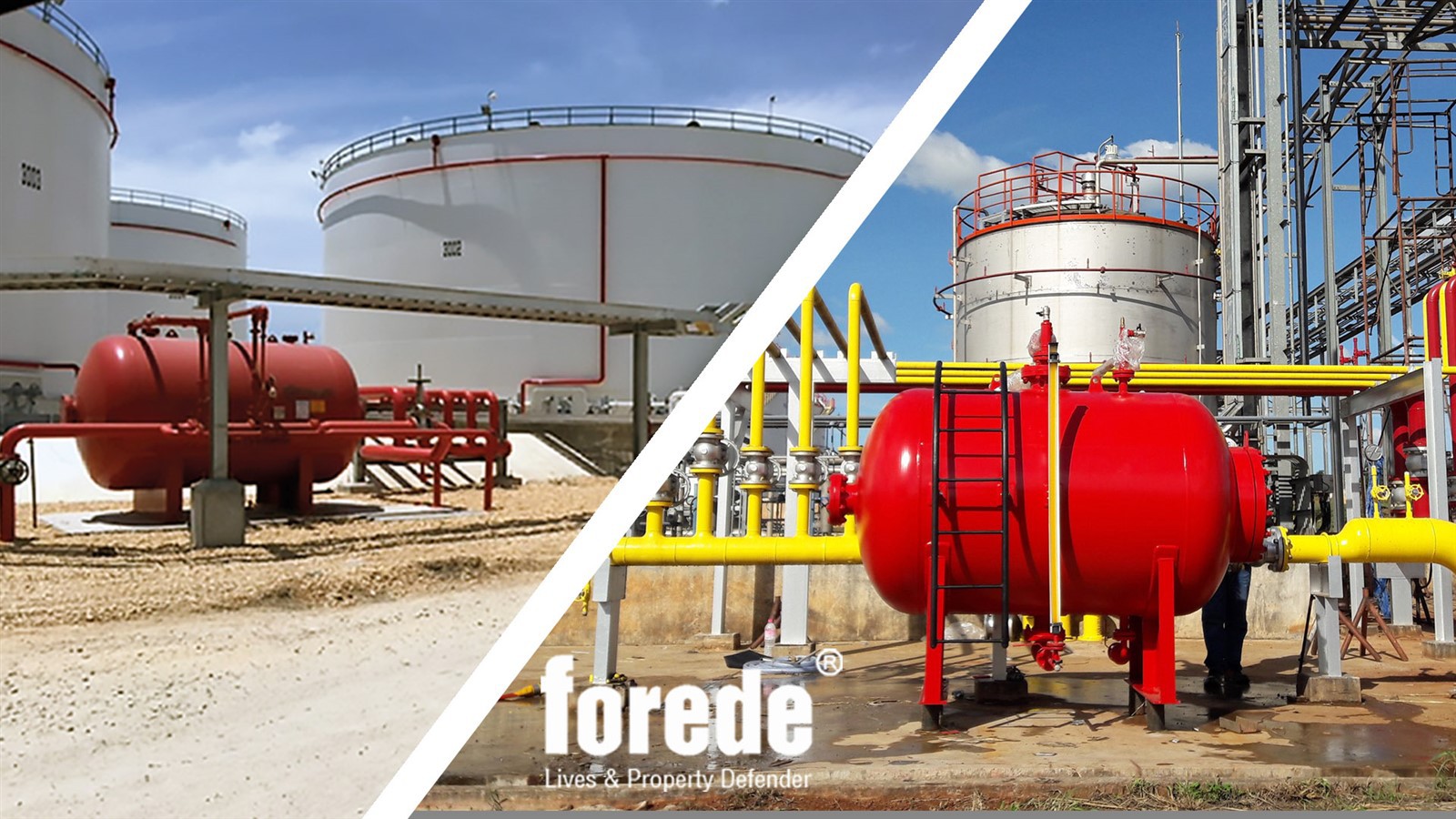
Foam bladder tank is a pressure vessel that stores foam concentrate inside a flexible internal bladder. Water enters the tank and compresses the bladder, forcing the foam concentrate out into a proportioner where it mixes with water to create firefighting foam.
It is commonly used in:
Oil & gas facilities
Chemical plants
Aircraft hangars
Fuel storage terminals
Power plants
Make sure:
The system is isolated from the water supply.
The tank is depressurized.
The correct type of foam concentrate is available (AFFF, AR-AFFF, Protein, etc.).
You follow applicable standards such as NFPA (typically NFPA 11).
✅ Step-by-Step Procedure to Fill a Foam Bladder Tank
1️⃣ Isolate and Depressurize the System
Close the water inlet and outlet valves.
Open the drain valve to release internal pressure.
Confirm the tank pressure gauge reads 0 bar / 0 psi.
⚠ Never open the tank when pressurized.
2️⃣ Connect Foam Filling Pump
Use a foam concentrate transfer pump (manual or electric).
Connect the pump hose to the foam concentrate filling connection on the bladder tank.
Ensure all fittings are tight and sealed.
3️⃣ Open Vent Valve
Open the foam vent valve to allow air inside the bladder to escape.
This prevents air pockets during filling.
4️⃣ Start Filling
Start the foam pump slowly.
Fill until:
Foam concentrate flows steadily from the vent (no air bubbles), or
The calculated tank capacity is reached.
Typical fill level: 100% of bladder rated capacity (never overfill).
5️⃣ Close Valves
Close the vent valve once filling is complete.
Stop the pump.
Disconnect the filling hose.
Close the foam fill connection securely.
6️⃣ Leak & Pressure Check
Slowly reintroduce water pressure.
Check for:
Leakage at fittings
Abnormal pressure readings
Bladder integrity issues
📌 Important Precautions
✔ Use only compatible foam concentrate
✔ Do not mix different foam types
✔ Avoid contamination
✔ Record batch number & fill date
✔ Inspect bladder condition periodically
🛠 Alternative Filling Method (Bottom Fill)
Some vertical bladder tanks allow bottom filling by:
Using a dedicated foam inlet
Filling by gravity (if tank elevation allows)
Always follow the manufacturer's instructions.
🚨 Common Mistakes to Avoid
Filling without depressurizing
Overfilling the bladder
Using water to "test fill" the bladder
Leaving air trapped inside
Using incompatible foam type