

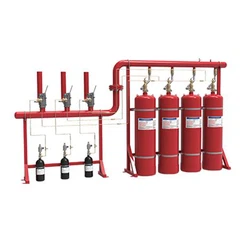

What is a Foam Storage Tanks?
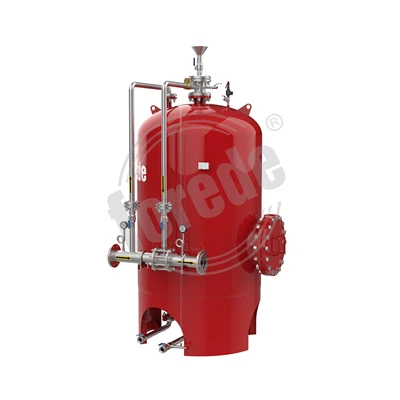
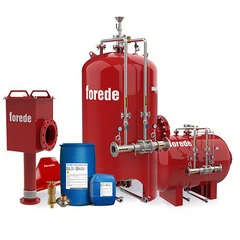
forede Foam Storage Tanks are professional fire-fighting foam storage equipment, featuring carbon steel tank body, built-in PVC/Rubber Bladder, 100-10000L optional capacity, and 4-100LPS flow rate (determined by capacity). The carbon steel body ensures strong durability and pressure-bearing capacity, while the PVC/Rubber Bladder isolates foam concentrate to maintain its purity. It has four distinct advantages, including flexible capacity and flow rate options, easy installation and maintenance. Widely applicable to industrial facilities, oil and gas storage, commercial public facilities, and marine offshore facilities, it adapts to diverse fire scales. As a core part of foam fire suppression systems, it provides timely and sufficient foam supply for fire suppression, especially for flammable liquid fires. Easy to operate and maintain, it remains in good standby condition for long-term use, serving as an indispensable fire protection equipment to safeguard personnel and property safety.
General Description
forede Foam Storage Tanks are professional fire-fighting storage equipment designed for storing and supplying fire-fighting foam concentrate, with high-quality carbon steel as the tank body material, built-in PVC/Rubber Bladder, 100-10000L optional capacity, and 4-100LPS flow rate (determined by tank capacity) as core characteristics. The carbon steel body provides excellent structural strength, pressure-bearing capacity, and durability, adapting to various indoor and outdoor environments, while the PVC/Rubber Bladder effectively isolates foam concentrate from the tank body, ensuring its purity and effectiveness. The equipment has four distinct advantages: strong durability of carbon steel, reliable isolation of PVC/Rubber Bladder, flexible capacity and flow rate options, and easy installation and maintenance. It is widely applicable to four main scenarios: industrial facilities, oil and gas storage and transportation facilities, commercial and public facilities, and marine and offshore facilities, adapting to diverse fire scales and working environments. As a core component of foam fire suppression systems, it works with foam generators and proportioners to form effective foam layers, efficiently suppressing flammable liquid fires. The standardized use process, including pre-installation, foam filling, daily inspection, emergency use, and post-use maintenance, ensures the tank remains in good standby condition for a long time. Overall, forede Foam Storage Tanks are reliable, durable, and practical, providing critical support for foam fire suppression, safeguarding personnel and property safety in various high-risk scenarios.
Advantages
forede Foam Storage Tanks have four distinct outstanding advantages, fully meeting the foam storage and supply needs of various fire protection scenarios, combining durability, practicality, and flexibility, with carbon steel material, PVC/Rubber Bladder, 100-10000L optional capacity, and 4-100LPS flow rate as core highlights.
excellent structural strength and durability brought by high-quality carbon steel material. The carbon steel tank body has strong pressure-bearing capacity and impact resistance, able to withstand the internal pressure of foam concentrate storage and resist external collision, corrosion, and harsh environmental impacts. Whether installed indoors or outdoors, it can maintain stable performance for a long time, avoiding deformation, leakage, or damage, ensuring the safe storage of foam concentrate and reducing maintenance costs. The carbon steel material also has good weldability, making the tank body seamless and compact, further enhancing its sealing and pressure-bearing performance.
reliable isolation and protection of the PVC/Rubber Bladder. The built-in PVC/Rubber Bladder is highly compatible with various fire-fighting foam concentrates, effectively isolating the foam from the carbon steel tank body, preventing chemical corrosion and contamination of the foam concentrate. This ensures the foam concentrate remains pure and effective for a long time, avoiding performance degradation caused by contact with the tank body. The PVC/Rubber Bladder also has good elasticity and wear resistance, able to adapt to the expansion and contraction of foam concentrate during storage and supply, extending the service life of the tank.
flexible capacity and flow rate options to meet diverse needs. With optional capacities ranging from 100L to 10000L, the tanks can be customized according to the fire protection scale of different scenarios, from small commercial venues to large industrial parks. The flow rate of 4LPS to 100LPS, determined by the tank capacity, ensures that the foam supply can match the fire scale-smaller tanks with lower flow rates for initial small fires, and larger tanks with higher flow rates for large-scale fierce fires, providing targeted and efficient foam supply support.
easy installation, operation, and maintenance. The tank has a compact and reasonable structural design, suitable for both indoor and outdoor installation, with simple installation procedures that do not require complex construction. It is equipped with clear level gauges and easy-to-operate inlet and outlet valves, allowing operators to quickly check the foam level and control the supply of foam concentrate. Daily maintenance only requires regular inspection of the tank body, Bladder, and valves, cleaning the Bladder when necessary, which is simple and time-saving, ensuring the tank remains in good standby condition for a long time.
How to use Foam Storage Tanks?
The use of forede Foam Storage Tanks follows a simple and standardized process, focusing on the characteristics of carbon steel material, PVC/Rubber Bladder, 100-10000L capacity, and 4-100LPS flow rate, ensuring safe and efficient storage and supply of foam concentrate, with each step designed to maximize the effectiveness of foam fire suppression. Firstly, pre-installation and preparation: select a suitable installation location (indoor or outdoor) that is flat, stable, and close to the foam fire suppression system, ensuring the location is free of flammable and explosive materials and easy to maintain. Check the carbon steel tank body for cracks, deformation, or corrosion, and inspect the PVC/Rubber Bladder for damage, leakage, or aging. Confirm the tank capacity and flow rate match the actual fire protection needs, and install the tank firmly, connecting the inlet and outlet interfaces to the foam proportioner and foam generator correctly, ensuring tight connections without leakage. Secondly, foam concentrate filling: open the inlet valve of the tank, slowly inject the appropriate type of fire-fighting foam concentrate into the PVC/Rubber Bladder, and observe the level gauge to ensure the filling amount does not exceed the maximum capacity of the tank. After filling, close the inlet valve tightly, and check for any leakage at the inlet interface and Bladder to avoid foam concentrate contamination or waste. Thirdly, daily standby and inspection: the tank is in long-term standby, so regular inspections are required. Check the level gauge regularly to monitor the remaining amount of foam concentrate, and supplement it in a timely manner when it is insufficient. Inspect the carbon steel tank body for corrosion, and clean the surface to prevent rust. Check the PVC/Rubber Bladder for damage or aging, and replace it if necessary. Inspect the inlet and outlet valves, pressure relief valve, and other components to ensure they are flexible and sealed. When a fire occurs (emergency use), start the foam fire suppression system, open the outlet valve of the tank, and the foam concentrate will be delivered to the foam proportioner at a flow rate of 4-100LPS (determined by the tank capacity), mixed with water to form fire-fighting foam, which is then sprayed to the fire source through the foam generator to suppress the fire. Finally, post-use maintenance: after the fire is extinguished, close the outlet valve of the tank, and clean the inlet and outlet interfaces, foam pipelines, and proportioner to remove residual foam concentrate. Check the PVC/Rubber Bladder for damage, and clean it if there is any residue. Inspect the carbon steel tank body and all components for damage, corrosion, or deformation, and repair or replace them if necessary. Refill the tank with foam concentrate, close the inlet valve tightly, and reset the tank to the standby position, ensuring it is ready for the next use.
Where to use Foam Storage Tanks?
industrial facilities
industrial facilities, such as oil refineries, chemical plants, and petrochemical storage yards. These places store a large number of flammable liquids (such as oil, gasoline, chemical solvents), which are prone to large-scale fires. The 1000-10000L large-capacity foam storage tanks are ideal for these scenarios, providing 40-100LPS high flow rates to supply sufficient foam concentrate, working with foam fire suppression systems to quickly control and extinguish fires, preventing the spread of flammable liquids and reducing industrial losses. The carbon steel tank body can withstand the harsh industrial environment, and the PVC/Rubber Bladder ensures the purity of the foam concentrate.
oil and gas storage
oil and gas storage and transportation facilities, including oil depots, gas stations, and oil tankers. These places have high fire risks due to the storage and transportation of flammable and explosive oil and gas. According to the scale of the facility, 100-5000L foam storage tanks can be selected, with 4-60LPS flow rates to meet the foam supply needs of different fire scenarios. For example, gas stations can use small 100-500L tanks to suppress initial oil fires, while large oil depots can use 5000-10000L tanks to handle large-scale tank fires, ensuring timely and effective fire suppression.
commercial and public facilities
commercial and public facilities, such as large shopping malls, hotels, airports, and railway stations. These places have dense personnel and may store flammable materials such as cosmetics, cleaning agents, and fuels, and flammable liquid fires may occur accidentally. The 100-1000L medium-capacity foam storage tanks are suitable for these scenarios, with 4-30LPS flow rates to supply foam concentrate for initial fire suppression, protecting the safety of personnel and property. The compact design of the tank allows it to be installed in limited indoor spaces, such as equipment rooms and fire control rooms.
marine and offshore facilities
marine and offshore facilities, such as ships, offshore platforms, and coastal terminals. These facilities are in a humid marine environment, and flammable liquid fires (such as ship fuel, offshore oil) are prone to occur. The carbon steel tank body of forede Foam Storage Tanks has good corrosion resistance, able to adapt to the marine environment, and the PVC/Rubber Bladder ensures the stability of foam concentrate. According to the size of the facility, 100-2000L tanks can be selected, with 4-40LPS flow rates to provide reliable foam supply for fire suppression at sea or offshore, ensuring the safety of marine facilities and personnel.