

Where to use Foam Storage Tanks

How to use Foam Storage Tanks
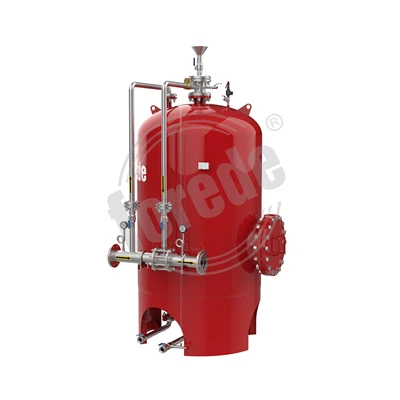
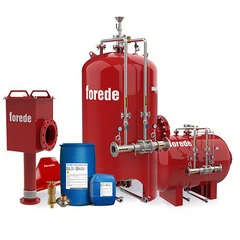
forede Foam Storage Tanks are widely applicable to various scenarios that require foam fire suppression, especially suitable for places where flammable liquid fires are prone to occur, with 100-10000L optional capacity and 4-100LPS flow rate adapting to diverse fire scales, and the carbon steel body and PVC/Rubber Bladder ensuring stable operation in different environments.
The first main application scenario is industrial facilities, such as oil refineries, chemical plants, and petrochemical storage yards. These places store a large number of flammable liquids (such as oil, gasoline, chemical solvents), which are prone to large-scale fires. The 1000-10000L large-capacity foam storage tanks are ideal for these scenarios, providing 40-100LPS high flow rates to supply sufficient foam concentrate, working with foam fire suppression systems to quickly control and extinguish fires, preventing the spread of flammable liquids and reducing industrial losses. The carbon steel tank body can withstand the harsh industrial environment, and the PVC/Rubber Bladder ensures the purity of the foam concentrate.
The second scenario is oil and gas storage and transportation facilities, including oil depots, gas stations, and oil tankers. These places have high fire risks due to the storage and transportation of flammable and explosive oil and gas. According to the scale of the facility, 100-5000L foam storage tanks can be selected, with 4-60LPS flow rates to meet the foam supply needs of different fire scenarios. For example, gas stations can use small 100-500L tanks to suppress initial oil fires, while large oil depots can use 5000-10000L tanks to handle large-scale tank fires, ensuring timely and effective fire suppression.
The third scenario is commercial and public facilities, such as large shopping malls, hotels, airports, and railway stations. These places have dense personnel and may store flammable materials such as cosmetics, cleaning agents, and fuels, and flammable liquid fires may occur accidentally. The 100-1000L medium-capacity foam storage tanks are suitable for these scenarios, with 4-30LPS flow rates to supply foam concentrate for initial fire suppression, protecting the safety of personnel and property. The compact design of the tank allows it to be installed in limited indoor spaces, such as equipment rooms and fire control rooms.
The fourth scenario is marine and offshore facilities, such as ships, offshore platforms, and coastal terminals. These facilities are in a humid marine environment, and flammable liquid fires (such as ship fuel, offshore oil) are prone to occur. The carbon steel tank body of forede Foam Storage Tanks has good corrosion resistance, able to adapt to the marine environment, and the PVC/Rubber Bladder ensures the stability of foam concentrate. According to the size of the facility, 100-2000L tanks can be selected, with 4-40LPS flow rates to provide reliable foam supply for fire suppression at sea or offshore, ensuring the safety of marine facilities and personnel.
A Horizontal Foam Bladder Tank is a specialized pressure vessel designed to store foam concentrate and automatically inject it into a firewater system for proportioning. It consists of:
Horizontal Steel Shell: A robust, ASME-coded pressure vessel mounted horizontally.
Flexible Bladder (Liner): An elastomeric membrane (typically EPDM or butyl rubber) inside the shell that holds the foam concentrate, completely separating it from the water.
Water Chamber: The space between the bladder and the shell, filled with pressurized water (or water/glycol mix).
Foam Concentrate Outlet: Connected to the bladder interior, leading to the proportioning device (eductor, balanced pressure pump).
Water Inlet/Outlet: Connected to the water chamber for filling, pressurization, and replenishment.
Pressure Gauges & Valves: For monitoring and control of both water pressure and concentrate level/supply.
Operation relies on system water pressure compressing the water chamber, which squeezes the bladder and forces concentrate out at the same pressure. Bladder failure indicators (e.g., sight glasses showing concentrate in water outlet) are common. Capacities range from ~25 to 5,000+ gallons.
The core function is to store foam concentrate under pressure and automatically deliver it at the correct flow and pressure to a foam proportioning system upon water flow activation. Its key purposes are:
Reliable, Automatic Proportioning: Ensures immediate, uninterrupted foam concentrate supply to proportioners (eductors, balanced pressure controllers) when the firewater system activates, enabling rapid foam solution generation.
Contamination Prevention: The bladder is an absolute physical barrier, preventing concentrate from mixing with pressurizing water and vice-versa. This protects concentrate integrity and prevents water dilution or system corrosion.
Pressure Matching: Delivers concentrate at pressure equal to the system water pressure at the proportioner inlet, which is critical for the operation of balanced pressure proportioning systems and improves eductor performance.
Sealed Storage: Protects concentrate from atmospheric exposure (oxygen, moisture, contaminants) that can degrade quality, extending shelf life.
System Simplicity: Eliminates the need for complex concentrate transfer pumps and associated controls in basic systems
.
Horizontal Bladder Tanks are the preferred concentrate storage method for many fixed foam fire suppression systems due to reliability and simplicity:
Foam-Water Sprinkler/Deluge Systems: Protecting aircraft hangars, warehouses (flammables, plastics), chemical processing areas, loading docks, and high-hazard manufacturing.
Foam Chambers & Pourers: For atmospheric storage tank protection (cone roof tanks).
Foam Monitors & Cannons: Supplying large outdoor monitors protecting tank farms, process areas, and LNG facilities.
Balanced Pressure Proportioning Systems: Serving as the primary concentrate storage and pressure supply unit (paired with a proportioner and pump for recirculation).
High-Risk Industrial Facilities: Oil & gas platforms, refineries, power plants (especially turbine enclosures, transformer yards), pharmaceutical plants.
Marine Applications: Protecting engine rooms, pump rooms, cargo decks, and helidecks on ships and offshore platforms where space is constrained and stability is key.
Tunnel Fire Suppression Systems: Supplying foam for deluge systems in critical sections.
Smaller Systems: Where pump-based transfer systems are overly complex or costly (e.g., paint spray booths, small hazard rooms).
The horizontal orientation and bladder principle offer distinct operational and practical benefits:
Space Efficiency & Low Center of Gravity: Horizontal tanks fit more easily under low ceilings, in mezzanines, or within equipment rooms. Their low profile enhances seismic stability, crucial in earthquake zones and marine installations.
Optimized Floor Space: Ideal for installations where floor area is limited but headroom is available.
Complete Separation & Contamination Prevention: The bladder is an impermeable barrier, ensuring no intermixing. This is superior to piston tanks (potential seal leaks) or diaphragm tanks (potential permeation).
Accurate Level Monitoring: Concentrate level is reliably indicated by bladder position, typically monitored via magnetic level indicators or sight glasses directly on the tank.
Bladder Failure Indication: Clear indicators (e.g., concentrate appearing in the water chamber drain) provide immediate warning of bladder rupture.
Maintains Concentrate Integrity: Sealed storage minimizes oxidation, moisture absorption, and evaporation of volatile components, preserving foam quality and extending useful life.
Simplicity & Reliability: Minimal moving parts (just valves). Operation relies solely on system water pressure, ensuring automatic function without external power or complex controls.
Ease of Refill: Concentrate can be pumped in against the bladder pressure without needing to drain the water chamber first.
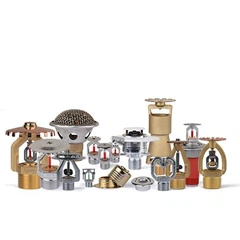
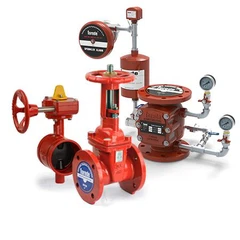
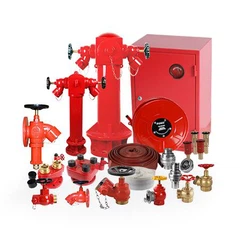
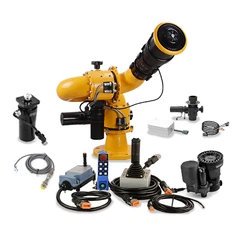
As a leading company in firefighting field,FOREDE has a wide product range including Fire Nozzle&Monitors, Fire Sprinkler Systems, Foam Systems, Fire Hydrant Systems,Fire Truck Accessories.etc.
Our address
Nan'an City, Quanzhou City Fujian PRC-China
Phone Number