


What is Deluge Valves for Fire Protection Sprinkler Systems?
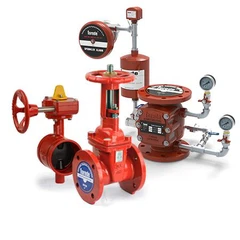
forede Deluge Valves are core components of open-type fire sprinkler systems, featuring a durable metal body, spring-loaded clapper, and pilot control mechanism. They activate rapidly via fire detection signals, discharging large-volume water simultaneously from all open sprinkler heads for full-area fire suppression. Key advantages: instant full-area suppression, flexible detection linkage, harsh environment adaptability, dual activation modes, and easy maintenance. Ideal for high-risk facilities like petrochemical plants, power plants, hazardous warehouses, and airports. Proper use involves linkage commissioning, routine maintenance, and post-fire reset. These valves are critical for protecting high-risk environments against fast-spreading fires, ensuring rapid and effective fire containment to minimize losses.
General Description
forede Deluge Valves for Fire Protection Sprinkler Systems are specialized open-type control valves designed for deluge sprinkler systems-an automatic fire suppression setup where sprinkler heads remain open and the pipeline is normally dry (without pressurized water). Unlike closed-type wet alarm valves, these deluge valves serve as the "on-off hub" that connects the main water supply to the open sprinkler network, relying on linkage with fire detection systems (e.g., smoke detectors, heat detectors, flame detectors) to activate. Their core function is to open rapidly upon receiving a fire signal, allowing large-volume water to be discharged simultaneously from all open sprinkler heads, achieving instant full-area fire suppression to contain fast-spreading or high-intensity fires.
The valve features an integrated structure consisting of a heavy-duty cast steel or 316 stainless steel valve body, a spring-loaded clapper (normally closed), a pilot control mechanism (electric, pneumatic, or hydraulic), a pressure relief port, and a linkage interface for fire detection systems. Under standby conditions, the clapper is tightly sealed by the combined force of the internal spring and pilot pressure (air or hydraulic pressure), keeping the main water supply isolated from the dry sprinkler pipeline. The fire detection system remains in continuous monitoring mode, with sensors distributed across the protected area. When a fire breaks out, the detection system quickly identifies the hazard and sends an electrical or pneumatic signal to the pilot control mechanism.
This signal triggers the pilot mechanism to release the pilot pressure, disrupting the balance on the clapper. The main water supply pressure then pushes the clapper open rapidly (within 5–10 seconds), and water rushes into the dry pipeline and is discharged simultaneously from all open sprinkler heads. A dedicated alarm port on the valve body activates a water motor gong or electronic alarm to alert on-site personnel. A key characteristic of deluge valves is their "zero-delay full-area coverage" capability-unlike wet systems that only activate individual sprinkler heads, deluge valves ensure uniform water distribution across the entire protected area, making them ideal for suppressing fires that spread quickly (e.g., oil fires, chemical fires). The valve is engineered to handle working pressures ranging from 0.2 MPa to 1.6 MPa and is compatible with various water sources, including fire pumps and high-capacity water tanks.
Advantages
forede Deluge Valves offer five distinct advantages tailored to the requirements of high-risk fire protection scenarios, focusing on rapid fire suppression, full-area coverage, and reliable linkage performance-key to containing fast-spreading, high-intensity fires that pose immediate threats to life and property.
instant full-area water discharge suppresses fast-spreading fires. Upon activation, the valve opens rapidly to allow water to flow through all open sprinkler heads simultaneously, covering the entire protected area in seconds. This eliminates the time lag associated with closed-type systems (which require individual sprinkler heads to activate), making it highly effective for suppressing fires that spread quickly, such as flammable liquid fires, chemical fires, or electrical fires in cable tunnels. The large-volume water discharge (up to 200 m³/h depending on pipeline size) creates a water curtain or uniform spray to quickly cool the fire and prevent its spread to adjacent areas.
flexible linkage with multiple fire detection systems. The valve's pilot control mechanism is compatible with a wide range of fire detection systems, including smoke detectors, rate-of-rise heat detectors, ultraviolet (UV) flame detectors, and infrared (IR) flame detectors. It can also be linked to fire alarm panels and emergency shutdown systems (e.g., for industrial equipment). This flexibility allows customization based on the specific fire risk of the protected area-for example, using UV flame detectors for fast-flame fires in chemical plants or heat detectors for high-temperature industrial processes. The dual-signal verification (detection signal + valve activation) ensures reliable operation and reduces false activation risks.
manual and automatic dual activation modes enhance safety. In addition to automatic activation via the fire detection system, the valve is equipped with a manual emergency override (handwheel or lever) that allows on-site personnel to open the valve directly in case of detection system failure or urgent fire situations. This dual activation mode ensures that the fire suppression system can be activated promptly regardless of the detection system's status. The manual override is designed for easy operation without specialized tools, enabling quick response by on-site staff during emergencies.
modular design simplifies maintenance and installation. The valve's modular structure allows for easy disassembly and replacement of key components (pilot mechanism, clapper seals, springs) without removing the entire valve from the pipeline. This reduces maintenance downtime and operational costs. The valve is also equipped with pressure gauges (for monitoring main water supply pressure and pilot pressure) and drain valves (for pipeline flushing and maintenance), facilitating routine inspections and maintenance. The standardized flange connections (ANSI Class 125/150 or GB/T 9119) ensure compatibility with various pipeline sizes and water supply systems, simplifying on-site installation.
How to Use Deluge Valves for Fire Protection Sprinkler Systems?
Proper use of forede Deluge Valves involves three key phases: pre-installation linkage commissioning, routine monitoring and maintenance, and post-fire reset and restoration. Given the valve's critical role in high-risk fire scenarios and its linkage with fire detection systems, special attention must be paid to the coordination between the valve and the detection system, as well as the integrity of the dry pipeline.
Pre-Installation Linkage Commissioning 1) Verify valve and system compatibility: Confirm that the valve's pressure rating, flow capacity, and connection size match the system design requirements; check the valve body, clapper, and pilot mechanism for damage. 2) Linkage test with fire detection system: Connect the valve's pilot mechanism to the fire detection system and fire alarm panel; simulate a fire signal (via test mode) to ensure the pilot mechanism receives the signal and releases pilot pressure, allowing the valve to open rapidly. Verify that the alarm device (water motor gong) activates simultaneously. 3) Water flow and pressure test: Open the main water supply valve to pressurize the system; check for leaks in the valve body and pipeline connections. Activate the valve to verify that the water flow rate and pressure meet design requirements, and that water is evenly distributed from all sprinkler heads. 4) Manual override test: Operate the manual emergency override to ensure the valve opens smoothly and the system activates as intended.
Routine Monitoring and Maintenance 1) Daily status monitoring: Check the pilot pressure gauge (for pneumatic/hydraulic pilot valves) and main water supply pressure gauge to ensure they are within the design range. Verify that the valve's clapper is in the closed position and the dry pipeline is free of water (use drain valves to check for accumulated water). Monitor the fire detection system's status to ensure it is functioning correctly. 2) Monthly linkage test: Simulate a fire signal to test the coordination between the detection system and the valve; ensure the valve opens within 5–10 seconds, the alarm activates, and the fire alarm panel receives the signal. Test the manual override to confirm its operability. 3) Quarterly valve inspection: Examine the valve body for corrosion, cracks, or leakage; check the clapper seal and spring for wear or deformation (replace if necessary). Clean the pilot mechanism and linkage interface to remove debris that may affect operation. Inspect the dry pipeline for blockages or damage. 4) Annual comprehensive maintenance: Disassemble the valve's pilot mechanism and clapper for cleaning and inspection; re-calibrate pressure gauges and the fire detection system. Perform a full-system water flow test to confirm the valve's performance meets design requirements.
Post-Fire Reset and Restoration 1) Emergency shutdown: After the fire is extinguished, close the main water supply valve to stop water flow. Activate the drain valves to empty residual water from the pipeline and valve body. 2) System inspection: Check the valve body, clapper, and pilot mechanism for damage (e.g., deformation, corrosion, seal wear); replace any faulty components. Inspect the dry pipeline for cracks or blockages and repair as needed. Examine the fire detection system's sensors and linkage components for fire damage and replace them if necessary. 3) Valve reset: Reinstall the clapper and seals, ensuring the valve is in the closed position. Restore the pilot pressure (for pneumatic/hydraulic pilot valves) and check for leaks. 4) System re-commissioning: Close all drain valves, slowly open the main water supply valve to pressurize the system. Perform a linkage test with the fire detection system and a manual override test to ensure the valve and system are fully functional before returning to standby mode.
Application
Petrochemical and Oil & Gas Facilities
Petrochemical and Oil & Gas Facilities are primary application areas. Oil refineries, chemical plants, fuel storage tanks, and pipeline terminals-where flammable liquids (e.g., gasoline, diesel, chemicals) are processed or stored-rely on deluge valves to suppress fires that can spread rapidly and cause explosions. The valve's instant full-area water discharge creates a water barrier around storage tanks and processing equipment, cooling the surfaces and preventing fire escalation. It is also used in offshore oil platforms and onshore oil depots, where harsh environmental conditions require robust and reliable fire suppression systems.
Industrial Plants and Manufacturing Facilities
Industrial Plants and Manufacturing Facilities with high fire risks utilize these valves. Power plants (especially coal-fired and gas-fired plants), cable tunnels, and electrical equipment rooms-where electrical fires can spread quickly through cables and cause widespread power outages-rely on deluge valves for instant suppression. Manufacturing facilities producing or processing flammable materials (e.g., rubber, plastics, textiles) also use deluge systems to protect production lines and storage areas. Additionally, metal processing plants (e.g., steel mills) use them to protect high-temperature equipment and prevent fire spread in workshops.
Large-Scale Warehouses and Logistics Centers
Large-Scale Warehouses and Logistics Centers storing hazardous goods. Warehouses storing flammable chemicals, aerosols, fireworks, or high-value combustible goods (e.g., paper, wood, textiles) require full-area suppression to prevent fires from consuming the entire inventory. Deluge valves ensure that water is discharged simultaneously from all sprinkler heads, covering large storage racks and open spaces quickly. Cold storage facilities storing flammable refrigerants (where wet systems may freeze) also use deluge systems with freeze-resistant deluge valves to ensure reliable fire suppression.
Public Infrastructure and Transportation Hubs
Public Infrastructure and Transportation Hubs with high passenger density. Airports (terminal buildings, aircraft hangars), railway stations, and subway stations-where fires can spread quickly in crowded public spaces and cause mass casualties-use deluge valves to protect critical areas. Aircraft hangars, in particular, rely on large-scale deluge systems to suppress fires involving aircraft fuel, with deluge valves ensuring instant full-area water discharge to cool the aircraft and prevent fire spread. Tunnel systems (road tunnels, rail tunnels) also use deluge valves to suppress fires in enclosed spaces where smoke accumulation and fire spread are rapid.