


What is a Fire Department Connection (FDC)?
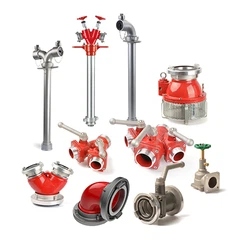
A Fire Department Connection (FDC) is a critical component of a building's fire protection system, designed to provide firefighters with a reliable means of supplying water to internal fire suppression systems, such as standpipes, sprinklers, or hydrant networks. In emergencies, especially in high-rise buildings or large structures where municipal water pressure may be insufficient, the FDC serves as a lifeline, enabling firefighters to augment water flow and pressure using external pump trucks.
The primary role of an FDC is to ensure that firefighters can quickly and efficiently deliver water to a building's fire suppression systems during a fire. When activated:
- External Water Supply: Firefighters connect a supply hose from a pump truck to the FDC, bypassing the building's internal plumbing if it is compromised or inadequate.
- Pressure Augmentation: The pump truck pressurizes the water, forcing it through the FDC and into the building's standpipe or sprinkler system, ensuring sufficient flow and reach for firefighting operations.
- Redundancy: FDCs provide a backup water source, enhancing the reliability of the fire protection system, particularly in high-risk or tall buildings.
FDCs are engineered to withstand harsh conditions and ensure compatibility with firefighting equipment. Key components include:
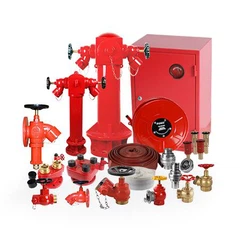
- Inlet Body: The main housing of the FDC, typically made of brass, bronze, or corrosion-resistant steel, with standardized threading (e.g., National Pipe Thread or Storz) to accept fire hose couplings.
- Valves: FDCs are equipped with check valves or clapper valves to prevent backflow, ensuring water only flows into the building's system. Some FDCs also include isolation valves to allow maintenance without shutting down the entire system.
- Caps/Plugs: Protective covers that seal the inlet when not in use, preventing debris, insects, or unauthorized access. These are often tethered to the FDC to avoid loss.
- Pressure Gauge: A built-in or nearby gauge that displays water pressure, helping firefighters monitor system performance during operation.
- Signage: Clear, permanent labeling indicating the system served (e.g., "STANDPIPE" or "SPRINKLER") and the building's address for quick identification.
FDCs are classified based on their design and intended use:
Wet-Barrel vs. Dry-Barrel:
- Wet-Barrel FDCs: Always filled with water, suitable for warmer climates where freezing is not a concern.
- Dry-Barrel FDCs: Filled with air and charged with water only when needed, ideal for cold regions to prevent freezing
- Single vs. Dual Service:
- Single-Service FDCs: Supply water to one system (e.g., standpipe only).
- Dual-Service FDCs: Can supply water to both standpipes and sprinklers, often using a "Siamese" connection with two inlets.
- Wall-Mounted vs. Freestanding:
- Wall-Mounted FDCs: Installed directly on building exteriors, the most common type.
- Freestanding FDCs: Stand-alone units, often used in industrial settings or where wall mounting is impractical.
Proper installation is crucial for FDC functionality. Key considerations include:
- Location: FDCs must be installed on the exterior of buildings, near public ways or fire lanes, and within 1.5 to 1.8 meters (5 to 6 feet) of the ground for easy access.
- Accessibility: The area around the FDC must be kept clear of obstructions, with a minimum 90 cm (3 ft) clearance on all sides.
- Protection from Damage: FDCs should be shielded from vehicle impacts, falling debris, or vandalism, often using bollards or protective cages.
- Piping Configuration: The FDC must be connected to the building's fire suppression system via piping of adequate size and material (typically steel or copper) to minimize friction loss.