

What is an Inline Foam Eductor?

What is an Inline Foam Eductor?
Inline Foam Eductor (also called an Inline Foam Proportioner or Venturi Eductor) is a mechanical device used in firefighting to automatically mix foam concentrate with water at a specific ratio before it reaches the discharge nozzle. It operates solely on water pressure and flow, requiring no external power source. Key components include:
Venturi Section: A constricted tube where water velocity increases, creating a pressure drop (vacuum).
Pickup Tube: Connects to the foam concentrate container/source. The vacuum draws concentrate into the water stream.
Mixing Chamber: Area where water and concentrate are turbulently mixed to form foam solution.
Outlet: Delivers the premixed foam solution to hoselines or fixed systems.
Designed for specific flow rates (e.g., 95 GPM, 200 GPM) and fixed ratios (commonly 1%, 3%, or 6%), eductors are typically installed "inline" on a hoseline or pump discharge. They are distinct from foam nozzles (which add air) and balanced pressure proportioning systems (which use pumps).
The core function of an Inline Foam Eductor is accurate and reliable proportioning – mixing the correct percentage of foam concentrate with water to create an effective foam solution under fireground conditions. Its purposes are:
Consistent Foam Quality: Ensures the foam solution delivered to the nozzle has the precise concentration needed for optimal firefighting performance (expansion, stability, burnback resistance). Incorrect ratios significantly reduce effectiveness.
Operational Simplicity: Provides a "set-and-forget" proportioning method. Once connected to concentrate and supplied with water at the correct flow/pressure, it operates automatically.
Resource Efficiency: Prevents wastage of expensive foam concentrate by maintaining the designed ratio.
Enabling Foam Use: Allows standard water streams (handlines, monitors, sprinklers) to deliver foam solution by simply inserting the eductor into the line. It's the essential link between concentrate and the water supply.
Inline Foam Eductors are versatile and found in numerous firefighting scenarios:
Portable Handlines: Most common use. Firefighters connect a short hose ("pickup tube") from the eductor to a 5-gallon pail or larger container of foam concentrate on the apparatus. The eductor is then connected inline on the attack hoseline.
Apparatus-Mounted Systems: Many fire engines have pre-piped eductors drawing from an onboard foam tank, feeding discharges like deck guns, bumper turrets, or rear discharges for rapid deployment.
Foam-Water Monitors: Large portable or fixed monitors often have integrated or dedicated eductors for high-flow foam application.
Fixed Foam Systems (Smaller Scale): Protecting hazards like fuel loading racks, transformer yards, or small storage areas where simpler proportioning is acceptable (often drawing from day tanks).
Wildland Firefighting: Used with backpacks (Rattler type) or on skid units to apply foam or Class A foam for wetting and penetration.
Industrial Facilities: For mobile or semi-fixed foam applications within plants.
Training: Essential for teaching foam principles and application techniques.
The operation relies entirely on fluid dynamics (Bernoulli's Principle):
Water Flow: Pressurized water enters the eductor inlet and flows into the converging venturi section.
Velocity Increase & Pressure Drop: As the water passes through the narrow venturi throat, its velocity drastically increases. According to Bernoulli, this increase in velocity causes a corresponding decrease in pressure, creating a strong vacuum (suction) at the throat.
Concentrate Draw: This vacuum opens a check valve and sucks foam concentrate up the pickup tube from its container (which must be at or below the eductor).
Mixing: The concentrate is injected into the high-velocity water stream at the venturi throat. Turbulent flow in the downstream mixing chamber thoroughly blends the concentrate with the water, forming a homogeneous foam solution.
Solution Delivery: The premixed foam solution exits the eductor outlet and flows through the hoseline to the nozzle. The nozzle's role is then to aerate this solution into finished foam.
Advantages:
Simplicity & Reliability: No moving parts or external power required. Rugged and easy to maintain.
Cost-Effective: Significantly cheaper than balanced pressure or pump-around proportioning systems.
Portability: Easy to deploy on any hoseline with minimal equipment (hose, eductor, pickup tube, concentrate).
Automatic Operation: Proportioning starts/stops instantly with water flow.
Accuracy (Within Design): Provides consistent ratio when operated at its rated flow and pressure.
Wide Availability & Standardization: Common equipment meeting standards (e.g., NFPA 1901, NATO STANAG).
Limitations:
Pressure & Flow Dependent: Must be operated at the manufacturer's specified inlet pressure (e.g., 150-200 PSI) and flow rate to achieve the designed ratio. Deviation causes incorrect proportioning (usually under-proportioning).
Backpressure Sensitive: Excessive backpressure (long hoselines, high elevation, kinks, clogged nozzles) downstream of the eductor disrupts the vacuum, stopping concentrate pickup. Maximum allowable backpressure is typically low (e.g., 40-70% of inlet pressure).
Limited Viscosity Range: Designed for standard AFFF/FFFP/Class A concentrates. Thick concentrates (some AR-AFFF, protein) or cold temperatures can impede flow through the pickup tube.
Fixed Ratio: One eductor provides only one specific ratio (e.g., 3%). Changing ratios requires switching eductors or concentrate type.
Limited Suction Lift: Generally limited to lifting concentrate vertically about 6 feet. Containers must be positioned at or below the eductor.
Potential for Aeration: Air leaks in the pickup tube or at the concentrate container connection prevent concentrate pickup.
Not Ideal for All Concentrates: Can struggle with very high viscosity or non-Newtonian AR foams compared to pump systems.
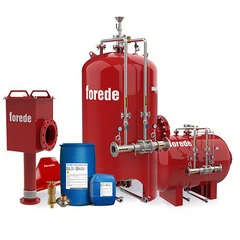
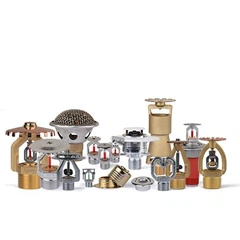
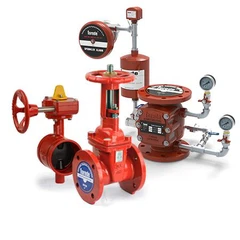
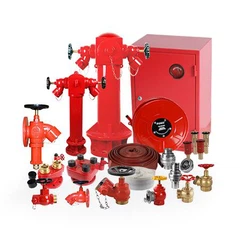
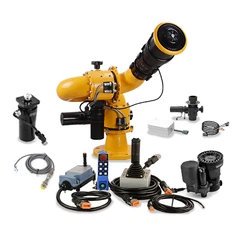
As a leading company in firefighting field,FOREDE has a wide product range including Fire Nozzle&Monitors, Fire Sprinkler Systems, Foam Systems, Fire Hydrant Systems,Fire Truck Accessories.etc.
Our address
Nan'an City, Quanzhou City Fujian PRC-China
Phone Number