

What is a High Expansion Foam Nozzle/Generator?

What is a High Expansion Foam Nozzle/Generator?
High Expansion Foam Nozzle, more accurately termed a High Expansion Foam Generator (HEF Generator), is a specialized firefighting appliance designed to produce massive volumes of fire-suppressing foam by mechanically aspirating very large quantities of air into a relatively small stream of foam solution (water + foam concentrate). Its defining characteristic is generating foam with an extremely high expansion ratio, typically ranging from 200:1 to over 1000:1. This means for every 1 unit volume of foam solution entering the generator, it outputs 200 to 1000+ unit volumes of finished foam. Physically, HEF generators are distinct. Common types include:
Portable/Wheeled Generators: Feature a large, open, cage-like structure (aspiration chamber) surrounding a spray nozzle or distributor. A powerful fan (electric, hydraulic, water-powered turbine, or pneumatic) forces air through this chamber.
Fixed Generators: Mounted in protected areas like hangars or warehouses, often ducted to discharge points.
Trailer-Mounted: For large-scale deployment.
Foam solution is sprayed into the high-velocity air stream within the aspiration chamber. The turbulent mixing creates a multitude of large, fragile, mostly air-filled bubbles. The resulting foam is very light, dry, and resembles shaving cream or snow, forming large, cohesive blocks rather than flowing like liquid.
The core function of a High Expansion Foam Generator is to rapidly fill large enclosed or confined volumes with a non-combustible, oxygen-displacing, cooling foam mass to extinguish fires and prevent their spread. It achieves this through unique mechanisms:
Oxygen Displacement (Smothering): The sheer volume of foam physically displaces the air (oxygen) within the protected space, dramatically reducing oxygen concentration below the level needed to sustain combustion (typically below 15%, often much lower).
Cooling: Although the foam itself has low water content per bubble, the massive volume means significant total water is introduced. The water within the bubble walls absorbs heat as the foam contacts flames and hot surfaces, cooling the environment and fuel.
Fuel Separation & Vapor Suppression: The foam forms a cohesive blanket over burning or exposed fuels, separating them from atmospheric oxygen and suppressing flammable vapor release.
Smoke & Gas Displacement: The expanding foam mass pushes smoke and hot, toxic gases out of the space through designated vents, improving visibility and tenability for potential firefighter entry during overhaul.
Radiation Shielding: The thick foam layer acts as an insulating barrier, reducing radiant heat transfer to exposed fuels or structures.
High Expansion Foam Generators excel in scenarios requiring rapid filling of large, enclosed, or difficult-to-access volumes where traditional agents are ineffective:
Aircraft Hangars: The primary application. Fills the entire hangar volume to protect aircraft and the structure from a fire anywhere within, especially critical under large, inaccessible aircraft wings/fuselage.
Warehouses & Storage Facilities: Protecting high-bay warehouses storing valuable or combustible goods, particularly where fire might be deep-seated (e.g., rolled paper, tires, textiles).
Substations & Transformer Rooms: Safely suppressing fires involving oil-filled electrical equipment where water spray could cause arcs/shorts; foam acts as an insulating blanket.
Shipboard Compartments: Machinery spaces, cargo holds, vehicle decks.
Mine Tunnels & Galleries: Filling tunnels to extinguish fires and block passage of smoke/fumes.
Basements & Underground Structures: Filling complex, confined spaces where access is limited.
Nuclear Facilities: Used in some designs for volume protection in certain compartments.
Tunnels (Limited): Potential for protecting emergency exits or service rooms, though less common for main bores than water mist/sprinklers.
High-Risk Storage: Areas storing flammable liquids in containers where a large spill fire could occur.
The high expansion ratio is the defining feature enabling HEF's unique firefighting capabilities:
Rapid Volume Fill: The core purpose. Generating 200-1000+ times the volume of the solution used allows a single generator to fill enormous spaces (thousands of cubic meters/feet) incredibly quickly, achieving total flood protection faster than any other agent.
Effective Oxygen Displacement: The foam's low density (high air content) allows it to completely fill a space, leaving minimal air pockets and maximally reducing oxygen concentration to extinguishing levels.
Buoyancy & Stability (in confined spaces): The light foam rises naturally, filling the space from the top down and conforming to complex geometries. Within an enclosed space, it's relatively stable despite its fragility.
Minimal Water Damage: Uses significantly less water than sprinklers or low/medium expansion foam to protect the same volume, drastically reducing water damage to sensitive contents (aircraft electronics, archives, stored goods).
Insulating Properties: The high air content creates excellent thermal insulation within the foam mass, shielding underlying fuels and structures from intense radiant heat.
Penetration: The foam can flow around obstacles and into cavities within the space, reaching fires hidden behind equipment or within stored materials.
Weight: The foam is light enough not to collapse ceilings or damage most stored goods under its weight.
Advantages:
Unmatched Speed for Volume Fill: Rapidly floods large, enclosed spaces, crucial for preventing fire spread in complex structures like hangars.
Effective Oxygen Deprivation: Highly effective at smothering fires by drastically reducing oxygen levels throughout the protected volume.
Reduced Water Damage: Minimal water usage compared to other suppression methods, protecting valuable assets.
Excellent Insulation: Provides significant radiant heat shielding for exposures.
Accessibility: Can suppress fires in areas inaccessible to firefighters (under aircraft, high racks, deep within storage).
Smoke/Gas Displacement: Clears smoke, improving conditions for eventual overhaul.
Suitable for Class A & Certain Class B: Effective on solid fuels and some contained flammable liquid fires (where foam blanket can form).
Limitations:
Confinement Requirement: ABSOLUTELY CRITICAL. HEF is only effective in well-sealed enclosures. Open doors, windows, or large vents prevent foam buildup and allow oxygen ingress, rendering it ineffective. Requires complex sealing systems in facilities.
Foam Fragility: The foam is very delicate. Strong air currents (ventilation, wind), water spray, or physical disturbance easily break it down.
Limited Cooling Power Per Unit Volume: While total cooling is significant, the foam has less immediate surface cooling power than low expansion foam or water on direct contact.
No Sub-surface Capability: Too light for use on open liquid spills or sub-surface injection.
Limited Outdoor Use: Generally ineffective outdoors due to wind dispersion and lack of confinement.
Complex Installation & Maintenance: Fixed systems require sophisticated ductwork, sealing mechanisms, and reliable power for fans. Maintenance is crucial.
Potential Overpressurization: Rapid foam generation in a tightly sealed space can create damaging pressure if not properly vented.
Cleanup: Large volumes of collapsed foam require extensive, often messy, cleanup operations.
Cost: High initial cost for fixed systems. Portable units require significant resources (power source, large solution supply).
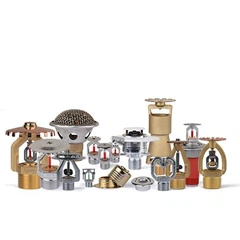
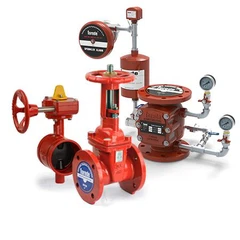
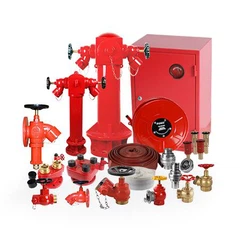
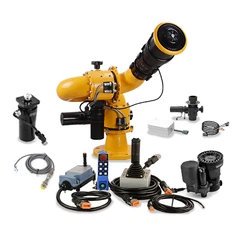
As a leading company in firefighting field,FOREDE has a wide product range including Fire Nozzle&Monitors, Fire Sprinkler Systems, Foam Systems, Fire Hydrant Systems,Fire Truck Accessories.etc.
Our address
Nan'an City, Quanzhou City Fujian PRC-China
Phone Number