


What is Fire Water Cum Foam Monitors?
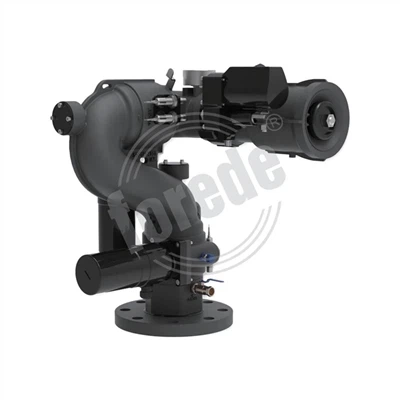
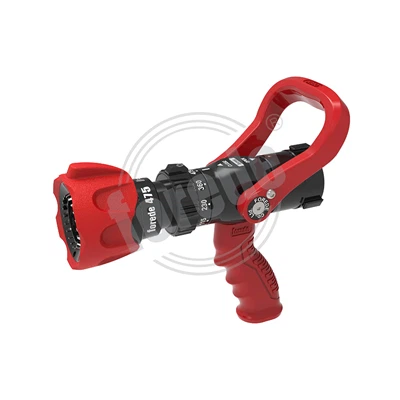
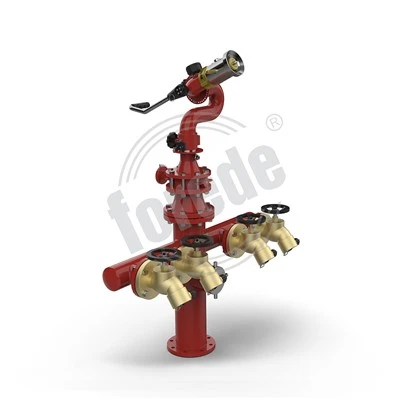
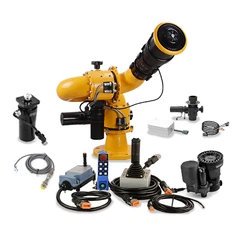
forede Fire Water cum Foam Monitors is an SS304 stainless steel mechanical device with integrated handle control, water/foam compatibility, and three flow rates (24/32/48 LPS). Operating at 0.8-1.0 MPa, it offers 42-55m water stream distance, dual modes, and 360° adjustment via one-handed operation, no electricity required. Key strengths include adjustable flow for multi-scale fires, SS304 corrosion resistance, seamless media/mode switching, and cost-effectiveness. It is widely used in coastal ports, petrochemical workshops, gas stations, and ship decks for Class A/B/C fire suppression.
General Description
forede Fire Water cum Foam Monitors is a professional mechanical fire suppression device featuring full SS304 stainless steel construction, integrated handle control, water/foam dual-medium compatibility, and three adjustable flow rates (24/32/48 LPS). Operating at 0.8-1.0 MPa, it offers maximum straight stream distances of 50-65 meters (water) and 42-55 meters (foam), with 360° horizontal and -55° to +75° vertical adjustment via one-handed handle operation. All key functions-flow regulation, media switching, stream mode, and direction-are centralized on the handle for seamless operation.
Core advantages include one-handed operational agility, SS304's corrosion resistance to saltwater and foam, adjustable flow rates for multi-scale fires, seamless dual-medium/stream switching, mechanical reliability (no electricity), and cost-effectiveness. These features make it ideal for coastal ports, petrochemical workshops, gas stations, and ship decks-scenarios needing tailored suppression for fires of varying sizes and types.
Its workflow follows simple mechanical steps: standby with locked handle and closed valves, manual activation via inlet valves, handle adjustment of parameters, targeted suppression matching fire scale, and post-fire reset with foam residue flushing. The monitor balances versatility, durability, and simplicity, delivering consistent, reliable protection for small to medium-sized high-risk areas without complex systems.
Advantages
forede Fire Water cum Foam Monitors boasts five core advantages, centered on its integrated handle control, full SS304 stainless steel construction, water/foam dual-medium compatibility, and three adjustable flow rates. These advantages address the demand for agility, durability, and scenario adaptability in manual fire suppression, outperforming conventional monitors in operational efficiency and fire-targeting precision.
Integrated handle control for one-handed operation. The ergonomic handle centralizes flow rate adjustment (24/32/48 LPS), water/foam switching, stream mode toggling, and direction control, allowing operators to respond to dynamic fires quickly with a single hand. This streamlined design reduces operational steps and fatigue, critical for suppressing fast-spreading flammable liquid fires where every second counts. The lever-driven mechanism ensures labor-saving operation even under high pressure.
SS304 durability and multi-environment resistance. The full SS304 stainless steel structure resists corrosion from saltwater, foam additives, industrial fumes, and moisture, avoiding rust, pitting, or material degradation. Unlike carbon steel alternatives, it maintains structural integrity after long-term outdoor exposure or contact with extinguishing foam, extending service life to over 10 years under normal operation and minimizing maintenance needs.
adjustable flow rates for multi-scale fire adaptation. The 24/32/48 LPS flow gears enable precise matching to fire intensity: 24 LPS for small localized blazes (e.g., equipment leaks), 32 LPS for medium-scale fires (e.g., cargo stacks), and 48 LPS for large-area flammable liquid spills. This flexibility avoids resource waste from excessive water/foam use and ensures sufficient suppression power for larger fires, enhancing universal applicability.
seamless dual-medium and stream mode switching. Dedicated toggles on the handle enable instant switching between water and foam, as well as straight stream and spray modes, without interrupting suppression work. Foam mode forms an oxygen-isolating film to smother Class B fires and prevent re-ignition, while water mode handles Class A fires; straight stream targets distant blazes, and spray covers wide areas, adapting to diverse fire types.
How Do Fire Water Cum Foam Monitors?
forede Fire Water cum Foam Monitors operates through a simple, reliable mechanical workflow, leveraging integrated handle control, dual-medium nozzle, adjustable flow rates, and SS304 structural stability. The process involves standby preparation, manual activation, handle-based parameter adjustment, fire suppression, and post-operation reset, requiring no external power and ensuring immediate emergency responsiveness.
Standby State: Ready for Deployment The monitor connects to both the fire water supply and foam mixing unit via standardized flange connections. Inlet valves remain closed, and the nozzle is locked in a preset position via the handle's mechanical lock. The handle is set to the default flow rate (typically 32 LPS), media (water), and stream mode (straight stream) based on the site's primary risk. SS304 components remain corrosion-resistant in standby, even in harsh coastal or chemical environments.
Activation: Manual Valve Opening When a fire is detected, operators unlock and open the corresponding inlet valves-water valve only for Class A fires, and both water and foam valves for Class B fires. The foam mixing unit automatically blends concentrate with water at the correct ratio. High-pressure water or foam mixture flows into the SS304 barrel instantly, with no electrical delays. Operators then release the handle's lock to enable adjustments.
Handle-Based Parameter Adjustment Operators use the handle to control all parameters: rotating horizontally (360°) and tilting vertically (-25° to +80°) to align with the fire; toggling flow rate (24/32/48 LPS) based on fire scale; switching between water/foam media; and adjusting stream mode (straight stream/spray). All operations are one-handed, with no additional tools. Once set, the handle's lock secures the nozzle against high-pressure drift.
Fire Suppression and Reset The water/foam mixture forms the selected stream: straight stream for distant fires, spray for wide areas, and foam for liquid fire oxygen isolation. Operators fine-tune parameters via the handle as the fire evolves. After extinguishing, operators close inlet valves, flush the nozzle with water to remove foam residue, reset the handle to default settings, and re-engage the lock. Routine checks include cleaning the SS304 nozzle, inspecting seals, and lubricating the handle's transmission.
Application
Coastal Small Ports and Fuel Terminals
Coastal Small Ports and Fuel Terminals are primary application areas. These venues face salt spray corrosion and fires of varying scales-from small lubricant leaks to large fuel spills. The SS304 structure ensures durability, while the 48 LPS flow rate handles large spills, 32 LPS for medium blazes, and 24 LPS for minor leaks. The handle's one-handed operation allows quick adjustment on narrow docks, and foam mode effectively suppresses flammable liquid fires, suiting coastal operations with limited staff.
Small Petrochemical Workshops and Chemical Warehouses
Small Petrochemical Workshops and Chemical Warehouses utilize this monitor for targeted protection. Facilities handling solvents, oils, or chemical raw materials encounter fires ranging from small drum leaks to medium-scale storage area blazes. The 24 LPS gear is ideal for confined-space small fires, 32 LPS for equipment-related blazes, and 48 LPS for large chemical spills. Foam mode smothers Class B fires, water mode handles Class A fires, and SS304 resists chemical vapors and foam erosion.
Gas Stations and Small Fuel Depots
Gas Stations and Small Fuel Depots deploy it for fire safety in fuel storage and dispensing zones. The all-mechanical handle operation eliminates electrical hazards in explosive environments, while foam mode forms a protective film on fuel spills. The adjustable flow rates adapt to leaks (24 LPS) or small storage tank fires (32/48 LPS), and the SS304 material resists fuel vapor corrosion. Its low maintenance suits 24/7 unattended or lightly staffed facilities.
Ship Decks and Marine Vessels
Ship Decks and Marine Vessels are another key application. Small to medium-sized ships face fire risks from fuel, cargo, or engine failures, with limited deck space and exposure to saltwater. The monitor's compact size, SS304 saltwater resistance, and handle operation (one-handed control for balance) make it ideal. Adjustable flow rates adapt to small engine room fires (24/32 LPS) or large cargo spills (48 LPS), integrating seamlessly with shipboard fire systems.