

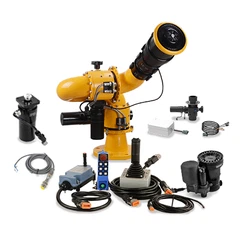
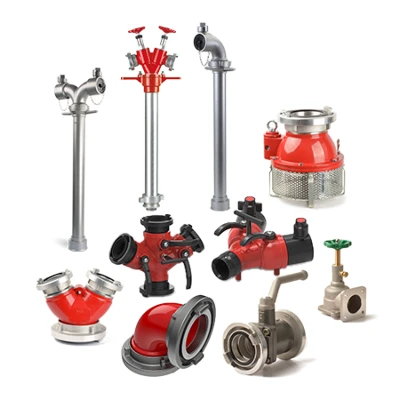
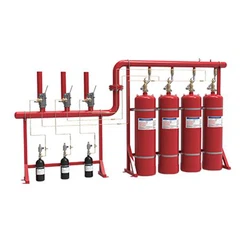

What is Fire Water Cum Foam Monitors?
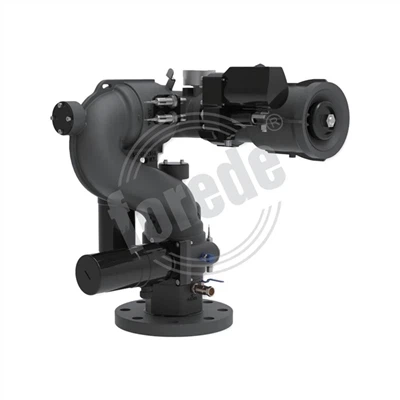
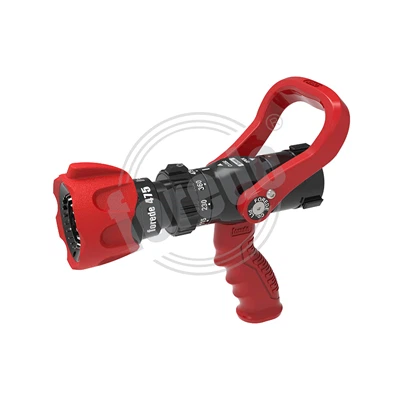
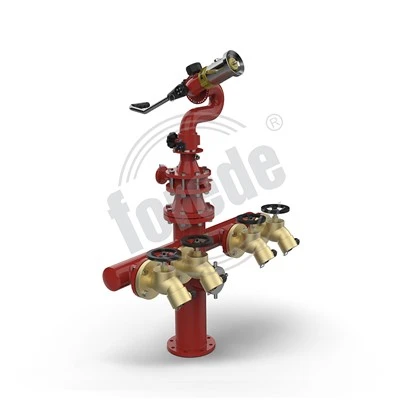
forede Fire Fixed Station Manual Fire Fighting Water Monitor is a permanently mounted mechanical device with SS304 body, aluminum alloy nozzle, and handle control. It has 20-30-40LPS adjustable flow rates (50-65M range), operates at 0.8-1.0 MPa, and supports dual stream modes via one-handed operation. Key strengths include fixed-installation stability, corrosion resistance, scale-adaptive flow, and mechanical reliability. It is widely used in industrial facilities, warehouses, coastal docks, and high-rise perimeters for Class A/B fire suppression.
General Description
forede Fire Fixed Station Manual Fire Fighting Water Monitor is a professional fixed-installation fire suppression device, engineered for permanent deployment in key fire-risk zones. It features a robust SS304 stainless steel body for structural durability and an aluminum alloy nozzle head for lightweight maneuverability, paired with an ergonomic handle for full manual operation. Designed exclusively for fire water application, it offers three adjustable flow rates-20 LPS (72 m³/h), 30 LPS (108 m³/h), and 40 LPS (144 m³/h)-with corresponding maximum jet ranges of 50 meters, 58 meters, and 65 meters, ensuring targeted suppression for fires of varying scales.
As a fixed-station unit, it is permanently mounted via standardized flange connections to pre-designated positions (e.g., building rooftops, warehouse corners, dock platforms), integrating seamlessly with the central fire water supply system. Operating at a working pressure of 0.8-1.0 MPa, it supports seamless switching between straight stream (for long-range targeting) and spray (for wide-area coverage) modes, with a spray angle of 105°. The non-slip handle enables 360° smooth horizontal rotation and -55° to +85° vertical tilting, complemented by a mechanical self-locking mechanism to secure the nozzle position under high water pressure.
Distinguishing itself from mobile fire monitors, its fixed installation ensures stable positioning and continuous water supply, while the all-mechanical structure (no electrical components) guarantees reliability in power outages, dusty industrial environments, or extreme weather. The SS304 body resists corrosion from moisture, salt spray, and industrial fumes, while the aluminum alloy nozzle reduces overall weight for effortless handle adjustment. It effectively suppresses Class A (solid combustibles) and Class B (flammable liquids) fires, serving as a low-maintenance, long-lasting solution for fixed-point fire protection.
Advantages
forede Fire Fixed Station Manual Fire Fighting Water Monitor boasts five core advantages, centered on its fixed-installation design, SS304+aluminum alloy material combination, adjustable 20-30-40LPS flow rates, and manual handle control. These advantages address the demand for stable, reliable, and targeted fixed-point fire suppression, outperforming mobile monitors in installation stability and long-term operational consistency.
fixed-installation stability and continuous supply. Permanently mounted via flange connections, it maintains firm positioning even under maximum 40 LPS flow pressure, avoiding displacement during high-intensity suppression. Integrated with the central fire water system, it ensures uninterrupted water supply for prolonged fires, eliminating the need for manual water source deployment-critical for large-scale blazes that require sustained suppression.
adjustable flow rates for scale-adaptive suppression. The 20/30/40 LPS fixed flow gears precisely match fire intensity: 20 LPS for small localized blazes (e.g., equipment leaks), 30 LPS for medium-scale fires (e.g., palletized cargo), and 40 LPS for large-area outbreaks (e.g., outdoor yards). Each gear delivers consistent jet range (50-65M) and water pressure, avoiding resource waste and ensuring sufficient suppression power.
integrated manual handle control for agility. The ergonomic handle centralizes flow switching, mode adjustment, and direction control, enabling one-handed operation without additional tools. Smooth mechanical transmission ensures 360° horizontal rotation and flexible vertical tilting, allowing quick targeting of moving or scattered fires-compensating for fixed installation with operational agility.
mechanical reliability and cost-effectiveness. The all-mechanical design eliminates electrical failures, ensuring performance in power outages, humidity, or dust. It has lower initial and maintenance costs than automated fixed monitors, with routine upkeep limited to nozzle cleaning, seal inspection, and handle lubrication-no specialized technical support required.
How Do Fire Water Cum Foam Monitors?
forede Fire Fixed Station Manual Fire Fighting Water Monitor operates through a reliable mechanical workflow, leveraging fixed installation, integrated handle control, and adjustable flow rates. The process-standby, activation, adjustment, suppression, and reset-relies on manual operation and central water supply, requiring no external power and ensuring immediate response to emergencies.
Standby State: Permanent Readiness Permanently mounted via flange connections to the central fire water system, the monitor remains in standby with the inlet valve closed. The nozzle is locked in a preset position (aligned with high-risk zones) via the handle's mechanical lock, set to default 30 LPS flow and straight stream mode. The SS304 body and aluminum alloy nozzle are protected from environmental damage, maintaining corrosion resistance and structural integrity.
Activation: Rapid Water Supply When a fire is detected, operators unlock and open the inlet valve (connected to the central fire water system) to deliver high-pressure water to the monitor. Water instantly fills the SS304 body and flows to the aluminum alloy nozzle, with no delays from electrical systems. Operators then release the handle's self-locking mechanism to initiate parameter adjustments, transitioning quickly to operational status.
Handle-Based Adjustment Using the integrated handle, operators control all functions: rotating horizontally (360°) and tilting vertically (-55° to +75°) to align the nozzle with the fire; toggling flow rate (20/30/40 LPS) based on fire scale and range; and switching between straight stream (long-range) and spray (wide-area) modes. All operations are one-handed, with smooth mechanical transmission ensuring precise adjustments even under high pressure.
Suppression and Post-Operation Reset High-pressure water forms the selected stream, suppressing fires via targeted penetration (straight stream) or wide-area cooling (spray). Operators fine-tune parameters as the fire evolves to maintain effectiveness. After extinguishing, operators close the inlet valve, flush the nozzle with residual water, adjust the nozzle back to the preset position, and re-engage the handle lock. Routine checks include cleaning the aluminum alloy nozzle, inspecting flange seals for leaks, and lubricating the handle's transmission.
Where to use Fire Fixed Station Manual Fire Fighting Water Monitor?
Large Industrial Workshops and Manufacturing Plants
Large Industrial Workshops and Manufacturing Plants are primary applications. These venues have fixed production zones and extensive layouts, requiring permanent fire points to cover equipment lines, storage areas, and assembly stations. Mounted at strategic corners, the monitor uses 40 LPS flow and 65M range to cover wide workshops, 30 LPS for equipment-focused blazes, and 20 LPS for minor leaks. The SS304 body resists industrial fumes, ensuring long-term reliability.
Large Warehouses and Logistics Centers
Large Warehouses and Logistics Centers utilize it for zone-specific protection. Warehouses storing paper, wood, or packaged goods have high fire spread risks, requiring fixed monitors at aisle intersections or cargo yard edges. The 65M range covers large open spaces, while adjustable flow rates adapt to small storage room fires (20 LPS) and large cargo piles (40 LPS). Fixed installation avoids obstruction of logistics operations, and the mechanical lock ensures stable positioning during suppression.
Coastal Docks and Port Terminals
Coastal Docks and Port Terminals deploy it for saltwater-resistant fixed protection. Mounted on dock platforms or cargo handling zones, it endures salt spray corrosion via the SS304 body, while the 65M range targets fires on small vessels or cargo stacks. The 40 LPS flow handles large fuel spills, and the aluminum alloy nozzle enables easy handle adjustment in windy coastal conditions-suiting 24/7 port operations with limited on-site staff.
High-Rise Building Perimeters and Parking Garages
High-Rise Building Perimeters and Parking Garages are another key use case. Fixed at ground-level perimeters or rooftop platforms, the 65M range suppresses exterior fires (e.g., cladding, balconies) without aerial support. Underground parking garages mount it at entry points, using 20-30 LPS flow for vehicle fires and the straight stream mode to target engine compartments. The corrosion-resistant design withstands garage humidity and exhaust fumes.