


What is a Portable Manual Fire Water Cannon?
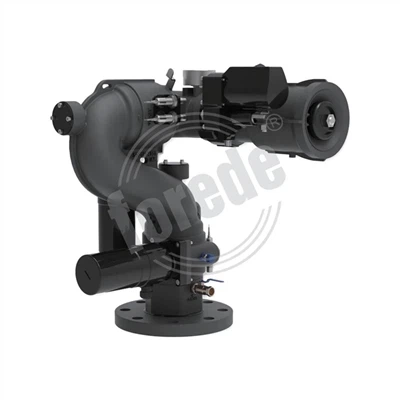
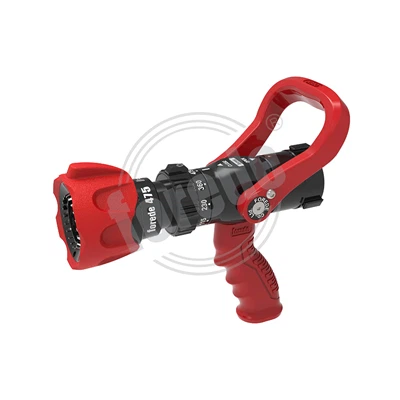
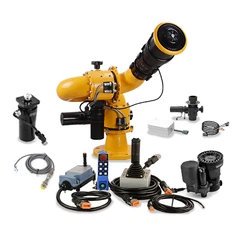
forede Portable Manual Fire Water Cannon is professional mobile fire-fighting equipment made of high-quality aluminum alloy, with 20-30-40LPS optional flow rates. The aluminum alloy body endows it with lightweight, durability, and corrosion resistance, making it easy to carry, move, and deploy in various emergency scenarios. As a manual-operated device, it relies on simple and intuitive controls to adjust flow rates and spray angles, avoiding power dependence and ensuring usability in power outages or remote areas. It has four distinct advantages and is applicable to four main scenarios, covering outdoor areas, indoor emergencies, rescue sites, and industrial/commercial backup protection. The three flow rate options adapt to different fire scales, from small initial fires to large-scale ones, ensuring targeted and efficient suppression. Easy to operate and maintain, it can be quickly activated in emergencies, serving as a reliable complement to fixed fire protection systems. With its flexible performance and stable quality, it is an indispensable tool for emergency fire rescue, effectively safeguarding personnel and property safety.
General Description
forede Portable Manual Fire Water Cannon is a professional mobile fire-fighting equipment designed for flexible and targeted emergency fire suppression, featuring high-quality aluminum alloy material and 20-30-40LPS optional flow rates as its core characteristics. The aluminum alloy body provides excellent lightweight performance, structural strength, and corrosion resistance, making the cannon easy to carry, move, and deploy in various fire scenarios while ensuring long-term stable operation. As a manual-operated device, it relies on intuitive manual controls to adjust flow rates and spray angles, avoiding reliance on power supply and ensuring usability in power outages or remote areas. The equipment has four distinct advantages: lightweight and durable aluminum alloy construction, flexible 20-30-40LPS flow rate adjustment, reliable manual operation, and easy deployment with high compatibility. It is widely applicable to four main scenarios: outdoor areas, indoor emergency sites, emergency rescue sites, and industrial/commercial backup fire protection, adapting to diverse fire scales and working environments. The cannon integrates portability, durability, and operability, with a simple structure that is easy to install and maintain, compatible with various water supply sources. The standardized use process, including pre-use preparation, deployment, fire suppression, and post-use maintenance, ensures the cannon can be quickly put into use in emergencies. Overall, forede Portable Manual Fire Water Cannon is a reliable, flexible, and practical fire-fighting tool, providing critical support for emergency fire rescue, filling the gaps in fixed fire protection coverage, and safeguarding personnel and property safety in various fire scenarios.
Advantages
forede Portable Manual Fire Water Cannon has four distinct outstanding advantages, fully meeting the emergency fire suppression needs of various complex scenarios, combining practicality, durability, and flexibility, with the 20-30-40LPS optional flow rate as a core highlight.
excellent lightweight and durability brought by high-quality aluminum alloy material. Compared to traditional metal materials, aluminum alloy significantly reduces the overall weight of the cannon, making it easy to carry by hand, lift, or move via its wheeled base (for larger models), even in narrow or uneven terrain. Despite its lightweight, the aluminum alloy structure maintains strong load-bearing capacity and impact resistance, able to withstand the high water pressure required for 20-40LPS flow rates during operation and resist accidental collision or damage in harsh fire rescue environments. The surface of the aluminum alloy cannon undergoes special anti-corrosion treatment, effectively resisting moisture, dust, and slight chemical erosion from fire scenes, ensuring stable operation and extending the service life of the equipment.
flexible 20-30-40LPS optional flow rate, which provides targeted fire suppression solutions for different fire scales. The 20LPS flow rate is ideal for small initial fires, minimizing water waste while ensuring effective suppression; the 30LPS flow rate is suitable for medium-scale fires, balancing suppression efficiency and water consumption; the 40LPS flow rate delivers a powerful water jet to quickly control large-scale or fierce fires, preventing further spread. This flexibility allows the cannon to adapt to diverse fire scenarios without unnecessary water waste or insufficient suppression power
reliable and flexible manual operation design. The cannon is equipped with simple and intuitive manual controls, including a flow rate adjustment valve and a spray angle handle, allowing firefighters to quickly adjust the flow rate and spray direction (horizontally and vertically) according to the fire situation without complex training. Manual operation also avoids reliance on power supply, ensuring the cannon can be used normally even in power outages or remote areas without electricity, which is crucial for emergency fire rescue in harsh environments.
easy deployment and high compatibility. It can be quickly connected to various water supply sources, including fire hoses, fire trucks, and mobile water tanks, and its portable design allows rapid transportation to any fire site, making it suitable for both indoor and outdoor emergency scenarios. The simple connection structure and compact size also enable it to be deployed in narrow spaces, filling the gaps of fixed fire protection equipment and providing timely fire suppression support.
Why Choose Portable Manual Fire Water Cannon
The use of forede Portable Manual Fire Water Cannon follows a simple and standardized process, focusing on portability, manual operation, and flow rate adjustment (20-30-40LPS), ensuring that the equipment can be quickly put into use in emergency scenarios, with each step designed to maximize efficiency and safety. Firstly, pre-use preparation is essential. Before use, check the overall condition of the cannon, including the aluminum alloy body for cracks, deformation, or damage, the water inlet interface for leakage, the spray nozzle for blockage, and the manual control components (flow rate valve, angle handle) for flexibility. Confirm that the flow rate adjustment valve can switch smoothly between 20LPS, 30LPS, and 40LPS, ensuring no jamming or malfunction. Prepare the required fire hoses and water supply source (fire truck, mobile water tank, or fixed water pipeline), and confirm that the water supply pressure meets the operation requirements of the selected flow rate to avoid insufficient water flow or equipment damage. Secondly, deployment should be rapid and accurate. Transport the cannon to the fire scene quickly, either by hand carrying (for small models) or pushing the wheeled base (for larger models), and place it on a flat and stable surface to avoid tilting during operation, which could affect spray accuracy. Adjust the initial position of the cannon to face the fire source, and ensure there is no obstruction between the cannon and the fire source to ensure effective spray coverage. Connect one end of the fire hose to the water inlet interface of the cannon, and tighten it firmly to ensure no leakage; connect the other end of the hose to the water supply source, checking for tightness again. Thirdly, fire suppression operation requires precise control. After confirming the connection is tight, open the water supply valve to inject water into the cannon. Use the manual flow rate adjustment valve to select the appropriate flow rate according to the fire scale: 20LPS for small initial fires, 30LPS for medium-scale fires, and 40LPS for large-scale fires. Use the angle handle to adjust the spray angle (horizontally and vertically) to align the nozzle with the fire source accurately, ensuring the water jet covers the entire fire source. During operation, continuously adjust the flow rate and spray angle according to the fire spread direction, and move the cannon as needed to follow the fire, ensuring comprehensive suppression. Finally, post-use maintenance is crucial for long-term use. After the fire is extinguished, close the water supply valve and disconnect the fire hose from the cannon and water supply source. Drain the residual water in the cannon and hoses to avoid internal corrosion, especially for the aluminum alloy components. Clean the spray nozzle and water inlet interface to remove debris or scale that may cause blockage. Inspect the aluminum alloy body, manual control components, and flow rate valve for damage, corrosion, or deformation, and repair or replace any damaged components if necessary. Wipe the cannon clean, store it in a dry and ventilated place, and check it regularly to ensure the flow rate adjustment function is normal and the equipment is in good standby condition for the next use.
Where to use Portable Manual Fire Water Cannon?
outdoor areas,
outdoor areas, such as construction sites, outdoor storage yards, oil depots, open-air industrial areas, and rural areas. These places have large open spaces, scattered fire risks, and limited fixed fire protection equipment, and often lack stable power supply. The portable manual design allows firefighters to quickly move the cannon to the fire source, even in uneven or remote areas, and select the appropriate flow rate (20-40LPS) according to the fire scale to carry out fire suppression operations. For example, in construction sites where flammable materials (such as wood, paint) are stored, the 20LPS flow rate can suppress initial fires, while the 40LPS flow rate can handle large-scale fires in outdoor storage yards.
indoor emergency sites
indoor emergency sites, such as large warehouses, shopping malls, factories, basements, and old buildings. These indoor spaces may have complex structures, narrow corridors, or frequent power outages, making fixed or automatic fire equipment ineffective. The lightweight aluminum alloy cannon can be carried through narrow passages to reach the fire source, and firefighters can manually adjust the flow rate and spray angle to target fires near flammable materials or valuable equipment, avoiding unnecessary damage. The 20-30LPS flow rates are particularly suitable for indoor scenarios to prevent excessive water damage while ensuring effective suppression.
emergency rescue sites
emergency rescue sites, such as vehicle fires, small-scale forest fires, and temporary event venues. Vehicle fires often occur on roads or remote areas, and the portable manual cannon can be quickly transported by emergency vehicles to the scene, connected to fire hoses, and used with the 30-40LPS flow rate to suppress the fire, preventing explosions. For temporary event venues (such as outdoor concerts, fairs) or small-scale forest fires, the 20-30LPS flow rate is flexible enough to fill the gaps in fixed fire protection, ensuring rapid response to initial fires.
industrial
industrial and commercial backup fire protection, such as chemical plants, logistics centers, hotels, and power stations. These places have high fire risks, and the portable manual cannon can be placed in key areas as a backup, ensuring that in case of fixed fire system failure or power outage, firefighters can quickly use it with the appropriate flow rate to suppress fires and minimize losses. Its compatibility with various water supply sources also makes it suitable for temporary fire protection during facility maintenance or construction.