

Difference Between Alarm Valve and Deluge Valve
The alarm valve and deluge valve are critical components in fire suppression systems, yet they serve distinct functions and are deployed in different scenarios. While both valves are integral to ensuring rapid response to fire hazards, their structural designs, operational mechanisms, and application contexts highlight key differences.
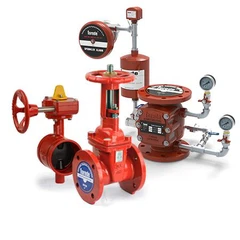
Alarm check valve is a crucial component in fire protection systems. It is designed to ensure that water flows in one direction, preventing backflow and contamination of the water supply. In case of a fire, the valve automatically triggers an alarm, alerting occupants and emergency services. This not only helps in timely response to emergencies but also minimizes damage and ensures safety. Regular maintenance and inspection of alarm check valves are essential to ensure their proper functioning.
A deluge valve is a key component in fire protection systems, designed to rapidly release a large volume of water when activated. This ensures a swift and effective response to any fire emergency, helping to prevent catastrophic damage and protect lives. Deluge valves are engineered to provide reliable and quick operation, making them an essential part of any fire safety strategy.
Functional Roles and System Integration
- Alarm Valve:
The alarm valve is primarily a monitoring and signaling device integrated into wet pipe or pre-action sprinkler systems. Its core function is to detect pressure drops caused by water flow during system activation, triggering alarms (e.g., water motor gongs or pressure switches) to alert occupants or monitoring centers. For instance, in a wet pipe system, the alarm valve opens automatically when a sprinkler head activates, allowing water to flow while simultaneously activating a water-flow alarm.
- System Context: Commonly used in wet pipe systems, where pipes are permanently charged with water, or pre-action systems requiring dual triggers (e.g., smoke detection and manual activation).
- Key Components: Includes a water motor gong, pressure switch, and sometimes a delay chamber to prevent false alarms from minor pressure fluctuations.
- Deluge Valve:
- The deluge valve is a flow-control device designed for rapid, large-scale water discharge in high-risk environments. It remains closed under normal conditions, holding back water in the system's piping. Upon activation (via electrical, pneumatic, or mechanical means), it opens fully, flooding the protected area with water or fire-extinguishing agents.
-
System Context: Deployed in deluge sprinkler systems, water spray systems, or water curtain systems for high-hazard areas (e.g., chemical storage, oil refineries, or aircraft hangars).
Key Components: Includes a solenoid valve, pressure switch, manual override, and sometimes a fire detection system (e.g., heat or smoke sensors) to trigger activation.
Operational Mechanisms
- Alarm Valve:
The alarm valve operates as a hydraulic differential valve. When water flows through the system (e.g., due to a sprinkler activation), the pressure drop across the valve's diaphragm causes the clapper to lift, allowing water to flow to the alarm device. This process is passive and relies solely on hydraulic pressure changes.
- Deluge Valve:
The deluge valve is an active, multi-trigger valve. It requires an external signal (e.g., electrical pulse from a smoke detector, pneumatic pressure from a detection tube, or manual operation) to open. Once activated, the valve's rubber sleeve or piston retracts, permitting unrestricted water flow. Some models, like the Inbal deluge valve, feature a three-layer rubber sleeve for durability and rapid response.
Design and Structural Differences
- Alarm Valve:
Typically compact, with a focus on pressure sensing and alarm signaling. For example, the ZSFG deluge valve (often confused with alarm valves due to nomenclature overlap) includes a wet-type alarm valve mounted atop its outlet, but this is a hybrid design. Standard alarm valves lack flow-control mechanisms and are optimized for pressure monitoring.
- Deluge Valve:
Robust and large-scale, designed to withstand high pressures and rapid water discharge. The ZSFG deluge valve, a common model, features a single-direction flow design with manual and automatic override capabilities. Its rubber sleeve or piston mechanism ensures immediate, full-bore opening upon activation.
Application Scenarios
- Alarm Valve:
Best suited for environments where early detection and alerting are critical, such as offices, schools, or residential buildings. In pre-action systems, it prevents accidental water discharge by requiring dual triggers (e.g., smoke detection and manual confirmation).
- Deluge Valve:
Essential for high-risk areas requiring immediate, large-scale suppression, such as chemical plants, oil refineries, or aircraft hangars. For instance, in a water spray system for flammable liquid storage, the deluge valve ensures rapid flooding of the area to prevent escalation.