

Fire is one of the most destructive forces known to humanity, capable of reducing buildings, valuables, and even lives to ashes in a matter of minutes. Throughout history, humans have developed various methods to combat fires, from primitive buckets of water to advanced automated systems. Among these, the fire sprinkler system stands out as one of the most reliable, effective, and widely used active fire protection measures. Designed to detect and suppress fires in their early stages, fire sprinkler systems have saved countless lives and prevented billions of dollars in property damage worldwide. This comprehensive guide explores every aspect of fire sprinkler systems, from their historical evolution and basic components to their diverse types, working principles, design standards, installation requirements, maintenance protocols, and real-world impact. Whether you are a building owner, facility manager, fire safety professional, or simply someone interested in understanding how these life-saving systems work, this article provides a detailed and accessible overview of fire sprinkler technology.
Function
Fire Sprinkler System
fire sprinkler system is an active fire protection system consisting of a network of pipes, sprinkler heads, control valves, alarm devices, and a water supply system designed to detect and suppress fires automatically. Unlike fire extinguishers, which require human intervention, sprinkler systems operate independently, activating when they detect a significant increase in temperature-typically caused by a fire. When activated, the system releases water directly onto the fire, cooling the flames, reducing smoke production, and preventing the fire from spreading to other areas of the building. Contrary to popular misconceptions, most sprinkler systems do not activate all sprinkler heads simultaneously; instead, only the heads in the immediate vicinity of the fire are triggered, minimizing water damage while effectively containing the fire.
Fire sprinkler systems are versatile and can be customized to suit a wide range of building types and fire hazards, from residential homes and office buildings to warehouses, factories, and high-rise structures. They can also be integrated with other fire safety systems, such as fire alarms, smoke detectors, and emergency lighting, to create a comprehensive fire protection network.
Water Supply System
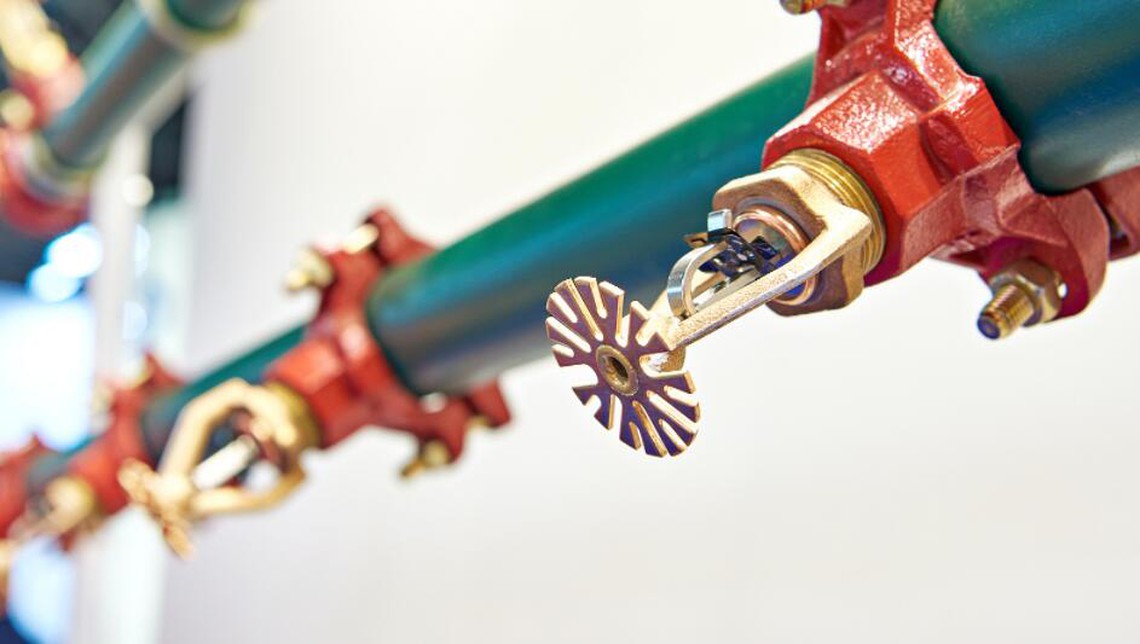
The water supply system is the backbone of a fire sprinkler system, providing the necessary water pressure and flow rate to suppress fires. The water supply can come from a variety of sources, including municipal water mains, fire hydrants, water tanks, or pumps. The type of water supply used depends on the size of the building, the fire hazard level, and the availability of municipal water.

Municipal Water Mains
For most small to medium-sized buildings, the municipal water supply is the primary source of water for the sprinkler system. The water main must be capable of providing the required flow rate and pressure to the sprinkler system, even during peak demand. In some cases, a backflow preventer is installed to prevent water from the sprinkler system from flowing back into the municipal water supply, which could contaminate the drinking water.

Water Tanks
In buildings where the municipal water supply is insufficient or unreliable, a water tank is used to store water for the sprinkler system. Water tanks can be above-ground or underground and are typically filled with potable water. The tank must be sized to provide enough water to suppress a fire for a specified period, usually 30 to 60 minutes, depending on the building's fire hazard level.
Fire Pumps
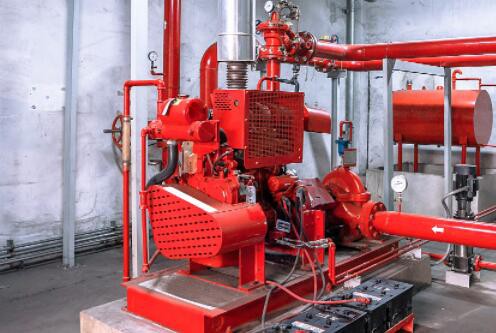
Fire pumps are used to increase the water pressure in the sprinkler system to the required level. Pumps are typically used in large buildings, high-rises, or buildings with high fire hazard levels, where the municipal water pressure is insufficient. Fire pumps can be electric or diesel-powered, and they are activated automatically when the system pressure drops below a certain level. Diesel-powered pumps are often used as a backup in case of a power outage.
Sprinkler Heads
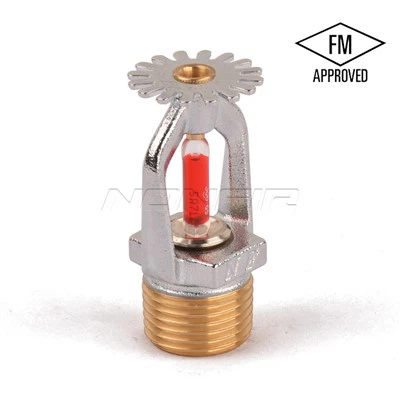
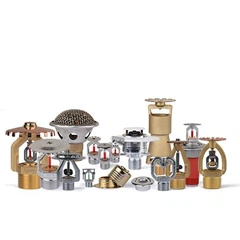
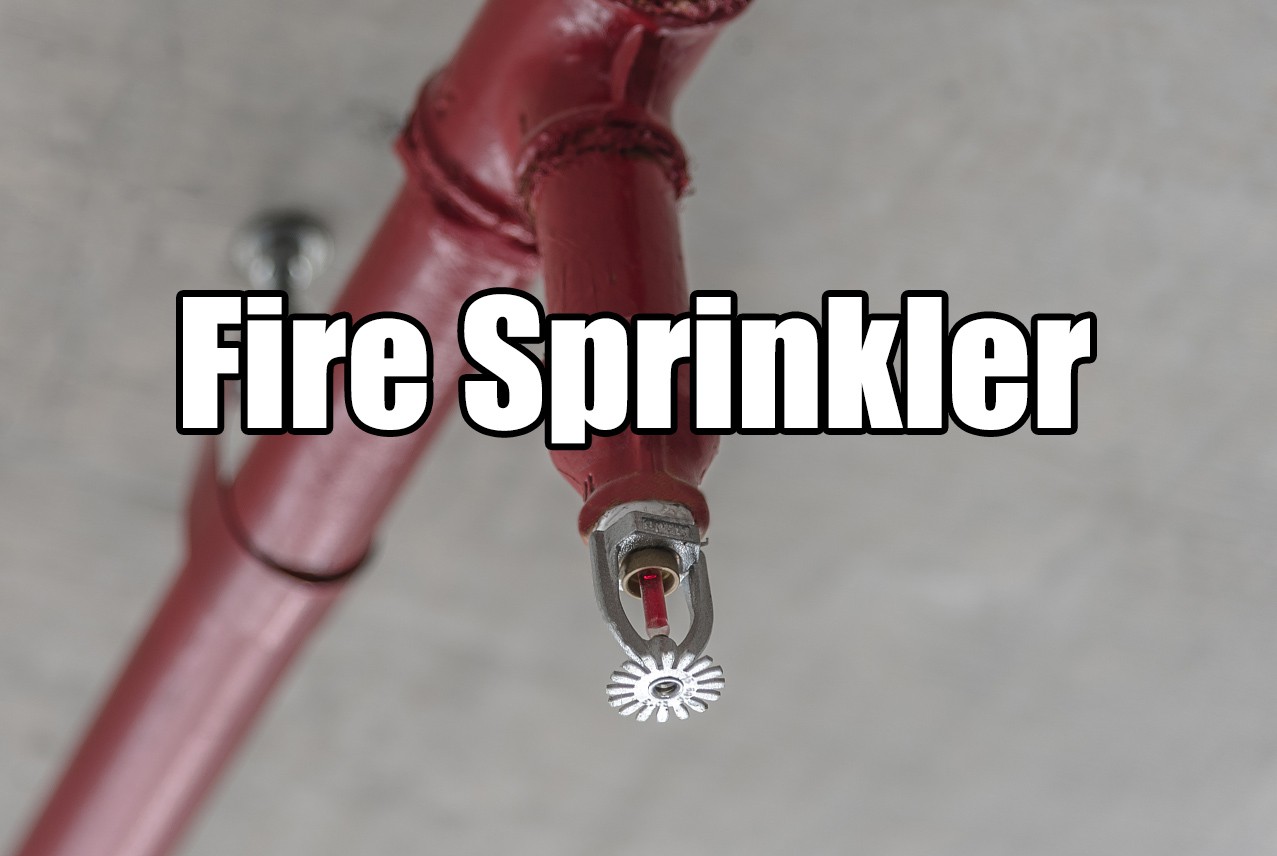
Sprinkler heads are the most visible component of a fire sprinkler system and are responsible for releasing water onto the fire. Each sprinkler head is designed to activate at a specific temperature, which is determined by the type of sprinkler head and the fire hazard level of the area. Sprinkler heads come in a variety of types, each designed for specific applications and environments.

Glass Bulb Sprinkler Heads
It's the most common type of sprinkler head used in modern systems. The glass bulb contains a liquid that expands when heated, causing the bulb to shatter at a specific temperature. The temperature rating of the bulb is indicated by the color of the liquid: red for 68°C, orange for 79°C, yellow for 93°C, green for 141°C, and blue for 182°C . When the bulb shatters, and water flows through the sprinkler head onto the fire.

Fusible Link Sprinkler Heads
These sprinkler heads use a fusible link made of two metal strips joined by a low-melting-point alloy. When the temperature reaches the alloy's melting point, the link breaks, and the valve opens. Fusible link sprinkler heads are often used in industrial environments where high temperatures are common, such as factories and warehouses.
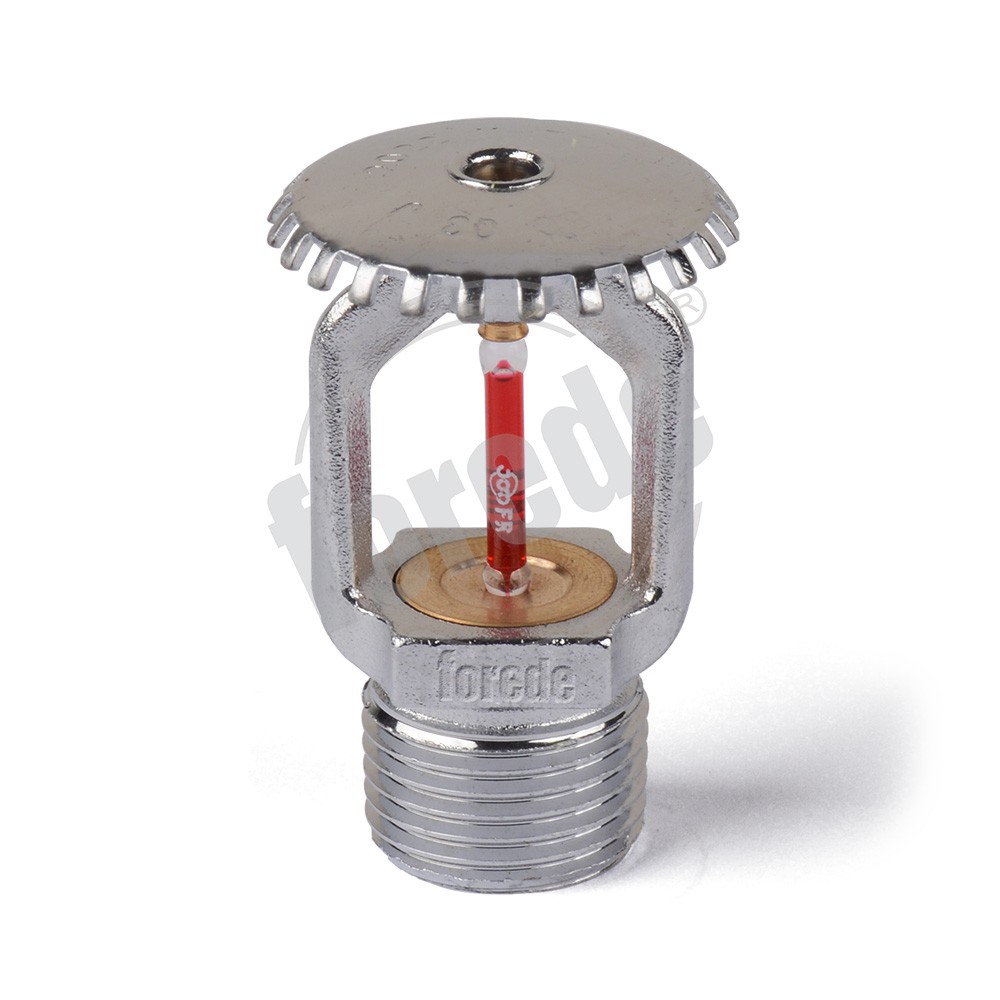
Quick Response Sprinkler Heads
QR sprinkler heads are designed to activate faster than standard sprinkler heads, making them ideal for use in residential buildings and areas with high fire growth rates. QR heads have a smaller glass bulb and a more sensitive heat detector, allowing them to activate within seconds of a fire starting.
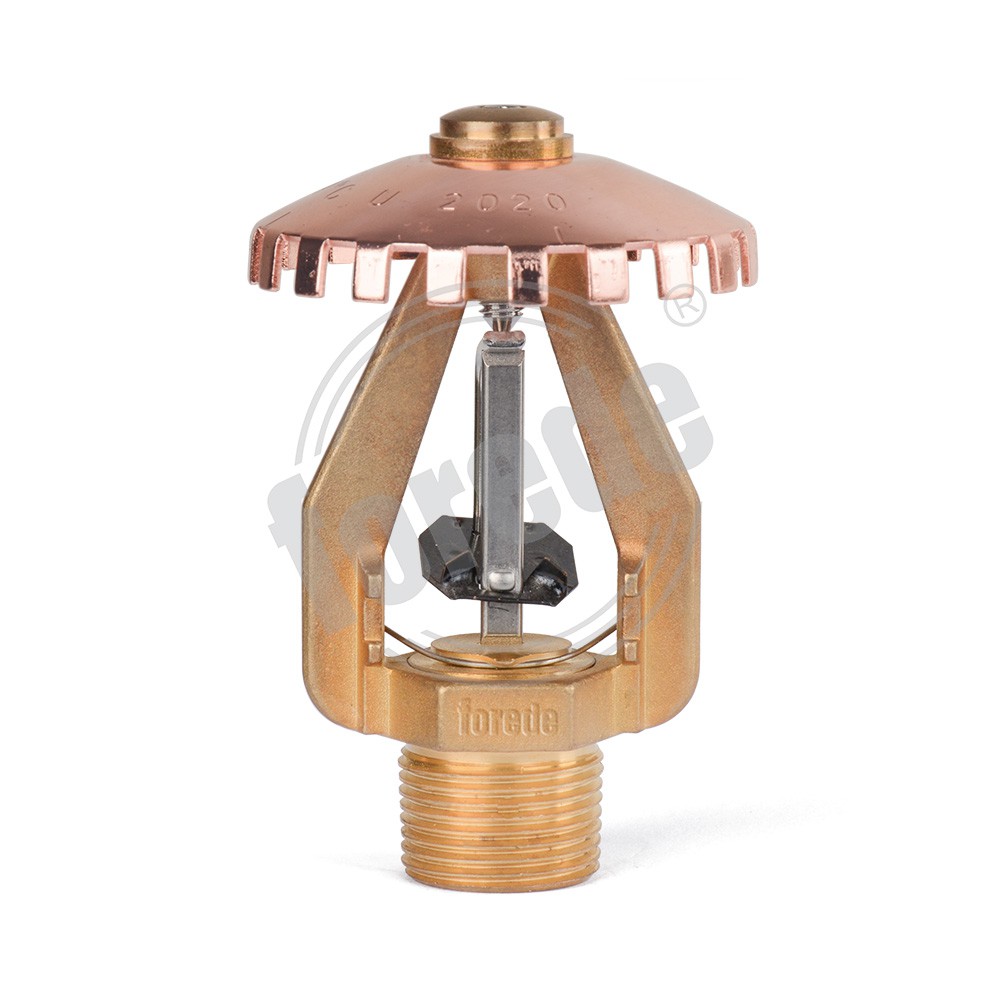
(ESFR) Sprinkler Heads
ESFR sprinkler heads are designed for use in high-ceiling warehouses and storage facilities. They are capable of releasing large volumes of water at high pressure, which is necessary to suppress fast-growing fires in these environments. ESFR heads are typically installed at heights of 9 to 15 meters (30 to 50 feet) and can cover large areas.

Sidewall Sprinkler Heads
Sidewall sprinkler heads are installed on walls rather than ceilings and are designed to distribute water in a horizontal pattern. They are often used in areas where ceiling-mounted sprinklers are not practical, such as hallways, stairwells, and small rooms.

Water Mist Sprinkler Heads
Water mist sprinkler heads release a fine mist of water droplets, which are more effective at suppressing fires than traditional sprinklers. The small droplets evaporate quickly, cooling the fire and reducing smoke production. Water mist systems are ideal for use in data centers, museums, and other areas where water damage is a concern.
Working Principle
Fire sprinkler systems are designed to detect and suppress fires automatically, without human intervention. The process of fire detection and suppression involves several key steps, from the initial detection of heat to the activation of the sprinkler heads and the delivery of water to the fire. Understanding how fire sprinkler systems work is essential for appreciating their effectiveness and ensuring that they are properly designed and maintained.
1. Fire Detection: The First Line of Defense
The first step in the fire suppression process is the detection of the fire. Fire sprinkler systems detect fires through the use of heat-sensitive sprinkler heads, which are designed to activate when the temperature in their immediate vicinity reaches a specific level. Unlike smoke detectors, which detect smoke, sprinkler heads detect heat, which is a more reliable indicator of a fire.
Each sprinkler head has a heat-sensitive element, either a glass bulb filled with a liquid or a fusible link made of a low-melting-point alloy. When a fire occurs, the heat from the fire rises and accumulates near the ceiling, where the sprinkler heads are installed. As the temperature increases, the liquid in the glass bulb expands, causing the bulb to shatter, or the fusible link melts, breaking the connection. This action opens the valve in the sprinkler head, allowing water to flow out.
It is important to note that sprinkler heads are independent of each other. Each sprinkler head only activates when the temperature in its immediate vicinity reaches its activation temperature. This means that only the sprinkler heads in the area of the fire will activate, minimizing water damage to other parts of the building. In most cases, a single sprinkler head is sufficient to extinguish a small fire, while larger fires may activate multiple heads.
2. Water Delivery: Getting Water to the Fire
Once a sprinkler head is activated, water flows from the head onto the fire. The water is delivered through a network of pipes that are connected to a water supply, which may be a municipal water main, a water tank, or a fire pump. The water supply must be capable of providing the required flow rate and pressure to the sprinkler heads to ensure effective fire suppression.
In wet pipe systems, the pipes are filled with water at all times, so water flows immediately when a sprinkler head is activated. In dry pipe systems, the pipes are filled with pressurized air, so the air must be expelled before water can flow. This process takes a few seconds, but it is necessary to prevent freezing in cold environments. In preaction systems, the pipes are dry until the fire detection system and a sprinkler head are activated, at which point the preaction valve opens, and water flows into the pipes.
Fire pumps are used to increase the water pressure in the system to the required level. Pumps are activated automatically when the system pressure drops below a certain level, which occurs when a sprinkler head is activated. Diesel-powered pumps are often used as a backup in case of a power outage, ensuring that the system continues to function even if the electricity is cut off.
3. Fire Suppression: How Water Extinguishes Fires
Water is an effective fire suppressant for several reasons. First, water cools the fire, reducing the temperature below the ignition point of the fuel. This is the most important mechanism of fire suppression, as fires require heat to sustain themselves. Second, water creates a barrier between the fuel and the oxygen in the air, smothering the fire. Third, water evaporates when heated, creating steam, which displaces oxygen and further smothers the fire.
The effectiveness of water as a fire suppressant depends on the flow rate and pressure of the water, as well as the pattern in which it is distributed.


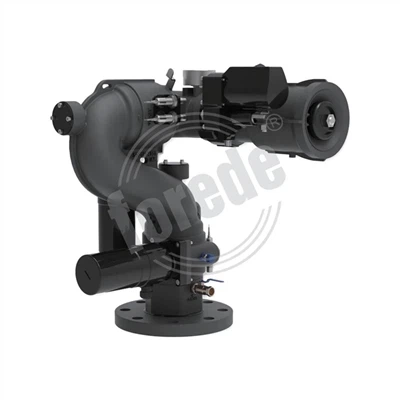
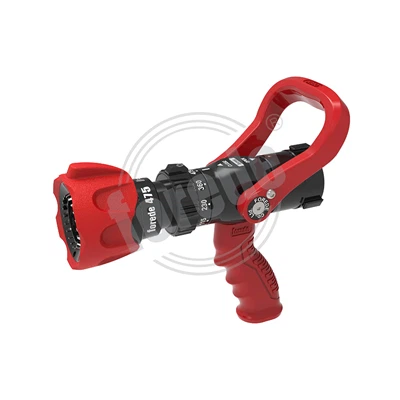
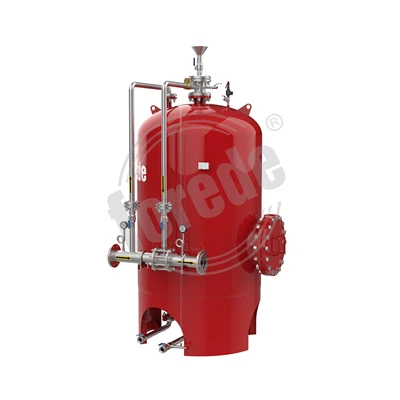
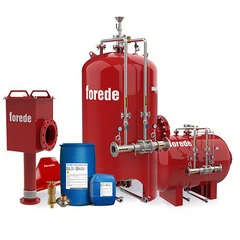
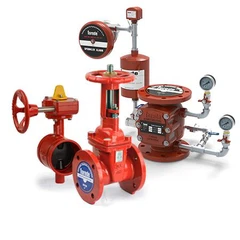
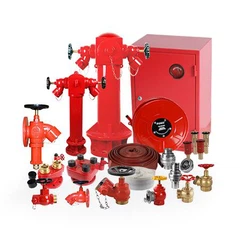
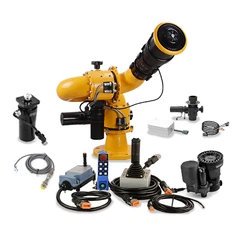
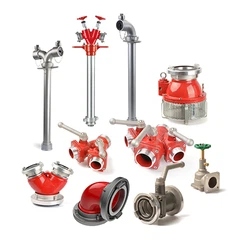
forede® specialize in the research and development and production of fire sprinkler system, offering a complete product line covering all specifications including fire sprinkler heads, alarm check valves, meeting the needs of various firefighting and rescue scenarios.
We welcome global customers to inquire about pricing. To provide you with a fast and accurate solution, please provide key parameters such as flow rate, working pressure, inlet standard and dimensions when inquiring. We will provide you with a professional quote and technical support as soon as possible.