
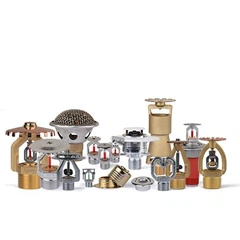
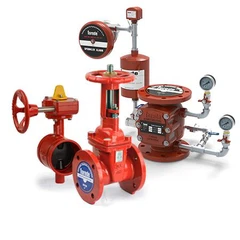
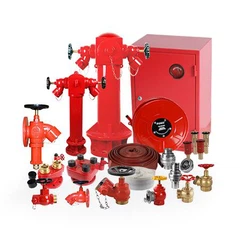

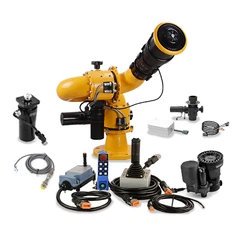
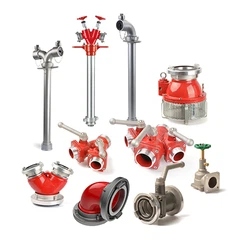
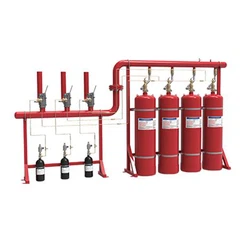

What is Fire Protection Solutions Deluge Valves?
forede Fire Protection Solutions Deluge Valves are core integrated components of comprehensive fire suppression systems, featuring a durable, corrosion-resistant design and modular pilot control for seamless system compatibility. Operating in dry-pipeline configurations with open sprinklers, they deliver instant full-coverage water discharge upon activation, suppressing fast-spreading fires in high-risk scenarios. Key strengths include rapid 3-8 second activation, dual automatic/manual activation modes, and adaptability to harsh environments. They are widely integrated into fire protection solutions for petrochemical plants, power stations, large warehouses, and critical infrastructure. Working via coordinated standby, activation, and suppression stages, the valves synergize with detection systems and water supply networks to ensure reliable fire containment. As a system-oriented component, they provide essential support for customized, high-performance fire protection solutions.
General Description
forede Fire Protection Solutions Deluge Valves are integrated control components specifically developed for comprehensive fire suppression systems, designed to deliver rapid, full-coverage water discharge in high-risk fire scenarios. Unlike standard standalone deluge valves, these products are engineered as a core part of integrated fire protection solutions, seamlessly connecting with detection systems, water supply networks, and alarm devices to form a coordinated fire defense system. Characterized by an open-sprinkler configuration and dry-pipeline operation, the valves remain closed during standby, keeping the sprinkler pipeline free of pressurized water while maintaining a state of immediate readiness.
Constructed from high-strength corrosion-resistant materials (316 stainless steel or reinforced cast steel), the valve features a precision-engineered spring-loaded clapper, a modular pilot control unit (compatible with electric, pneumatic, or hydraulic activation), and integrated pressure monitoring and alarm interfaces. Its core function is to act as the "control hub" of the fire protection solution: upon detecting a fire, it triggers instant water discharge across the entire protected area, suppressing fast-spreading flames before they escalate. The valve is designed to adapt to diverse fire protection system requirements, supporting water flow rates up to 220 m³/h and working pressures ranging from 0.2 MPa to 1.6 MPa, making it a versatile core component for customized fire protection solutions.
A key attribute of these valves is their system-oriented design, which ensures compatibility with various fire detection technologies and auxiliary fire protection equipment. This integration capability allows them to be seamlessly incorporated into large-scale or complex fire protection solutions, providing unified control and monitoring for industrial, commercial, and infrastructure facilities. Whether paired with flame detectors for chemical plants or heat detectors for power stations, the valves serve as the central execution unit that translates detection signals into immediate suppression action, embodying the core value of integrated fire protection solutions.
Advantages
forede Fire Protection Solutions Deluge Valves offer five core advantages that align with the requirements of integrated fire protection systems, focusing on system compatibility, rapid response, operational reliability, and scenario adaptability. These advantages make them a preferred choice for high-risk facilities requiring comprehensive fire defense solutions, where the coordination between components directly impacts fire suppression effectiveness.
ultra-rapid response for critical fire containment. Equipped with a high-sensitivity pilot control mechanism, the valve opens within 3-8 seconds of receiving an activation signal-faster than standard deluge valves. This rapid response ensures that fast-spreading fires (such as flammable liquid or chemical fires) are suppressed in the early stages, preventing catastrophic escalation. The instant full-coverage water discharge (covering the entire protected area via open sprinklers) creates a continuous water barrier that cools the fire source and blocks flame spread, a critical advantage for high-risk scenarios where every second counts.
robust durability for harsh environment endurance. Built with industrial-grade corrosion-resistant materials and a sealed internal structure, the valve can withstand extreme environmental conditions, including high humidity, chemical fumes, dust, and temperature fluctuations (-25°C to 85°C). The spring-loaded clapper mechanism features wear-resistant seals and anti-jamming design, ensuring reliable operation even after long-term standby (up to 10 years of maintenance-free standby in standard conditions). This durability makes it suitable for harsh environments such as offshore oil platforms, chemical processing plants, and desert power stations-key application areas for comprehensive fire protection solutions.
flexible activation modes for solution redundancy. The valve supports dual activation modes (automatic + manual) to enhance the reliability of fire protection solutions. Automatic activation is triggered by linked detection systems, while the manual emergency override (ergonomic handwheel design) allows on-site personnel to activate the valve directly in case of detection system failure or urgent situations. Additionally, the valve can be integrated with remote control systems, enabling activation from the fire control center-providing multiple redundancy layers that align with the risk-mitigation goals of comprehensive fire solutions.
modular design for solution scalability. The valve's modular structure allows for easy configuration adjustments to adapt to different fire protection solution requirements. Key components (pilot units, seals, pressure gauges) can be replaced or upgraded without removing the entire valve from the pipeline, supporting system expansion or modification. Standardized flange connections (ANSI Class 125/150, GB/T 9119) ensure compatibility with various pipeline sizes and water supply systems, making it easy to integrate into new or existing fire protection solutions. This scalability reduces the cost of system upgrades and maintenance, enhancing the long-term value of the fire protection solution.
How Do Fire Protection Solutions Deluge Valves Work?
forede Fire Protection Solutions Deluge Valves operate as the core control unit of integrated fire suppression systems, following a three-stage coordinated workflow-standby, activation, and suppression-that aligns with the operational logic of comprehensive fire protection solutions. This working mechanism ensures seamless synergy with detection systems, water supply networks, and alarm devices, delivering rapid, reliable fire suppression in high-risk scenarios.
Standby Stage: System Readiness & Pressure Sealing During normal operation, the valve functions as a key component of the standby fire protection system. The spring-loaded clapper remains tightly closed, sealed by two complementary forces: the tension of an internal compression spring and controlled pilot pressure (pneumatic or hydraulic). This dual-sealing design ensures the valve remains closed, isolating the high-pressure main water supply from the dry sprinkler pipeline (which is empty and depressurized). The valve is integrated with the fire protection system's monitoring panel, with pressure gauges continuously transmitting pilot pressure and main water supply pressure data to the control center. Meanwhile, linked fire detection sensors (heat, smoke, or flame) monitor the protected area 24/7, ensuring the entire solution is in full readiness.
Activation Stage: Coordinated Signal Transmission & Pressure Release When a fire breaks out, the detection sensors first identify the hazard (e.g., abnormal temperature rise, flame, or smoke) and transmit an activation signal to the fire control center. As part of the integrated solution, the control center verifies the signal (to avoid false alarms) and sends a command to the valve's pilot control unit. The pilot unit-depending on its type (electric, pneumatic, or hydraulic)-immediately releases the pilot pressure: electric pilot valves open a solenoid to relieve pressure, while pneumatic/hydraulic pilots activate a pressure relief valve. This rapid pressure release disrupts the force balance on the clapper: the sealing force is eliminated, and the high pressure from the main water supply pushes the clapper open within 3-8 seconds. This activation process is fully coordinated with the system's alarm devices, which trigger audible/visual alerts simultaneously.
Suppression Stage: Full-Area Water Discharge & System Synergy Once the clapper is fully open, high-pressure water from the main supply rushes into the previously dry sprinkler pipeline. Since all sprinkler heads are open (a key feature of deluge systems), water is discharged simultaneously from every head across the entire protected area, creating a uniform water curtain or spray that covers the fire zone. As part of the integrated fire protection solution, the valve's pressure switch transmits a signal to the control center, confirming activation and triggering additional system actions (e.g., starting backup fire pumps, shutting down fuel/electricity supply, or notifying emergency services). The valve remains open until the fire is extinguished and the main water supply is manually shut off by operators. After suppression, the valve can be reset to standby mode following system drainage and maintenance, re-integrating into the fire protection solution for future readiness.
Application
Petrochemical and Chemical Processing Zones
Petrochemical and Chemical Processing Zones are primary application areas. Oil refineries, chemical plants, ethylene production facilities, and fuel storage terminals-where flammable liquids, gases, and toxic chemicals are processed or stored-rely on these valves as part of their comprehensive fire protection solutions. The valves are integrated with flame detectors and emergency shutdown systems to form a multi-layered defense: upon detecting a fire, they trigger instant water discharge to cool storage tanks and processing equipment, while simultaneously shutting down fuel supply lines. This coordinated solution is critical for preventing explosions and chemical spills in high-hazard petrochemical environments.
Power Generation Facilities
Power Generation Facilities utilize these valves as key components of their fire protection solutions. Coal-fired, gas-fired, and nuclear power plants integrate the valves into fire suppression systems for boiler rooms, turbine halls, cable tunnels, and transformer stations. Electrical fires in these areas can spread rapidly through cables and equipment, causing widespread power outages. The valves, linked with heat detectors and smoke sensors, deliver full-coverage water suppression to contain fires in critical power generation areas, ensuring operational continuity and preventing catastrophic equipment damage. They are also used in renewable energy facilities such as large-scale solar power plants to protect inverter rooms and energy storage systems.
Large-Scale Warehousing and Logistics Hubs
Large-Scale Warehousing and Logistics Hubs requiring comprehensive fire coverage rely on these valves. Warehouses storing flammable goods (aerosols, chemicals, textiles), cold storage facilities with flammable refrigerants, and logistics distribution centers integrate the valves into their fire protection solutions to provide全域 coverage. Unlike conventional sprinkler systems, the valves deliver simultaneous water discharge across large open spaces and multi-level storage racks, forming a solution that addresses the challenge of fire spread in expansive, high-density storage environments. The valves are often paired with smoke detection networks to ensure early activation and full-area suppression.
Critical Infrastructure and Transportation Hubs
Critical Infrastructure and Transportation Hubs also deploy these valves as part of their fire protection solutions. Airports (especially aircraft hangars and fuel storage areas), railway stations, subway systems, and road tunnels integrate the valves with multi-sensor detection systems to protect crowded public spaces and critical infrastructure. Aircraft hangars, for example, use large-scale deluge solutions centered on these valves to suppress fires involving aircraft fuel, delivering massive water flow to cool the aircraft and prevent fire spread. Tunnels and subway stations use the valves to form longitudinal fire suppression solutions, containing fires in enclosed spaces where smoke accumulation and rapid spread are major risks.