


What is Ground Attack Fire Monitor
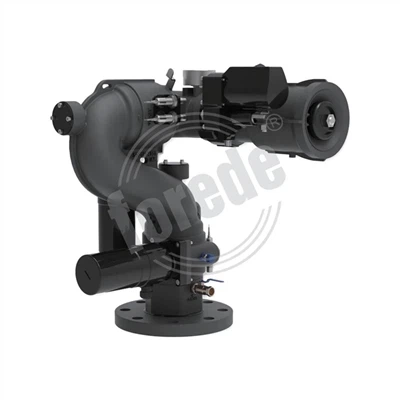
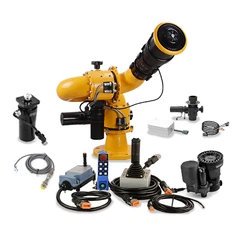
forede Ground Attack Fire Monitor is a 9–13kg aluminum alloy mobile fire device, with 360° rotation, adjustable spray (20° to 80°), and interchangeable nozzles (attack stream/coverage spray). It connects to hoses via quick couplings. Advantages: lightweight (single-operator transport), stable 38–58m jet, attack-tailored jet shapes, easy controls, rugged corrosion resistance. Ideal for industrial zones, construction sites, logistics centers, urban areas, and outdoor facilities-addressing ground-based fires with targeted suppression.
General Description
forede Ground Attack Fire Monitor is a specialized mobile fire suppression device engineered for aggressive, ground-based fire response in medium to large-scale emergencies, with its main structure crafted from high-strength aluminum alloy to prioritize both portability and operational robustness. Unlike standard fixed or heavy-duty monitors, it is designed to deliver targeted, high-impact water or foam jets directly to fire sources-acting as a "mobile ground-based suppression unit" that bridges the gap between handheld hoses and heavy fire-fighting equipment, ideal for scenarios where rapid, precise fire attack is critical. The device's core design centers on its aluminum alloy frame, which balances light weight (typically 9–13kg) with resistance to impact and corrosion-significantly lighter than steel alternatives, enabling easy transport while enduring harsh emergency conditions. Key components include a 360-degree smooth-rotating base (for full horizontal coverage of fire zones) and a vertically adjustable spray assembly (angle range of 20° to 80°) that controls jet elevation. The spray assembly features a precision-machined nozzle with interchangeable tips, supporting two core jet modes: a focused, long-range attack stream (for penetrating dense fires or reaching distant targets) and a wide, uniform coverage spray (for smothering surface blazes or protecting adjacent areas). Equipped with non-slip carrying grips (for secure transport) and a rugged, adjustable footing system (to anchor on uneven ground like gravel or concrete), the monitor connects to fire hoses via standard quick-release couplings-compatible with fire trucks, hydrants, or portable water pumps. Its intuitive control panel (with clearly labeled levers) allows users to adjust flow rate and jet direction in real time, while the lightweight build enables a single operator to set up and deploy the device in 2–3 minutes. It functions as a agile, ground-focused suppression tool that delivers the power needed for active fire attack, rather than just passive containment.
Advantages
forede Ground Attack Fire Monitor offers five key advantages rooted in its aluminum alloy construction and ground-focused design-lightweight mobility, stable jet performance, optimized jet shape, user-friendly operation, and rugged durability-outperforming conventional monitors in dynamic fire-attack scenarios.
agile lightweight design accelerates deployment. Made from high-grade aluminum alloy, the monitor weighs 9–13kg, 35–45% lighter than steel monitors of comparable power. This allows a single operator to carry it across rough terrain (such as industrial yards, construction sites, or uneven urban areas) without fatigue-critical for ground-based fire attack, where reaching the fire's perimeter quickly can prevent spread. Unlike heavy steel monitors that require teams to move, its portability ensures it can be positioned at the "front line" of fires, delivering suppression exactly where it's needed most.
stable jet performance ensures reliable fire penetration. The monitor's internal flow path is precision-honed to minimize turbulence, while the nozzle features a anti-dispersion design-even under high pressure (up to 15 bar), it maintains a steady, non-wavering jet. This stability enables the jet to penetrate dense smoke, stacked materials, or burning structures, reaching the fire's core with consistent momentum. With a maximum range of 38–58 meters (far beyond handheld hoses' 12–22 meters), operators can attack fires from a safe distance while ensuring the jet maintains its effectiveness.
optimized jet shape adapts to ground-attack needs. The interchangeable nozzle tips produce two purpose-built jet patterns: the focused attack stream has a narrow, consistent diameter that cuts through fire layers (ideal for targeting deep-seated blazes in machinery, storage racks, or building interiors); the wide coverage spray has a uniform fan shape that covers large ground areas (perfect for smothering fuel spills, grass fires, or surface-level warehouse blazes). Unlike generic monitors with inconsistent jet patterns, this design ensures each jet mode is tailored to ground-based attack, maximizing suppression efficiency in real-world scenarios.
aluminum alloy durability withstands ground-use wear. The aluminum alloy frame is treated with a scratch-resistant, anti-corrosion coating that resists damage from dirt, oil, water, and minor impacts-common in ground-based deployment. Unlike steel monitors that rust or dent easily, this design maintains performance even after repeated use on rough terrain or in industrial environments. The adjustable footing system (with reinforced feet) also prevents damage to the base during setup, ensuring long-term reliability for frequent ground-attack missions.
How to use a Ground Attack Fire Monitor?
Using forede Ground Attack Fire Monitor effectively involves four structured steps, focusing on safe positioning, secure connection, precise adjustment, and post-use care-ensuring effective ground-based fire attack while protecting the operator and device.
Step 1: Assess and Position for Ground Attack
First, evaluate the fire scene to identify the "attack point"-the closest safe location from which the jet can reach the fire's base (typically 9–11 meters away, to avoid heat/smoke exposure). Clear any obstacles (debris, equipment) between the monitor and the fire to ensure an unobstructed jet path. Carry the monitor to the attack point using the non-slip grips, then adjust the footing: twist the adjustable feet clockwise to lower or counterclockwise to raise, ensuring the monitor stands level and stable (no wobbling) on the ground. For soft terrain (dirt, sand), press the footing firmly into the ground to enhance stability.
Step 2: Connect to Water Source for Attack Readiness
Select a compatible fire hose (with quick-release couplings matching the monitor's inlet) and attach one end to the monitor's water port. Align the coupling's notches with the monitor's inlet, push until it clicks, then twist the locking ring ¼ turn to secure (no tools needed). Connect the other end of the hose to the water source-fire truck outlet, hydrant, or portable pump. Open the water source valve slightly (10–15%) to test for leaks: if water drips from couplings, disconnect and reattach, ensuring a tight seal. Once leak-free, close the valve temporarily to prepare for jet adjustment.
Step 3: Adjust Jet Settings for Targeted Attack
Choose the appropriate nozzle tip based on the fire type: install the focused attack tip for deep-seated or distant fires, and the wide coverage tip for surface or spread-out blazes. Attach the tip by twisting it onto the spray assembly until it locks. Open the monitor's flow control knob slowly (to avoid sudden pressure surges) to 50% capacity, then adjust the jet direction: use the rotation lever to swing the base horizontally, aligning the spray assembly with the fire's base. Use the vertical toggle to set the angle--12° to 25° for low-lying fires (e.g., spills, ground-level blazes) and 30° to 88° for elevated fires (e.g., racks, building exteriors). Increase flow rate to 100% once the jet is targeted, ensuring maximum penetration.
Step 4: Conduct Fire Attack and Post-Use Maintenance
During the attack, maintain a safe distance and keep the jet focused on the fire's base (not flames) to extinguish the fuel source. Adjust direction and angle in real time as the fire shrinks-use the wide spray to cool surrounding areas and prevent re-ignition. Once the fire is out, close the water source valve first, then open the monitor's flow knob to release residual water from the hose and monitor. Disconnect the hose, then remove the nozzle tip and rinse it with clean water to clear debris. Wipe the monitor's body with a dry cloth to remove dirt or foam residue, check for damage (cracks in the base, worn couplings), and store it in a dry, ventilated area-away from direct sunlight or extreme temperatures.
Application
Industrial Manufacturing Zones
Industrial Manufacturing Zones are primary application areas. Factories producing or handling flammable materials (such as petrochemical plants, rubber facilities, and metal processing workshops) use this monitor to attack fires in production lines or equipment clusters. Its lightweight design allows operators to move it between machinery, while the focused jet penetrates burning equipment (like industrial ovens or storage tanks) to extinguish deep-seated blazes. For example, in a chemical plant, the monitor can be positioned near a burning reactor to deliver a targeted stream, preventing the fire from spreading to adjacent tanks.
Construction and Demolition Sites
Construction and Demolition Sites benefit from its rugged mobility. These sites feature uneven ground, temporary structures, and flammable materials (wood, paint, fuel canisters)-making fixed equipment impractical. The monitor's adjustable footing anchors it on gravel, dirt, or concrete, while its 9–13kg weight enables transport to scaffolding, foundation pits, or high-rise floors. It is used to attack fires in construction vehicles (excavators, cranes), burning building materials, or temporary offices, often connected to portable water pumps for off-grid operation.
Urban Emergency Scenes
Urban Emergency Scenes use it for flexible ground response. In urban areas, fires in small commercial buildings (shops, restaurants), parking garages, or residential alleys often require agile, ground-based suppression. The monitor's compact size fits in narrow spaces (between buildings, in alleyways), while its lightweight design allows transport by emergency personnel on foot. For example, in a parking garage fire, the monitor can be set up near the entrance to attack car fires with a focused stream, while the wide spray prevents the fire from spreading to adjacent vehicles.
Outdoor Industrial Facilities
Outdoor Industrial Facilities leverage its durability. Outdoor sites like oil storage yards, gas stations, or lumber yards face fire risks from fuel spills, stacked materials, or weather-related incidents. The monitor's corrosion-resistant aluminum alloy withstands outdoor elements (rain, sun, dust), while its stable jet attacks fires in open areas-such as a burning pile of lumber or a fuel spill in an oil yard. Its compatibility with portable pumps also makes it useful in remote outdoor locations with no fixed water supply.