


Your Trusted Fire Protection Partner
Send your inquiry about our DN65 SS304 manual fire monitors to us today. Our product, with its corrosion-resistant 304 stainless steel body, DN65 standard waterway, 2400 LPM max flow rate, and compatibility with 9 interchangeable nozzles, is engineered to deliver reliable performance in marine, petrochemical, industrial, and public infrastructure settings. Contact us now to get detailed specifications, pricing, and customized solutions tailored to your project needs.
Email: sales6@forede.com WhatsApp +86 158 8080 0883 Contact Person: Karina
Tiller Type or Gear Type ? for Manual Fire Monitor
When it comes to choosing between Gear Type and Tiller Type for a Manual Fire Monitor, both options offer unique advantages that can enhance firefighting effectiveness. Understanding their features can help you decide which is better suited for your needs.
Tiller Type Fire Monitor
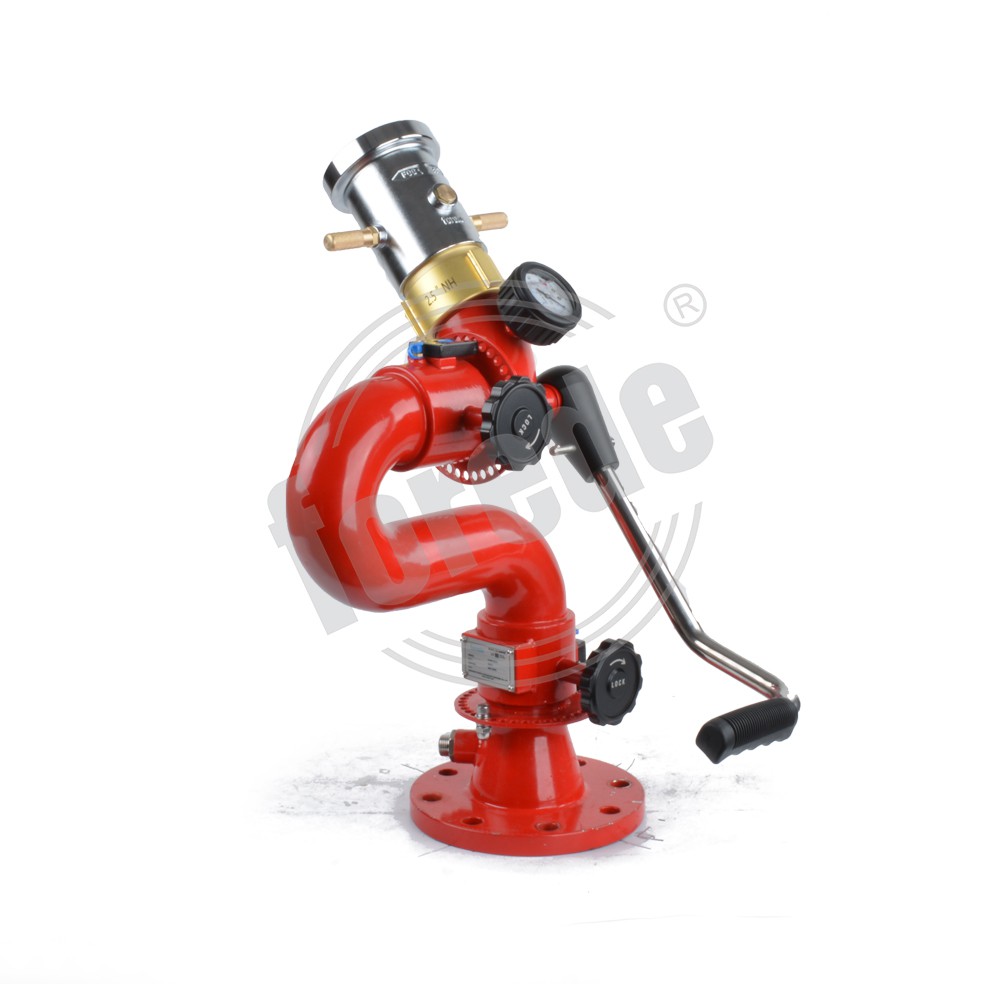
Tiller type fire monitors, on the other hand, provide intuitive and straightforward control. The tiller handle allows firefighters to maneuver the monitor quickly and with agility, offering a more hands-on approach. This type is excellent for rapid response scenarios where swift directional changes are needed. Its simplicity makes it user-friendly, promoting ease of use even under challenging conditions.
Pros:
Fast & Intuitive: One-hand operation for quick, wide-angle adjustments (360° horizontal, -45° to +80° vertical).
Lightweight & Compact: Fewer moving parts; easy to maneuver in tight spaces.
Low Cost: Simpler construction = lower purchase and maintenance costs.
Immediate Response: Direct linkage means no lag between handle movement and stream adjustment.
Cons:
Lower Precision: Harder to make small, incremental adjustments (e.g., fine-tuning stream aim).
More Physical Effort: Requires sustained force to hold position under high pressure (≥1.0 MPa).
Vulnerable to Vibration: Stream recoil can cause drift if not locked firmly.
Best For:
Rapid deployment scenarios (e.g., industrial fires, vehicle-mounted monitors).
Users prioritizing speed over pinpoint accuracy.
Budget-sensitive projects with low-to-moderate pressure (≤1.0 MPa) requirements.
Gear type fire monitors are known for their precision and smooth operation. The gearing mechanism allows for controlled, incremental adjustments, making it easier to direct water streams accurately to the target area. This type is particularly beneficial in situations where precision and fine-tuned direction are crucial. The robust construction of gear-type monitors also ensures durability and reliable performance, supporting firefighters in any demanding environment.
Pros:
High Precision: Gear reduction enables micro-adjustments (≤0.5° increments) for accurate stream targeting.
Stable & Lockable: Gears hold position firmly against recoil; no drift during prolonged use.
Lower Physical Effort: Mechanical advantage reduces force needed-ideal for high-pressure (≥1.2 MPa) or large-flow (≥50 L/s) applications.
Durable: Stainless steel gears resist corrosion; suitable for harsh environments (marine, chemical plants).
Cons:
Slower Operation: Multiple wheel turns are needed for large angle changes (less intuitive in emergencies).
Higher Cost: Complex gear assembly increases upfront and maintenance costs.
Bulkier: Larger housing to accommodate gears; less portable than tiller types.
Best For:
Applications requiring pinpoint accuracy (e.g., tank farm protection, high-rise exterior firefighting).
High-pressure/high-flow systems (≥1.2 MPa, ≥50 L/s) where stability is critical.
Marine or industrial settings with corrosion concerns.


Which One Is Better for You? Quick Decision Guide!
Both gear type and tiller type fire monitors bring valuable traits to the table. If your priority is precision and controlled adjustments, a gear type monitor may be the perfect fit. Conversely, if quick and intuitive maneuvering is essential, a tiller type monitor could serve you best. Ultimately, the ideal choice aligns with your operational needs, ensuring that your firefighting efforts are as effective and efficient as possible.
| Factor | Tiller Type | Gear Type |
|---|---|---|
| Speed | ✅ Excellent | ❌ Slow |
| Precision | ❌ Basic | ✅ Excellent |
| Effort (High Pressure) | ❌ High | ✅ Low |
| Cost | ✅ Low | ❌ High |
| Portability | ✅ Compact | ❌ Bulky |
| Best For | Fast response, tight spaces, budget | Precision aiming, high pressure, harsh environments |
Final Recommendation
Choose Tiller Type if you need speed, simplicity, and low cost for general firefighting or vehicle use.
Choose Gear Type if you need precision, stability, and durability for high-pressure, high-flow, or industrial/marine applications.
Both types meet global standards (e.g., GB 19156, IMO), so your decision hinges on operational priorities.
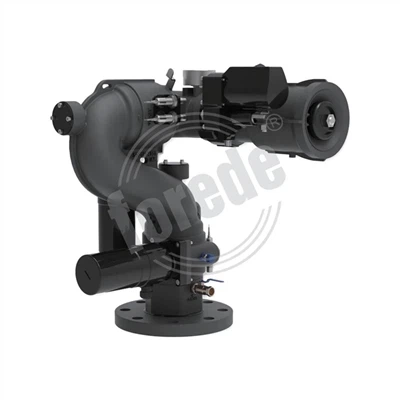
Gear Type SS304 Fire Monitor (DN65)
There are eight monitor nozzles for DN65 gear type SS304 fire monitor body.


Tiller Type SS304 Fire Monitor (DN65)
There are eight monitor nozzles for DN65 tiller type SS304 fire monitor body.


Six Key Services of the Tiller Type SS304 Fire Monitor
Efficient Fire Suppression
The Tiller Type SS304 Fire Monitor delivers powerful and precise water or foam streams, enabling rapid extinguishment of fires and minimizing damage. Its superior performance ensures safety and protection in critical moments.
Durability and Corrosion Resistance
Crafted from high-grade SS304 stainless steel, this fire monitor offers excellent resistance to corrosion and wear, ensuring long-lasting reliability even in harsh environments. This durability reduces maintenance needs and enhances operational readiness.
Flexible Positioning and Coverage
With its innovative tiller design, the fire monitor can be easily maneuvered to cover wide areas and difficult-to-reach spots. This flexibility increases firefighting effectiveness, providing comprehensive protection against fire outbreaks.
User-Friendly Operation
Designed for ease of use, the Tiller Type SS304 Fire Monitor allows firefighters to quickly adjust flow rates and directions, improving response time and control during emergencies. This enhances safety for both operators and those in danger zones.
Versatile Application
Suitable for various settings such as industrial plants, warehouses, and marine environments, this fire monitor adapts seamlessly to different firefighting scenarios. Its versatility makes it a valuable asset for diverse fire protection needs.
Enhanced Safety Features
Equipped with precision control mechanisms and robust construction, the monitor supports secure and controlled firefighting operations. This ensures that every action taken contributes positively to protecting lives and property.
Six Key Services of the Gear Type SS304 Fire Monitor
Corrosion-Resistant SS304 Bod
Crafted entirely from high-grade SS304 stainless steel, the monitor body delivers exceptional resistance to rust, saltwater, and chemical corrosion. It ensures long-term reliable performance even in harsh marine, offshore, and industrial environments.
Precision Gear Control System
The ergonomic gear-driven mechanism enables smooth, effortless 330° horizontal rotation and vertical angle adjustment. Firefighters can aim accurately and lock the position securely, ensuring stable targeting during emergency operations.
DN65 Universal Waterway
Designed with a standard DN65 waterway, this fire monitor is fully compatible with 9 interchangeable nozzles. It supports water, foam, and multi-media fire suppression, adapting to diverse fire scenarios without additional modifications.
2400 LPM Flow Performance
With a maximum flow rate of 2400 liters per minute, the monitor delivers powerful, long-range water discharge. It quickly suppresses large-scale fires and maximizes fire-fighting efficiency for petrochemical plants, warehouses, and port terminals.
Low Maintenance & Long Lifespan
The all-stainless-steel structure minimizes wear and tear, reducing maintenance frequency and costs. With robust gear parts and anti-corrosion treatment, the monitor maintains optimal performance for over 10 years.
Compliant & Safe Design
Engineered to meet international fire safety standards, the monitor undergoes rigorous pressure and durability testing. It features a safety locking function and pressure gauge, ensuring stable and safe operation in critical emergency situations.
5 FAQs – Gear Type vs Tiller Type Manual Fire Monitor
FAQ 1: Which type is easier to operate in emergency fire scenarios?
FAQ 2: Which manual fire monitor suits high water pressure working conditions?
FAQ 3: What is the main cost difference between gear type and tiller type monitors?
FAQ 4: Which type delivers more precise water jet aiming?
FAQ 5: Which type is more suitable for long-time continuous firefighting work?
Your Trusted Fire Protection Partner
Send your inquiry about our DN65 SS304 manual fire monitors to us today. Our product, with its corrosion-resistant 304 stainless steel body, DN65 standard waterway, 2400 LPM max flow rate, and compatibility with 9 interchangeable nozzles, is engineered to deliver reliable performance in marine, petrochemical, industrial, and public infrastructure settings. Contact us now to get detailed specifications, pricing, and customized solutions tailored to your project needs.
Email: sales6@forede.com WhatsApp +86 158 8080 0883 Contact Person: Karina